
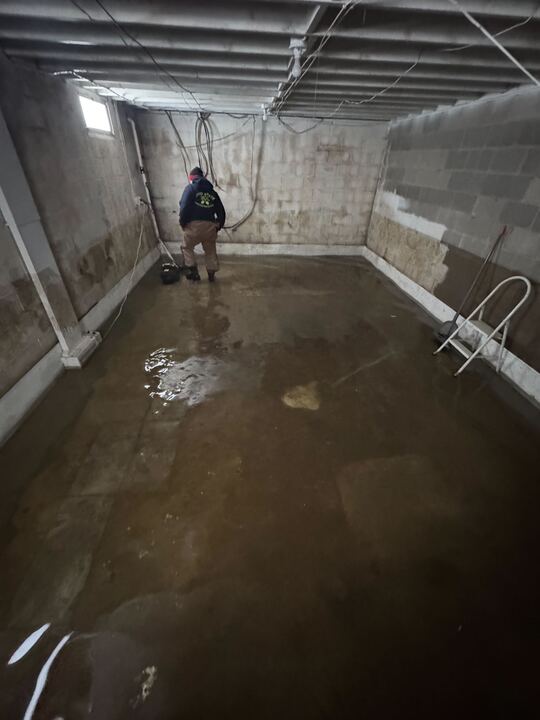
 When your basement starts to show signs of unwanted moisture, it’s essential that you don’t turn a blind eye. You’re likely dealing with common culprits such as poor construction, aging foundations, or inadequate drainage systems. But don’t fret, there are practical solutions to these issues, like maintaining gutters and keeping an eye out for potential leaks. However, understanding the specifics of these problems and their solutions might make all the difference in maintaining a dry and damage-free basement. Wouldn’t you like to know how to tackle this?
Key Takeaways
- Basement leaks commonly result from poor construction, aging homes, environmental factors, excessive rainfall, and hydrostatic pressure.
- Drainage issues, such as blocked gutters and improperly graded yard slopes, can exacerbate hydrostatic pressure leading to leaks.
- Regular inspections can identify and repair structural issues, such as cracks in basement walls, through sealants or injections.
- Poorly maintained window wells and faulty plumbing systems are also common causes of basement leaks that can be fixed with sealants and regular maintenance.
- Preventive measures include proper grading, use of dehumidifiers, maintaining window wells, and regular sump pump maintenance.
Understanding Basement Leaks
In dealing with basement leaks, it’s important to first understand their nature and origin. You must realize that basement leaks aren’t random occurrences, but rather, they’re a result of specific factors that lead to the unwanted seepage of water.
The common causes for leaks can range from poor construction and design of your basement to the age of your home. For instance, if the basement wasn’t correctly waterproofed when it was built, or if the waterproofing has worn out over time, you’re likely to experience leaks.
Likewise, if your home is old, the foundation might’ve developed cracks that allow water to seep in.
Additionally, the environment outside your basement can also contribute to leaks. The type of soil surrounding your home, the slope of your yard, and the level of the water table in your area, all can play a role in causing leaks.
Furthermore, excessive rainfall can overwhelm your home’s drainage system, leading to leaks. The same goes for melting snow.
Understanding these causes is the first step towards dealing with basement leaks effectively. After all, you can’t fix a problem without knowing what’s causing it in the first place.
Hydrostatic Pressure: A Common Culprit
When your home sits on water-saturated soil, hydrostatic pressure comes into play. This pressure is the force exerted by water pushing against your basement walls and floor. It’s a common cause of basement leaks, particularly after heavy rainfall or snow melts. When the ground can’t absorb any more water, the excess has nowhere to go but up against your home.
Hydrostatic pressure can be a particularly destructive force. Over time, it can weaken your home’s foundation, leading to cracks and leaks. It’s a gradually escalating problem–you mightn’t notice anything at first, but once the damage starts, it can quickly worsen.
So, how can you address this issue? To begin with, it’s important to guarantee proper drainage around your home. This includes maintaining gutters and downspouts to divert water away from your foundation.
A sump pump installation can also be beneficial, especially in areas prone to heavy rainfall.
Additionally, waterproofing treatments can be applied to your basement walls and floor. These treatments form a barrier to prevent water from seeping in.
However, keep in mind that these are preventative measures. If you’re already noticing leaks, it’s best to consult a professional to assess the damage and propose a suitable solution.
Leaking Wall Cracks and Solutions
You’ve likely noticed those ominous cracks crawling up your basement walls.
Fear not, as we’re about to discuss how to spot wall cracks effectively and tackle them head on.
From identification to repair, we’ll walk you through the best solutions to seal up those leaks and reclaim your dry, cozy basement.
Identifying Wall Cracks
Your basement’s walls may betray an unwelcome secret: cracks. These unsightly lines might be more than a cosmetic issue – they could signify a serious problem. If you’re dealing with water in your basement, the culprit may be hiding in plain sight: leaking wall cracks.
Cracks can occur for a variety of reasons, such as soil pressure, poor construction, or even normal house settling. But no matter the cause, it’s important to identify them quickly. You should regularly inspect your basement walls for any signs of cracking. Look for both horizontal and vertical cracks – they’re both problematic, but each indicates a different issue.
| Type of Crack | Common Causes | Potential Issue |
|---|---|---|
| Horizontal | Soil pressure, frost heave | Structural damage |
| Vertical | House settling, poor construction | Water leakage |
Effective Crack Repair Methods
Now that you’re aware of the common causes and potential issues of wall cracks, it’s time to tackle the repair process. You’ll need to have a clear plan of attack to effectively mend these pesky intrusions.
One common method you can use is epoxy injection. This technique involves sealing the crack with an epoxy paste and injecting the crack with a liquid epoxy resin. It’s a bit of a messy job, but it’s effective at permanently sealing wall cracks.
If the cracks are larger or deeper, you might need to evaluate a more robust solution. Polyurethane foam injection could be the answer. This method fills the entire depth of the crack, making it a great option for those harder to reach places.
Plus, it’s flexible, allowing it to move with the natural shift of your home’s foundation.
However, if the problem persists, it’s best to call in professionals. They’ve the right tools and expertise to handle extensive damage.
Window Well Leaks and Repairs
You’ve sealed the wall cracks, but don’t celebrate just yet; window wells can also be a source of basement leaks.
We’ll be discussing how to spot these leaks, how you can fix them yourself, and what steps you can take to prevent them.
Get ready to tackle window well leaks and keep your basement dry.
Identifying Window Well Leaks
When it comes to basement leaks, one often overlooked culprit is the window well. Although they’re designed to allow light into your basement and prevent soil erosion, they can be a source of unwanted water if not properly maintained. Identifying leaks in your window wells is the first step to a dry and comfortable basement.
Start by inspecting the well’s liner. It’s the barrier between the window and the surrounding soil. If it’s cracked or damaged, water can seep in. Next, look at the drain. If it’s blocked or non-existent, water can pool, leading to leaks. Finally, check the window itself. Any gaps or cracks can let water in.
Here’s a handy table to help you identify potential issues:
| Issue | Symptom | Possible Cause |
|---|---|---|
| 1. Leaking Liner | Wet basement walls | Cracked or damaged liner |
| 2. Pooling Water | Water in the well | Blocked or missing drain |
| 3. Window Leaks | Water around the window | Cracks or gaps in the window |
Take the time to check these areas regularly, and you’ll be well on your way to preventing window well leaks.
Repairing Window Well Leaks
If your basement walls are damp or there’s water pooling around your window well, it’s time to take action.
Window well leaks can cause significant damage over time, but don’t despair – you can fix this.
First, you’ll need to identify the source of the leak. If it’s the window itself, sealant can often do the trick.
You’ll want to apply a quality, waterproof sealant around the entire window frame. Let it dry thoroughly before testing it with a water hose.
If the leak is coming from the well, you’ll need to check the drain. If it’s blocked, clear out any debris and test it with water.
If it’s draining correctly, you’re good to go. If not, you might need to replace the drain or install a new one.
Lastly, consider installing a window well cover. This isn’t just a preventive measure – it can stop existing leaks by preventing water from pooling in the well.
Choose a durable, clear plastic cover that fits your window well perfectly.
Preventive Measures for Leaks
To keep your basement dry and damage-free, taking preventive measures against leaks is vital, particularly in the case of window well leaks.
You should start by making sure that your window wells are properly covered. A clear, plastic cover can effectively keep out rain and snow, preventing water accumulation.
Additionally, it’s important to inspect your window wells regularly. Look out for any signs of damage or sealant failure and address these issues promptly.
You’ll also want to check the drain in your window well. If it’s blocked by debris, water can pool and eventually seep into your basement. Make it a habit to clean out the drain frequently to guarantee it’s functioning properly.
Lastly, consider the slope of the ground around the window wells. It should slope away from your house to steer water away from the foundation.
If it slopes towards your house, you might need to regrade the area.
Plumbing Issues Leading to Leaks
Surprisingly, a significant number of basement leaks arise from plumbing issues. You mightn’t realize it, but your basement’s plumbing system can be a silent culprit.
Leaky pipes, faulty valves, or even poorly installed fixtures can all lead to unwanted water in your basement.
Often, these leaks can be small and hard to detect until they’ve caused substantial damage. Your first clue might be a musty odor or damp patches appearing on walls or floors.
However, don’t ignore these signs, because they’re your home’s way of telling you something’s wrong.
So, how do you tackle these plumbing-related leaks? First, you’ve got to identify the source.
This could be anything from a dripping pipe joint to a malfunctioning water heater. Once you’ve found the culprit, you’ll need to decide whether it’s a DIY fix or something that requires a professional plumber.
Sump Pump Failures and Fixes
Your basement’s watchdog, the sump pump, can also be a leading cause of leaks when it fails. This often happens when the pump’s motor burns out or the float switch, responsible for activating the pump, malfunctions. If your pump’s not working, you’ll notice water pooling where it shouldn’t be, signaling a potential leak.
Now, don’t panic. You’ve got options. First, verify if the pump’s power source is functional. It’s not unheard of for a tripped circuit breaker to be the culprit.
If the power’s fine but the pump’s still silent, check the float switch. It could be stuck or damaged, preventing the pump from triggering. Replacing it’s usually a quick, inexpensive fix.
However, if the motor’s burned out, you’ll need to replace the whole unit. While you can tackle this yourself, hiring a professional guarantees the job’s done right and can save you a headache.
Regular maintenance can help prevent failures, so consider setting a reminder to inspect your pump every few months. Remember, a well-functioning sump pump is integral to keeping your basement dry and leak-free.
Floor and Wall Joint Seepage
Moving on from sump pump failures, another common source of basement leaks is seepage at the floor and wall joints. The spot where your basement wall meets the floor is a typical area for water to enter. It’s not due to poor construction, but rather the natural settling of your house over time.
Now, you might notice seepage during heavy rains or when the snow melts. Don’t ignore it. It’s vital to fix this issue promptly to prevent further damage to your home’s structure.
Here’s a quick guide on the typical causes and simple fixes:
| Cause | Effect | Fix |
|---|---|---|
| Cracked Joint | Water seepage | Sealant |
| Poor Drainage | Increased water pressure | Improve exterior drainage |
| Hydrostatic Pressure | Pushes water in | Install interior drain tile |
| Condensation | Creates dampness | Use a dehumidifier |
| High Water Table | Water seeps upward | Install a sump pump |
Overhead Sewer Backup Problems
Plagued by overhead sewer backup problems? You’re not alone. This issue can be a major cause of basement leaks.
Overhead sewer systems, when functioning correctly, prevent sewer water from street sewers from flooding your basement. However, they can occasionally back up, leading to some serious headaches.
An overhead sewer backup might occur for a few reasons. You may be dealing with a blockage in the main sewer line. It could be as simple as debris buildup or as complex as tree roots growing into the line.
Another possibility is that your sewer system’s capacity is exceeded during heavy rainfall.
Here are some potential solutions to evaluate:
- Regularly clean your sewer line to prevent buildup
- Think about installing a backwater valve to prevent sewer water from flowing back into your basement
- If tree roots are the problem, you may need to repair or replace the affected sewer line
- In the case of capacity issues, contemplate upgrading your sewer system or adding a sump pump
Handling Leaky Basement Floor
Now, let’s shift our focus to handling a leaky basement floor.
First, you’ll need to understand how to identify floor leaks.
Then, we’ll guide you through effective methods for repairing these leaks.
Identifying Floor Leaks
Often, a vast majority of homeowners overlook the importance of identifying floor leaks in their basement.
However, detecting these leaks early on can save you from costly repairs and serious structural damage to your home.
Here’s how you can identify floor leaks:
- Look for wet spots or pools of water on your basement floor. This is the most obvious sign of a leak, but it’s also the easiest to miss if you’re not regularly checking your basement.
- Take note of any unusual dampness or humidity in your basement. This might be due to water seeping up through the floor.
- Keep an eye out for any cracks in your basement floor. Water could be leaking up through these cracks.
- Pay attention to any mildew or musty odors in your basement. This could indicate that there’s water leaking into your basement from underneath the floor.
Effective Floor Leak Repairs
Tackling a leaky basement floor doesn’t have to be a homeowner’s nightmare. Once you’ve identified the source of the leak, it’s time to roll up your sleeves and get to work.
Whether it’s a crack in the concrete or a plumbing issue, there’s a fix for that.
If it’s a concrete issue, patching up cracks is usually your best bet. You’ll need a concrete patch product and a trowel to apply it. Make sure the area is clean and dry before you start, then follow the product instructions closely.
If the leak is severe or widespread, you might need to hire a pro.
For plumbing leaks, first shut off your water supply. Then, identify the faulty part and replace it. If you’re not sure how, there are plenty of online guides to help.
If you’re not comfortable doing it yourself, call a plumber.
Preventative Measures for Future Leaks
To safeguard your basement against future leaks, it’s critical to implement a few key preventative measures.
These steps are designed to keep your basement dry and your home’s foundation secure.
Many of these preventative measures are easy to incorporate into your home maintenance routine.
Here are four key actions you can take to prevent basement leaks:
- Regularly Inspect Your Home’s Exterior: Make sure your home’s siding, windows, and doors are all properly sealed.
Don’t forget to check the seals around your basement windows and doors too.
- Maintain Your Gutters and Downspouts: Proper gutter and downspout maintenance can prevent water from pooling around your home’s foundation.
- Consider Landscaping Adjustments: If your yard slopes towards your home, you might need to make some landscaping changes to direct water away from your foundation.
- Use a Dehumidifier in Your Basement: This can help control the level of humidity in your basement, preventing condensation that can lead to leaks.
Frequently Asked Questions
How Much Does It Typically Cost to Repair a Basement Leak?
You’re probably wondering about repair costs for basement leaks. It varies greatly, but you’re looking at anywhere from $200 to $10,000, depending on the severity and source of the leak. Always get multiple estimates before proceeding.
Is It Safe to Live in a House With a Leaky Basement?
While it’s not immediately dangerous, living in a house with a leaky basement isn’t advisable. Moisture promotes mold growth, which can impact your health. It’s best to address the issue promptly to prevent structural damage and health issues.
How Long Does It Take to Fix a Leaky Basement?
Like maneuvering through a maze, the duration to fix a leaky basement varies. It depends on the severity of the issue, but typically, it can take anywhere from a couple of days to a few weeks.
What Are the Health Risks Associated With a Damp or Leaking Basement?
You’re at risk of respiratory problems due to mold growth in a damp basement. Also, excess moisture can attract pests. Long-term exposure may lead to allergies, asthma, and other serious health conditions. It’s essential to fix leaks promptly.
Does Homeowners Insurance Cover Basement Leak Repairs?
You’re in luck! Sometimes your homeowners insurance does cover basement leak repairs. However, it’s dependent on the cause of the leak. For example, if it’s due to a covered peril like a burst pipe, you’re covered.
Conclusion
Remember, a leak-free basement isn’t just a lucky roll of the dice. It requires consistent care and preventive measures. Always stay vigilant against hydrostatic pressure, wall cracks, and plumbing issues. Keep your gutters clean and your grading at an ideal level. Your basement is the foundation of your home, the rock upon which your castle stands. So, keep it dry and sturdy, and it will continue to support your family’s dreams for years to come.

Ohio State Waterproofing has provided quality service with over 90,000 successful waterproofing and foundation repair installations and satisfied customers since our inception in 1978.
Ohio State Waterproofing’s philosophy for success is to provide honest, courteous and guaranteed service to every customer. Our reputation reflects this. Our well-trained waterproofing technicians are dedicated to complete customer satisfaction. This is achieved through fast, efficient processes as well as teamwork throughout this organization. You will always find a friendly representative willing to meet your needs at Ohio State Waterproofing.
We are a full service company that handles problems ranging from patching cracks to rebuilding basements. In addition, we hold three patents related to waterproofing that make us unique in the industry. These patents and our experience allow us to be able to do what every other waterproofer can do, but no one else can do what we do.
We are actively involved in the industry and community, including the National Association of Waterproofing Contractors, BHA, NARI, NAHB, NHIA, the BIA, the FHA and a number of consumer advocacy groups, as well as playing leading roles in a number of charitable functions.
But, most importantly, our highest degree of praise comes from the thousands of referrals we get from satisfied customers. Together they’ve made us a leader in the basement waterproofing and foundation repair industry.

