
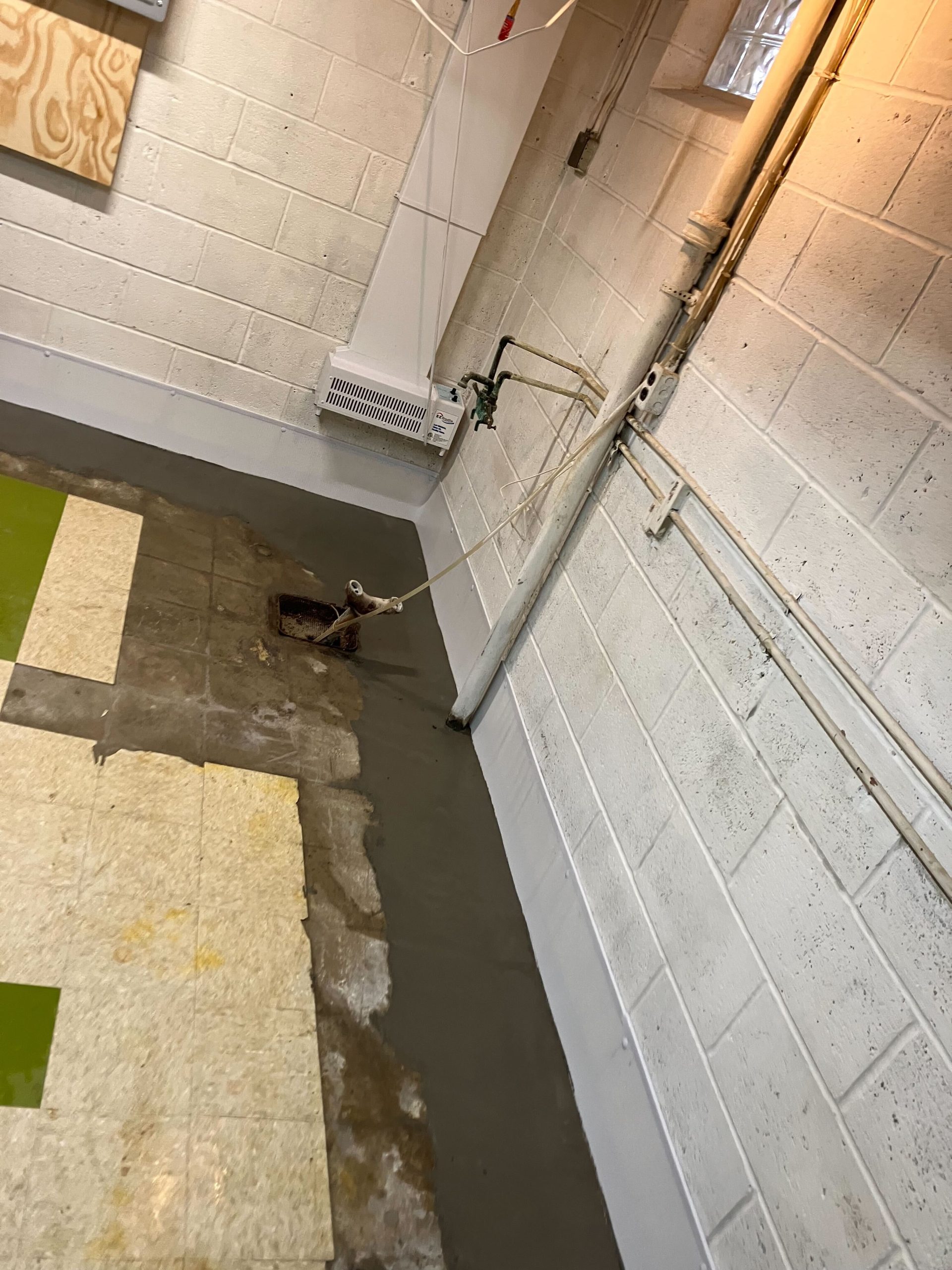
 You’ve just discovered a leak in your basement wall and you’re wondering, can you fix it from the inside? While interior repairs, such as waterproof coatings or sealants, can provide short-term relief, they might not tackle the root cause. Issues like external drainage problems could be the real culprits. To really solve the problem for the long haul, you’d need to identify and fix any cracks, guarantee proper drainage, and perhaps even seek professional advice. But before you roll up your sleeves or pick up the phone, let’s explore this further.
Essential Steps to Fix a Leaking Basement Wall from InsideKey Takeaways
- Yes, you can fix a leaking basement wall from the inside using waterproofing paint, silicate-based sealers, or plastic sheets and panels.
- The DIY approach can be cost-effective, but it requires time and skill, especially for applying waterproof coatings or installing interior vapor barriers.
- Quick fixes like crack injections can be done from the inside, but they may not address underlying issues, such as external water penetration.
- Professional services offer more comprehensive repair options, including installing interior drainage systems, which can be more effective but costlier.
- Regular inspections and preventive measures, like quality insulation and proper drainage, can help prevent future leaks and reduce the need for internal repairs.
Identifying the Source of the Leak
Before you can begin to fix a leaking basement wall, the first and possibly the most vital step, is accurately identifying the source of the leak.
Don’t be misled by the location of wet spots. Water can seep along internal pathways in the wall before appearing several feet away from the source of the problem.
For indoor leaks, look for signs of moisture, such as water stains, mold, peeling paint, or efflorescence – a whitish, powdery deposit of salts.
These signs could indicate a leak from plumbing pipes or appliances, condensation on cold surfaces, or seepage from outside.
If you suspect an outside source, check for saturated soil near the foundation after a heavy rain.
This could indicate a lack of proper drainage or grading. Examine the wall’s exterior for cracks or loose mortar.
Water can infiltrate these spaces, leading to leaks inside.
It’s often challenging to identify the exact source of a leak, but this step is essential.
You don’t want to invest time and money fixing the wrong area. If you’re unsure, consult a professional.
They’ve the experience and tools to accurately diagnose the problem.
Understanding Basement Wall Construction
To fully grasp the nuances of fixing a leaking basement wall, it’s crucial to understand the construction of basement walls. Primarily, these walls are made of concrete, poured in place or concrete blocks, serving as a sturdy barrier between your home and the earth.
Now, within this construction, you’ll find two critical layers that play a significant role in managing water intrusion. First, there’s the waterproofing layer, a coating applied to the exterior of the wall to prevent water penetration. It’s complemented by a drainage system that directs water away from the foundation.
Second, there’s the vapor barrier on the interior of the wall. This layer prevents moisture from the earth from seeping into your basement, contributing to a dry, comfortable living space.
However, despite these preventative measures, issues can arise causing leaks. Understanding these layers and their functions is key to comprehending why leaks occur and how to fix them.
Each layer has a specific purpose and failure in any of these can lead to leakage. Consequently, gaining this understanding puts you one step closer to successfully repairing your leaking basement wall, an endeavor we’ll explore deeper into in subsequent sections.
Assessing the Extent of the Damage
Before you can repair your leaking basement wall, it’s essential to understand the extent of the damage.
You’ll need to identify any cracks in the wall, look for signs of water damage, and evaluate the overall structural integrity of the basement.
This assessment won’t only determine the necessary repairs, but also help prevent future leaks and structural issues.
Identifying Basement Wall Cracks
Cracks in your basement walls can be more than just an eyesore; they may be a sign of serious structural damage. Think of these cracks as warning signs calling for your immediate attention.
To evaluate the severity of the problem, you’ll need to understand the different types of cracks and what they signify.
Vertical or diagonal cracks are typically less worrisome as they’re often caused by settling, a common occurrence in homes. However, horizontal cracks can indicate serious pressure from water or soil against the wall, possibly threatening the stability of your home.
Next, measure the width of the cracks. Hairline cracks aren’t usually a cause for alarm, but any crack that’s wider than 1/8-inch should be inspected by a professional.
Pay special attention to any areas where water is seeping through, as this could be a sign of a more severe problem underneath.
Understanding Water Damage Signs
Diving into the problem, it’s crucial to understand the telltale signs of water damage in your basement. Water damage isn’t always immediately apparent, so you need to stay vigilant for signs of subtle, creeping damage.
First, you should watch for discoloration on your walls or floors. This often appears as yellowish-brown water stains or spots. Peeling paint or wallpaper is another sign that water is seeping into your walls.
Additionally, watch for efflorescence, a white, powdery substance that forms on concrete or brick when water evaporates from the surface.
Next, take notice of any musty smells. Basements are often damp, but a strong, persistent musty odor can indicate a larger moisture problem. Similarly, if you notice mold or mildew growth, this is a clear sign that water is present.
Evaluating Structural Integrity
While it can be distressing to discover signs of water damage in your basement, it’s also essential to evaluate the extent of the damage to the structure of your home. Not all leaks will necessitate thorough structural repairs, but you can’t afford to ignore the possibility.
You’ll need to evaluate the structural integrity of your basement walls and foundation. This includes:
- Checking for cracks: Cracks can be a sign of structural problems. If they’re horizontal or stair-step, you might’ve a serious issue.
- Assessing wall bowing: If your walls are bowing inward, it’s a clear sign of structural damage.
- Noticing efflorescence: White, powdery substance on walls can indicate water seepage.
- Looking for mold: Persistent dampness can lead to mold, which further damages the structure.
- Examining the floor: If you see cracks or unevenness in the floor, it’s a sign of a shifting foundation.
Ignoring these signs could lead to serious problems down the line. It’s imperative to get a professional evaluation if you’re unsure.
Interior Basement Waterproofing Options
You may feel overwhelmed if you discover water seeping into your basement, but don’t worry. There are several interior basement waterproofing options available to you.
Firstly, consider concrete waterproof coatings. These thick cement-like products adhere permanently to concrete and masonry walls. You can’t apply them over painted surfaces, so you’d need to remove existing paint first.
Next, silicate-based concrete sealers, also known as densifiers, are suitable for walls that haven’t been painted or sealed. They react with the ingredients in concrete to form a waterproofing layer. However, they’re not effective on painted walls.
Waterproofing paint is another option. It’s an acrylic formula, not much different from ordinary wall paint. But you’ll need to apply it painstakingly thick.
Lastly, plastic sheets and panels can be used to prevent moisture from entering the basement. They serve as a barrier between the wall and the interior space, diverting water into a drainage system.
DIY Vs. Professional Repair Services
When tackling a leaking basement wall, you’ve got two main options: do it yourself or hire a professional.
Each has its own set of pros and cons, which we’re about to explore.
We’ll also help you evaluate different professional services to guarantee you get the best help possible if you decide to go that route.
DIY Repair: Pros and Cons
Initiating a DIY repair of a leaking basement wall can be both rewarding and challenging.
It’s a hands-on project that gives you the opportunity to put your skills to the test, and when done rightly, it can save you a significant amount of money.
However, there are pros and cons you should consider before delving into this task.
- Pro: Cost-saving– DIY repairs are often cheaper than professional services. You’re only paying for materials, not labor.
- Con: Time-consuming– It demands a substantial amount of your time, especially if you’re not familiar with the process.
- Pro: Skill acquisition– You’ll learn valuable skills that can be useful for future home projects.
- Con: Risk of mistakes– Without professional expertise, there’s a higher chance of making errors which could escalate the problem.
- Pro: Satisfaction– Successfully completing a DIY project can offer immense satisfaction and pride.
Deciding to go the DIY route isn’t a decision to take lightly.
It’s essential to weigh these pros and cons, and consider your skill level, available time, and the seriousness of the leak.
Evaluating Professional Services
Steering through the sea of professional services can be an intimidating task.
You’re facing a leaking basement wall, and while DIY methods might’ve crossed your mind, it’s key to contemplate professional help.
Firstly, let’s look at experience.
Professionals have dealt with myriad basement issues, and they’re equipped to handle unexpected challenges. They’ve seen it all, so you won’t have to worry about them getting stumped by your situation.
Secondly, reflect on the time factor.
While you could spend countless hours researching, planning, buying supplies, and then finally doing the work, professionals will have your basement fixed in a fraction of the time.
Thirdly, the quality of the repair.
Yes, hiring professionals will likely cost more than a DIY fix. However, you’re paying for a solution that will last. Cheap, quick fixes often lead to bigger problems down the line.
Lastly, don’t forget about the warranty.
Many professional services offer warranties on their work. If there’s a problem afterward, they’ll come back and fix it at no additional cost to you.
Make sure to evaluate your options carefully – it’s your home’s structural integrity on the line.
Preventive Measures for Future Leaks
To safeguard your basement against future leaks, it’s crucial to implement preventive measures.
These steps aren’t just about patching up existing leaks; they’re about preventing new ones from forming. This way, you’re proactively solving the problem instead of reactively fixing it.
Here are five preventive measures you can take to protect your basement:
- Proper Drainage: Confirm your home’s drainage system is directing water away from your foundation. Regularly clean and maintain your gutters and downspouts to prevent blockages.
- Landscaping: Grade your yard so that it slopes away from your home. This will help direct runoff water away from your foundation.
- Waterproofing: Apply a waterproofing compound to your basement walls. This barrier can help prevent water from seeping through.
- Insulation: Install quality insulation to help control the temperature and humidity levels in your basement, reducing condensation.
- Regular Inspection: Regularly inspect your basement for signs of leaks, cracks, or any structural issues. Early detection can prevent a small problem from becoming a major repair.
Cost Implications of Interior Basement Repair
Without a doubt, one of the critical considerations when planning for an interior basement repair is the cost. You should be aware that these costs can vary widely depending on the severity of the leak and the method chosen for repair.
Generally, the cost of an interior basement repair can range from a few hundred to several thousand dollars. Simple crack injections using epoxy or polyurethane might cost you around $300 to $500. On the other hand, more extensive repairs, such as installing an interior drainage system, could set you back anywhere from $2,000 to $6,000.
Remember, these costs are just estimates. The actual price can fluctuate depending on your location, the extent of the damage, and the rates of the contractor you hire. Thus, it’s advisable to seek multiple quotes before making a decision.
However, don’t let the expenses deter you. Fixing a leaking basement wall from inside is a worthwhile investment. It not only safeguards your property’s structural integrity but also prevents potential health hazards from mold and mildew growth.
In the long run, it could save you substantial money and stress.
Frequently Asked Questions
What Are the Health Risks Associated With a Leaking Basement Wall?
Sure, a leaking basement wall can pose several health risks.
You’re potentially exposed to harmful molds and mildew, which thrive in damp conditions. These can cause respiratory problems, allergies, and even skin irritations.
Also, persistent dampness can attract pests, leading to infestations.
Finally, a wet basement can lead to structural damage, posing a physical risk to you and your home.
It’s essential to address such issues promptly.
Can a Leaking Basement Affect the Overall Structural Integrity of My House?
Yes, a leaking basement can indeed affect your house’s overall structural integrity.
As they say, a chain is only as strong as its weakest link. Over time, persistent leaks can erode the foundation, causing cracks and instability.
This not only compromises your home’s structure but can also lead to costly repairs.
It’s essential to address any leaks promptly to prevent long-term damage.
Consult a professional if you’re unsure about the severity of the leakage.
How Long Does It Typically Take to Repair a Leaking Basement Wall?
Sure, you can fix a leaking basement wall from the inside.
Depending on the severity of the leak, it typically takes a day or two to repair.
You’ll need to first identify the source of the leak, then seal it using a waterproofing compound.
Keep in mind, you’re only treating the symptom, not the cause.
It’s recommended to also address the exterior issue causing the leak to prevent future problems.
What Are the Signs That the Leaking Basement Is Causing Mold Growth?
You’ll notice a few key signs if a leaky basement is causing mold growth.
Look for discoloration on walls, floors, or possessions. Mold often appears as black, white, or green spots.
You might also smell a musty or damp odor. Increased allergy symptoms or respiratory issues can also indicate mold presence.
It’s essential to address this promptly, as mold can cause health issues and further damage to your home.
Is There Any Insurance Coverage Available for Basement Wall Repairs?
Yes, you can often get insurance coverage for basement wall repairs.
However, it depends on your policy and the cause of the damage.
Standard homeowner’s insurance typically doesn’t cover damage from gradual wear and tear or poor maintenance.
But if the damage is sudden and accidental, like a burst pipe, you’re usually covered.
Always review your policy carefully and consult with your insurance provider to fully understand your coverage.
Conclusion
In principle, you can certainly tackle a leaking basement wall from the inside, but don’t underestimate the task. It’s not just a walk in the park! Understanding the leak’s source, evaluating damage, and choosing the right waterproofing strategy are essential. You might save a penny doing it yourself, but professional help could save you a fortune in the long run. Maintain your basement regularly to avoid this titanic task. Remember, prevention is always cheaper than repair!

Ohio State Waterproofing has provided quality service with over 90,000 successful waterproofing and foundation repair installations and satisfied customers since our inception in 1978.
Ohio State Waterproofing’s philosophy for success is to provide honest, courteous and guaranteed service to every customer. Our reputation reflects this. Our well-trained waterproofing technicians are dedicated to complete customer satisfaction. This is achieved through fast, efficient processes as well as teamwork throughout this organization. You will always find a friendly representative willing to meet your needs at Ohio State Waterproofing.
We are a full service company that handles problems ranging from patching cracks to rebuilding basements. In addition, we hold three patents related to waterproofing that make us unique in the industry. These patents and our experience allow us to be able to do what every other waterproofer can do, but no one else can do what we do.
We are actively involved in the industry and community, including the National Association of Waterproofing Contractors, BHA, NARI, NAHB, NHIA, the BIA, the FHA and a number of consumer advocacy groups, as well as playing leading roles in a number of charitable functions.
But, most importantly, our highest degree of praise comes from the thousands of referrals we get from satisfied customers. Together they’ve made us a leader in the basement waterproofing and foundation repair industry.
