
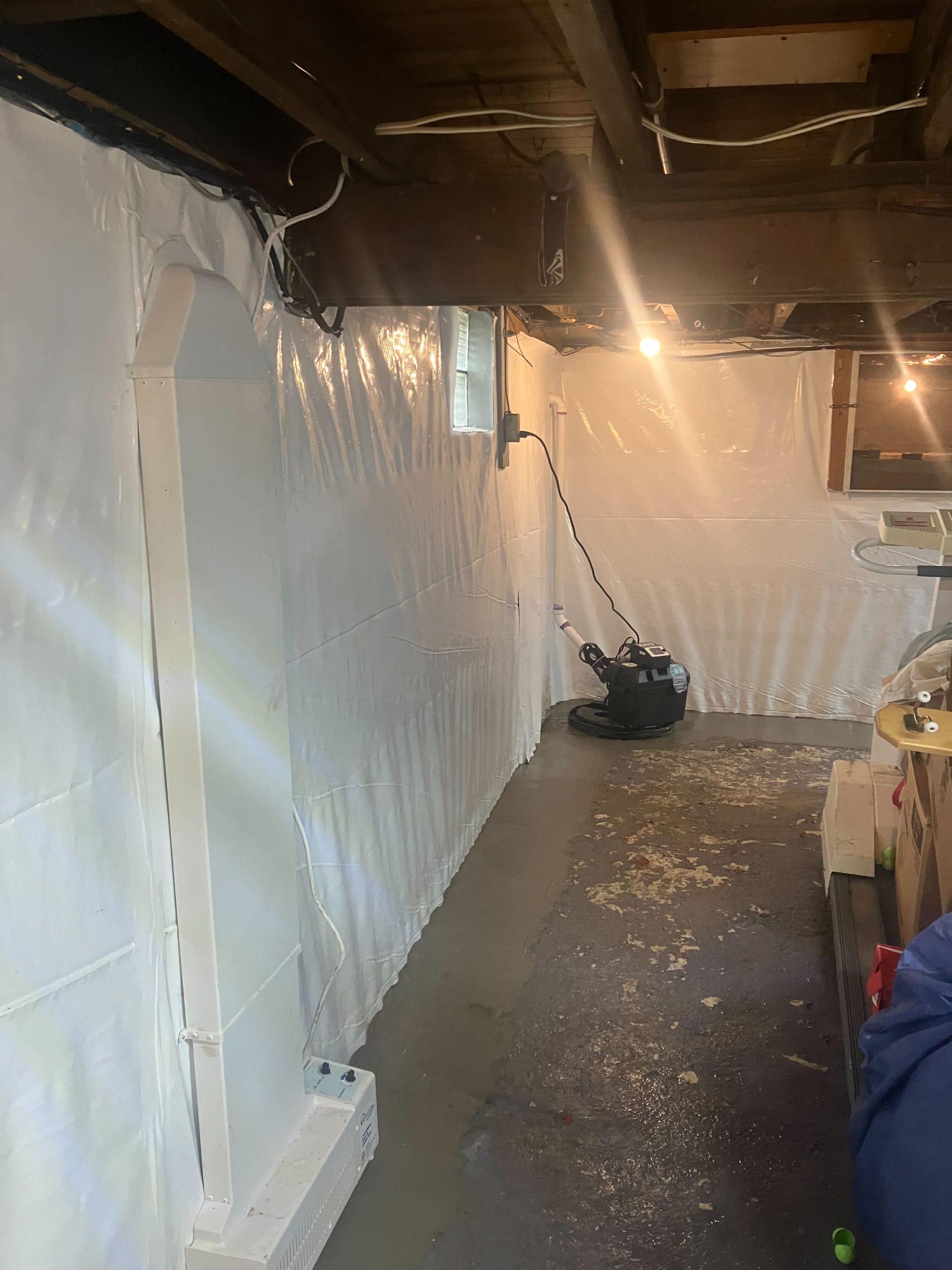
 You’ve installed a vapor barrier in your basement to combat moisture, but have you ever considered that mold might be growing underneath it? Vapor barriers are a great tool for keeping moisture at bay, but if they’re not installed correctly or maintained, they can inadvertently create a hotbed for mold growth. As you ponder on this, you might be wondering, what is the science behind mold formation and how can you prevent it from happening? Let’s explore this together.
Key Takeaways
- Mold can grow under a vapor barrier in a basement if moisture accumulates due to improper installation or barrier damage.
- Selecting puncture-resistant plastic sheeting and securing tightly to walls and floors can prevent moisture seepage and mold growth.
- Regular inspections and maintenance of the vapor barrier help to detect and repair any damage, preventing moisture accumulation.
- Ensuring proper ventilation and using dehumidifiers can manage humidity levels and reduce the risk of mold growing under the vapor barrier.
- Immediate action, like repairing leaks and removing moisture sources, is essential if signs of mold, such as musty odors or health symptoms, are detected.
Understanding Basement Vapor Barriers
Your home’s basement can often be a source of unseen problems, one of which is the need for a vapor barrier.
Vapor barriers, also known as moisture barriers, play a critical role in maintaining your basement’s health. They’re designed to limit the amount of water vapor that seeps into your basement, effectively blocking the dampness that can lead to various issues.
You’ve got to understand, moisture is a basement’s worst enemy. It can cause structural damage, paint peeling, and even attract pests. That’s why vapor barriers are so important. They’re usually made of plastic or foil sheet, and installed on the walls and floor of your basement to prevent moisture entry.
But here’s where it gets tricky. A poorly installed vapor barrier can do more harm than good. It can trap moisture instead of repelling it, creating a perfect environment for mold growth. Yikes!
Conditions Conducive for Mold Growth
Three critical factors contribute to mold growth in your basement: moisture, warmth, and organic material.
These elements, when combined, create the perfect breeding ground for mold. Let’s explore these factors more specifically.
- Moisture: Mold spores thrive in damp conditions. Whether it’s from a leaky pipe, condensation, or high humidity, water seeping into your basement provides the ideal environment for mold.
It’s important to keep your basement dry to prevent mold growth.
- Warmth: Mold also loves warm environments. If your basement isn’t well ventilated, heat can build up, especially during the summer months.
This warmth, combined with moisture, can lead to rapid mold growth.
- Organic Material: Finally, mold needs something to feed on. Organic materials, such as wood, fabric, or even dust, can provide the necessary nutrients for mold to grow.
Vapor Barriers and Moisture Control
You may be wondering, “What’s the deal with vapor barriers and how do they control moisture?”
Well, it’s crucial to understand these barriers to address potential basement moisture problems.
Armed with this knowledge, you can effectively prevent mold growth and maintain a healthy, dry basement.
Understanding Vapor Barriers
A significant number of homeowners struggle with understanding vapor barriers and their role in moisture control. You’re not alone if you’re one of them.
In simplest terms, a vapor barrier is a material used to resist the migration of water vapor. They’re typically used in basements and crawl spaces to control moisture and prevent mold growth.
To help you grasp the concept, here are three critical points about vapor barriers:
- Material: Vapor barriers are commonly made from plastic or specially coated paper. The material is designed to be impermeable to water vapor, hence, preventing moisture from passing through.
- Location: You’ll typically find them installed on the warm side of a wall, floor, or ceiling. This is to prevent the moisture from condensing inside the insulation, which could lead to mold problems.
- Function: The main purpose of a vapor barrier is to prevent water vapor from diffusing into the wall, floor, or ceiling. By doing so, it reduces the risk of structural damage and mold growth.
Understanding vapor barriers is the first step in effective moisture control.
Now, let’s move on to discussing basement moisture problems.
Basement Moisture Problems
Often, the unseen enemy in your basement is moisture. It’s a silent intruder that can lead to serious problems. If not handled properly, it can cause damage to your property and may even lead to health issues.
Understanding the source of moisture is the first step towards combating it. It can seep in from the outside through cracks in the walls or foundation, or it can come from inside your home. Activities like cooking, showering, or even breathing can increase humidity levels, causing condensation.
Basement moisture can also result from plumbing leaks or inadequate ventilation.
Once moisture penetrates your basement, it can lead to mold growth, especially under vapor barriers where it can get trapped. Besides being unsightly, mold can cause respiratory problems and other health issues.
Additionally, excessive moisture can cause materials to deteriorate, leading to structural damage.
Installing a vapor barrier can help control moisture levels in your basement. However, it’s crucial to verify it’s installed correctly to avoid trapping moisture, which can lead to mold growth.
You’ll also need to address the sources of moisture to guarantee your basement remains dry and mold-free.
Mold Growth Prevention
Wondering how to prevent mold growth in your basement? Well, you’re in luck. The primary key to mold prevention lies in moisture control.
It’s crucial to guarantee that your basement stays dry and well-ventilated. Here are three steps to keep mold at bay:
- Install a Vapor Barrier: Vapor barriers are instrumental in preventing moisture from seeping into your basement. They work by blocking the passage of water vapor, which can lead to mold growth if left unchecked.
- Guarantee Proper Ventilation: Proper ventilation can greatly cut down on moisture levels in your basement. You can increase ventilation by installing exhaust fans or using dehumidifiers.
- Regularly Check for Leaks: Regular inspections can help you catch any potential leaks early on. This step is important as leaks are often a leading cause of increased moisture levels.
Can Vapor Barriers Cause Mold?
You might be wondering, can vapor barriers actually cause mold?
To understand this, we’ll look at how vapor barriers impact humidity levels and the factors that encourage mold growth.
Then, we’ll discuss ways to prevent moisture accumulation, a key contributor to mold formation.
Vapor Barriers and Humidity
Understanding the relationship between vapor barriers and humidity is essential in managing potential mold issues in your basement.
Vapor barriers play a vital role in controlling the amount of moisture that enters your basement. However, if not installed properly, they can trap humidity, creating a favorable environment for mold growth.
If the humidity level in your basement becomes too high, it can lead to condensation, especially on cooler surfaces. This water can get trapped behind the vapor barrier, leading to a damp environment conducive to mold growth.
You can mitigate this by:
- Ensuring proper installation: Hire a professional or follow rigorous guidelines if you’re installing a vapor barrier yourself. It should be installed on the warm side of your insulation to prevent condensation.
- Maintaining appropriate humidity levels: A dehumidifier can help control humidity levels in your basement, preventing the buildup of moisture.
- Regularly inspecting for leaks: By routinely checking your vapor barrier for leaks or damage, you can address problems before they escalate into serious mold issues.
Mold Growth Factors
While correctly installed vapor barriers can considerably reduce moisture intrusion in your basement, they can inadvertently foster mold growth under certain conditions. This happens when the barrier traps moisture instead of directing it out, creating a damp, stagnant environment.
It’s crucial to understand that mold needs three key factors to grow: moisture, warmth, and organic material to feed on.
Your basement’s insulation can provide the warmth and organic material mold needs. When combined with trapped moisture from a poorly installed vapor barrier, it’s a perfect breeding ground for mold. This can lead to health hazards, structural damage, and unpleasant odors.
Vapor barriers aren’t the only cause of mold, though. Any sources of moisture, like leaks or condensation, can also lead to mold growth if they aren’t addressed promptly. Additionally, high humidity levels can add to the problem.
Preventing Moisture Accumulation
Although vapor barriers can potentially foster mold growth under certain conditions, this issue can be mitigated with proper installation and maintenance.
Excess moisture accumulation behind the vapor barrier is the real culprit that encourages mold growth. So, your primary focus should be on preventing this moisture buildup.
Here are three measures you can take to prevent moisture accumulation:
- Proper Installation: Make certain that your vapor barrier is installed correctly. It should cover the entire surface of your basement walls and floor, with no gaps or tears. This effectively seals off the area from outside moisture.
- Regular Maintenance: Don’t just install the barrier and forget about it. Regularly inspect it for damage and repair any issues immediately. This prevents moisture from seeping in through any cracks or holes.
- Controlled Humidity: Keep your basement’s humidity levels under control. Consider using a dehumidifier if necessary. High humidity can lead to condensation on the barrier’s surface, which can then seep behind it and cause mold growth.
The Science Behind Mold Formation
Mold, a relentless intruder, thrives in damp, dark environments. It’s a microscopic organism that’s always present, both indoors and outdoors. When conditions are just right, it can quickly become a problem in your basement.
Here’s the science behind it. Mold releases tiny spores into the air. These spores are like seeds, looking for the perfect place to grow. They need three things: moisture, a food source, and the right temperature. Your basement can provide all three.
Any organic material can serve as food for mold. That includes wood, paper, carpet, and even some types of paint. As for temperature, molds prefer the same range that we humans do.
The real key, however, is moisture. Without it, mold can’t grow. That’s why basements, which can be damp and humid, are prime real estate for mold. If there’s a leak or if the humidity level is high, you’re basically rolling out the welcome mat for mold.
A vapor barrier can help manage this moisture, but it’s not a magic bullet. Remember, where there’s moisture, there’s a potential for mold.
Proper Installation of Vapor Barriers
You might think installing a vapor barrier is a simple solution to prevent mold growth in your basement.
While this is partly true, it’s essential to make sure the vapor barrier is installed correctly. If not, you’re simply creating a hidden space for mold to thrive.
Let’s explore the three key steps you need to follow to properly install a vapor barrier:
- Choose the right material: Not all vapor barriers are created equal. You need to select a plastic sheeting that’s durable, resistant to punctures, and at least 6 mil thick.
- Seal it tight: It’s not enough to just lay the vapor barrier down. You need to secure it tightly to the walls and floors, making sure no gaps or openings. A good sealant is your best friend here.
- Overlap and tape seams: Overlap the sheets by at least 12 inches and seal the seams with a strong, waterproof tape. This prevents any moisture from sneaking in.
Common Signs of Basement Mold
It’s vital to know what to look for when it comes to mold in your basement. Mold can grow undetected for a long time, causing damage to your home and potentially leading to health problems.
Here are some common signs you’ve got a mold problem:
| Sign | Description | Why It’s a Problem |
|---|---|---|
| Musty Odor | This is often the first sign. Mold has a distinct, unpleasant smell. | Mold can be hidden behind walls or under floors. If you smell it, it’s there. |
| Visible Growth | You may see black, white, or green spots. They can be small or spread over a large area. | Visible mold shows an active colony that’s releasing spores into your air. |
| Health Symptoms | Allergies, respiratory issues, or unexplained illnesses could indicate mold. | Mold can trigger serious health problems, especially in those with mold allergies or asthma. |
If you notice any of these signs, don’t ignore them. Take action immediately to identify the extent of the problem and remove the mold. Remember, the longer you wait, the worse it can get. It’s important to catch these early warnings to prevent further damage and protect your health.
Preventing Mold Growth Under Vapor Barriers
When your home’s basement is at stake, taking steps to prevent mold growth under vapor barriers becomes a priority.
It’s an issue that can cause serious harm to your home’s structure and your family’s health.
But don’t worry, with a bit of diligence and knowledge, you can keep your basement mold-free.
- Ensure Good Ventilation: One of the best ways to prevent mold is by ensuring adequate ventilation.
This helps reduce the humidity levels, denying mold its preferred environment.
Install vents or use dehumidifiers to help circulate air and control moisture levels.
- Regular Maintenance: Keep a close eye on your vapor barrier and the surrounding area.
Make sure it’s intact and properly sealed.
Regular inspections and prompt repairs can nip any potential mold problem in the bud.
- Control Water Intrusion: Excess water is a mold’s best friend.
Manage any possible water leaks from pipes, ground water seepage, or condensation.
A well-maintained drainage system and water leak repairs will go a long way in mold prevention.
Risks and Remedies of Basement Mold
Despite your best prevention efforts, sometimes mold can still find its way underneath your basement’s vapor barrier. This occurrence may pose serious health risks such as respiratory problems, allergies, and even neurological issues. It’s a situation you can’t ignore.
Identifying mold is the first step. It’s usually black, green, or white and can have a musty smell. If you spot it, don’t panic. There are remedies available. The first and most essential step is to remove the cause of the moisture. Without dampness, mold can’t survive.
Next, consider hiring professionals to guarantee a thorough job. They’ll not only remove the mold but also sanitize the area, preventing future growth.
However, if you’re dealing with a small infestation, you might decide to tackle it yourself. Use a mixture of water and bleach, scrubbing the area vigorously. Make sure you’re wearing protective gear to avoid direct exposure.
Lastly, make sure your basement is well-ventilated and dry. A dehumidifier can be a great help in maintaining low humidity levels.
Additionally, periodic checks for leaks or damp spots can prevent future mold growth. Remember, your health is worth the effort.
Frequently Asked Questions
What Are the Health Risks Associated With Mold Exposure in the Basement?
You’re at risk of allergies, respiratory issues, and infections from mold exposure in your basement. It’s essential you keep your basement dry and well-ventilated to prevent mold growth and protect your health.
Can I Install a Vapor Barrier in My Basement by Myself?
Yes, you can install a vapor barrier in your basement yourself. It’s a manageable DIY project, but you’ll need the right materials and follow proper installation methods. Make certain you’re diligent to prevent future moisture problems.
What Are Some Natural Remedies to Remove Mold From Basements?
Sure, you can utilize natural remedies to remove mold from your basement. Vinegar, baking soda, and tea tree oil are effective options. Simply apply them to the mold, let sit, then scrub away. Always guarantee adequate ventilation.
How Often Should I Inspect My Basement for Mold Growth?
You should inspect your basement for mold growth at least once a month. If you’re noticing a persistent damp smell or increased allergies, you might need to check more frequently. Don’t neglect this important task.
Is It Necessary to Hire a Professional for Mold Remediation in the Basement?
Yes, it’s necessary to hire a professional for mold remediation in your basement. They’ve got the right tools and knowledge to safely remove mold, preventing future growth and protecting your home’s structural integrity and air quality.
Conclusion
So, can mold grow under your basement’s vapor barrier? Absolutely, if conditions allow. But don’t panic! You can prevent this by correctly installing the barrier, controlling humidity, and regularly inspecting for damage. Spot signs of mold early to mitigate risks. Remember, a little effort now can save you a lot of trouble later. Keep your basement dry and mold-free, ensuring a safe and healthy space for you and your family.

Ohio State Waterproofing has provided quality service with over 90,000 successful waterproofing and foundation repair installations and satisfied customers since our inception in 1978.
Ohio State Waterproofing’s philosophy for success is to provide honest, courteous and guaranteed service to every customer. Our reputation reflects this. Our well-trained waterproofing technicians are dedicated to complete customer satisfaction. This is achieved through fast, efficient processes as well as teamwork throughout this organization. You will always find a friendly representative willing to meet your needs at Ohio State Waterproofing.
We are a full service company that handles problems ranging from patching cracks to rebuilding basements. In addition, we hold three patents related to waterproofing that make us unique in the industry. These patents and our experience allow us to be able to do what every other waterproofer can do, but no one else can do what we do.
We are actively involved in the industry and community, including the National Association of Waterproofing Contractors, BHA, NARI, NAHB, NHIA, the BIA, the FHA and a number of consumer advocacy groups, as well as playing leading roles in a number of charitable functions.
But, most importantly, our highest degree of praise comes from the thousands of referrals we get from satisfied customers. Together they’ve made us a leader in the basement waterproofing and foundation repair industry.

