
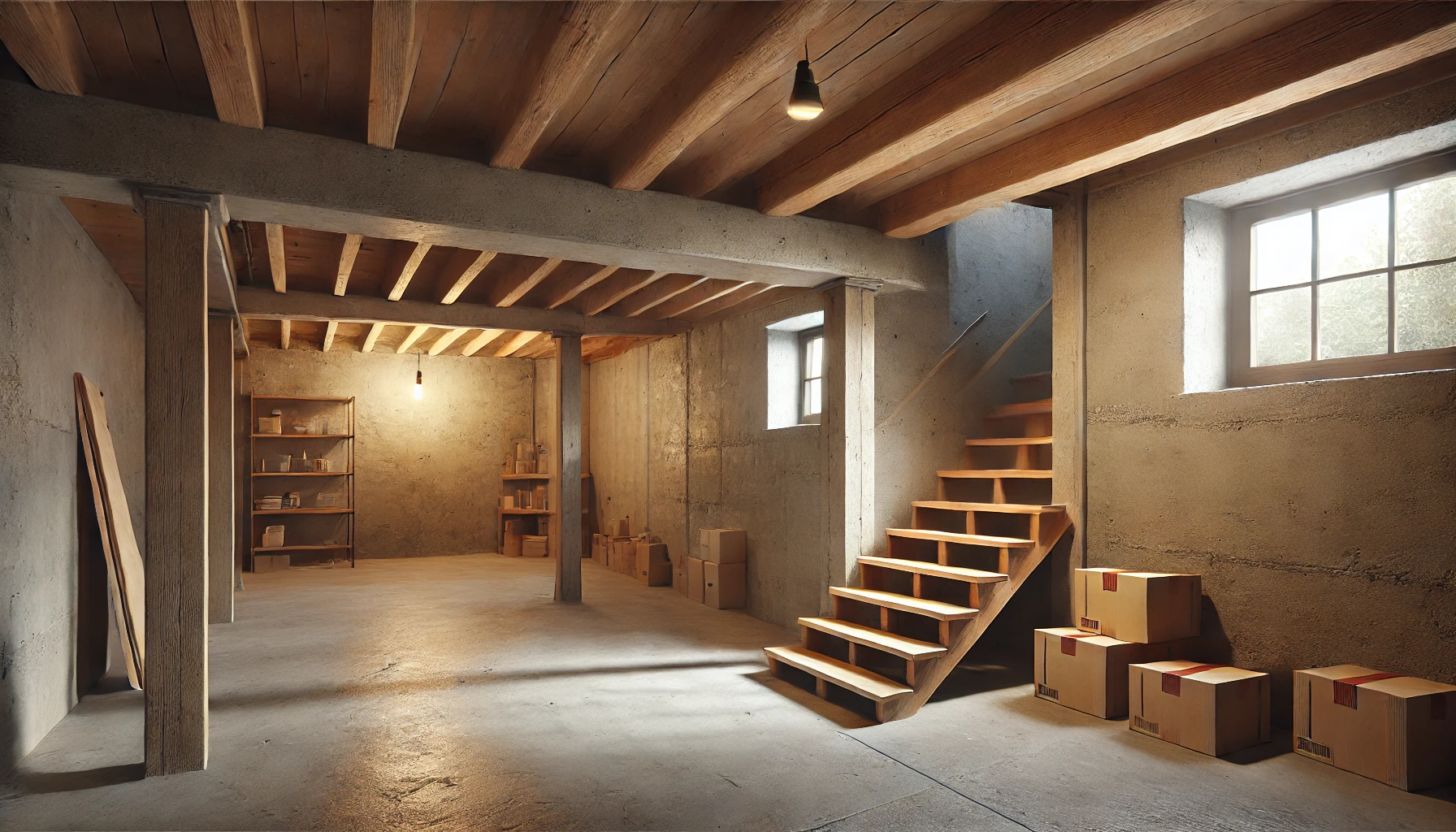
 Dealing with a damp, musty basement? You’re not alone, and there’s more at stake than just comfort. Persistent moisture can lead to mold growth and structural damage. So, how do you permanently remove moisture from your basement? You might think it’s as simple as buying a dehumidifier, but it’s actually a more complex issue involving drainage, waterproofing, and even the materials you choose for your walls and floors. Stick around, as we’re about to shed some light on these essential steps and more.
Key Takeaways
- Implement regular ventilation and consider installing a dehumidifier to maintain ideal humidity levels.
- Waterproof your basement using methods such as sealing walls and installing a sump pump.
- Install moisture-resistant materials like concrete flooring, cement board walls, and closed-cell spray foam insulation.
- Perform regular maintenance and inspections, looking for cracks or signs of moisture and addressing them promptly.
- Seek professional services for accurate diagnosis and long-term moisture control strategies.
Understanding Basement Moisture Causes
Creeping in unnoticed, moisture can turn your basement into a damp, musty nightmare.
You’ll start to notice a musty smell, patches of damp on the walls, or even the growth of mold. But where’s all this moisture coming from? Let’s get that figured out.
The primary culprit is typically condensation.
When warm, humid air comes into contact with your cool basement walls and floors, it condenses, building up over time and causing dampness. This can be particularly problematic during hot, humid summer months.
Another common cause is groundwater.
If your home’s built on a high water table or your area experiences heavy rainfall, water can seep into your basement through cracks in the walls or floor. You’re particularly vulnerable if your basement’s not properly waterproofed.
Lastly, internal sources of moisture, like your washing machine, dryer, or even a basement shower can add to the problem.
These appliances produce steam, which adds to the humidity level in your basement.
Understanding these causes is the first step towards a dry, comfortable basement.
Now that you’re equipped with this knowledge, you can start taking steps to combat this moisture invasion.
Importance of Proper Ventilation
Having a clear understanding of what causes basement moisture, you’re now ready to tackle the issue head-on. One of the most effective ways to reduce moisture is by properly ventilating your basement. Let’s explore why this is so critical.
When you improve basement ventilation, you’re promoting airflow. This airflow helps to evaporate any standing water or condensation, reducing the overall moisture levels.
But that’s not all. Ventilation also helps control the temperature, reducing the chances of cold spots where condensation can form.
Furthermore, good ventilation can improve air quality by reducing mold and mildew caused by dampness. These spores aren’t only harmful to your home, but they can also affect your health.
However, it’s not just about opening a window or two. It’s about strategic placement of vents, and sometimes, the use of fans to guarantee circulation reaches every corner.
Also, remember that ventilation is a continuous process. You can’t just do it once and forget about it.
Installing a Dehumidifier
Almost every basement can benefit from a dehumidifier. This handy gadget works by sucking in air, removing the moisture, and then blowing the dry air back out. It’s like having a tiny, power-efficient air conditioner just for your basement!
You’ll find two types of dehumidifiers on the market: refrigerant (or compressor) and desiccant. Refrigerant dehumidifiers are more common and work best in warmer climates, while desiccant ones excel in cooler, less humid environments. Choose the one that’s right for your location and basement conditions.
Installing a dehumidifier isn’t as hard as you might think. First, you’ll need to pick a spot. It should be somewhere with good airflow, and away from walls or furniture. That way, it can effectively pull in and pump out air.
Once you’ve picked your spot, just plug it in, set your desired humidity level (usually between 30% and 50%), and let it get to work.
Basement Waterproofing Techniques
While a dehumidifier is a great tool for managing dampness, you can take a step further to keep your basement dry by employing waterproofing techniques. These methods are designed to prevent water from entering your basement, even in heavy rain or snow.
Firstly, consider sealing your basement. This involves applying a waterproof coating to the interior walls and floors. It’s a quick fix and can be done DIY, but it’s not always a permanent solution as it can’t stop water from pushing through the walls from outside.
Secondly, you might want to think about exterior waterproofing. This is a more thorough and long-lasting technique, but also more costly and complex. It involves excavating around your home to apply a waterproof layer to the exterior basement walls. This keeps water away from the foundation of your house, stopping it from ever reaching your basement.
Lastly, a sump pump can be installed. This is a device that collects water in your basement and pumps it away from your house. It’s particularly effective in areas prone to flooding.
With these techniques, you can keep your basement permanently dry and protect your home from potential water damage.
Using Moisture-Resistant Materials
You’re now ready to tackle the next step: using moisture-resistant materials in your basement.
It’s essential to choose the right materials that can withstand damp conditions.
Additionally, implementing effective moisture barriers is a game-changer in keeping your basement dry.
Choosing the Right Materials
When dealing with a damp basement, your choice of materials can make a significant difference. It’s not just about choosing a material that looks good; it’s about choosing a material that’s resistant to moisture and can withstand the damp conditions of your basement.
Start with your flooring. Concrete or ceramic tiles are excellent choices as they’re naturally resistant to moisture. If you’re after a more homely feel, opt for moisture-resistant laminate or vinyl flooring.
When it comes to your walls, consider using moisture-resistant drywall or cement board. Unlike traditional drywall, these materials don’t absorb water, which can prevent the growth of mold and mildew.
Your choice of insulation is also vital. Closed-cell spray foam insulation works best in damp basements as it’s impermeable to water, unlike traditional fiberglass insulation.
Remember, it’s not enough to just pick moisture-resistant materials. You also need to make sure they’re correctly installed to maximize their effectiveness. Incorrect installation can lead to gaps and cracks, which can let moisture seep in.
As a result, it might be worth hiring a professional to do the job.
In the next section, we’ll talk about implementing moisture barriers to further protect your basement.
Implementing Moisture Barriers
Having made the right material choices for your basement, another effective step to prevent unwanted moisture is the implementation of moisture barriers.
Moisture barriers, or vapor barriers, are materials designed to resist the passage of water vapor. They’re often made from plastic or foil sheeting, and they’re a must-have in any basement moisture-proofing strategy.
Firstly, you’ll need to install these barriers on the walls and floor of your basement. When you’re applying them, make sure they’re tightly sealed and that there are no gaps or holes.
Water has a sneaky way of finding the smallest crevices, so you’ll want to be thorough.
Next, consider moisture-resistant insulation. It’s not enough to just block moisture; you’ve got to keep it from seeping in the first place.
Moisture-resistant insulation will help with this, providing an added layer of protection.
Lastly, don’t forget about your basement’s exterior. Waterproofing the outside can drastically reduce the amount of moisture that makes its way inside.
Landscaping to Avoid Water Seepage
Sloping your landscape away from your home’s foundation is a key step in preventing water seepage into your basement. When rain falls, you want it to flow away from your house, not toward it. This simple yet effective technique can make a significant difference in moisture control.
Consider adding gutters and downspouts to your home if you haven’t already. These tools can direct water away from your foundation, further reducing the risk of seepage. Confirm these are clean and unblocked for maximum efficiency.
However, landscaping isn’t just about practicality. It’s also an opportunity to enhance your home’s curb appeal. Why not add a beautiful rain garden or a gravel-filled trench known as a French drain? These features can be both functional and aesthetically pleasing.
| Landscaping Method | Emotion Evoked |
| Slope away from foundation | Empowerment |
| Gutters and downspouts | Assurance |
| Rain garden | Joy |
| French drain | Satisfaction |
| Regular cleaning | Peace of mind |
Regular Basement Maintenance Tips
Consistency, your secret weapon in the battle against basement moisture, can transform your basement from a damp, unpleasant space into a dry, welcoming one.
Regular maintenance is key, and it’s easier than you may think.
First, keep your gutters clean. Overflowing gutters can lead to water seeping into your basement. It’s a simple step, but it’s essential to keep the water flow away from your home’s foundation.
Don’t forget to check them after heavy rain or wind, as debris can accumulate quickly.
Next, don’t underestimate the power of a good dehumidifier. It’s an affordable solution that can make a significant difference in your basement’s humidity level.
Run it regularly, especially during the hotter months when humidity tends to be higher.
Inspect your basement walls and floor for cracks regularly. Small cracks can turn into major problems if left untreated.
Use a quality sealant for any cracks you find, and remember, it’s better to prevent than to repair.

Ohio State Waterproofing has provided quality service with over 90,000 successful waterproofing and foundation repair installations and satisfied customers since our inception in 1978.
Ohio State Waterproofing’s philosophy for success is to provide honest, courteous and guaranteed service to every customer. Our reputation reflects this. Our well-trained waterproofing technicians are dedicated to complete customer satisfaction. This is achieved through fast, efficient processes as well as teamwork throughout this organization. You will always find a friendly representative willing to meet your needs at Ohio State Waterproofing.
We are a full service company that handles problems ranging from patching cracks to rebuilding basements. In addition, we hold three patents related to waterproofing that make us unique in the industry. These patents and our experience allow us to be able to do what every other waterproofer can do, but no one else can do what we do.
We are actively involved in the industry and community, including the National Association of Waterproofing Contractors, BHA, NARI, NAHB, NHIA, the BIA, the FHA and a number of consumer advocacy groups, as well as playing leading roles in a number of charitable functions.
But, most importantly, our highest degree of praise comes from the thousands of referrals we get from satisfied customers. Together they’ve made us a leader in the basement waterproofing and foundation repair industry.
