
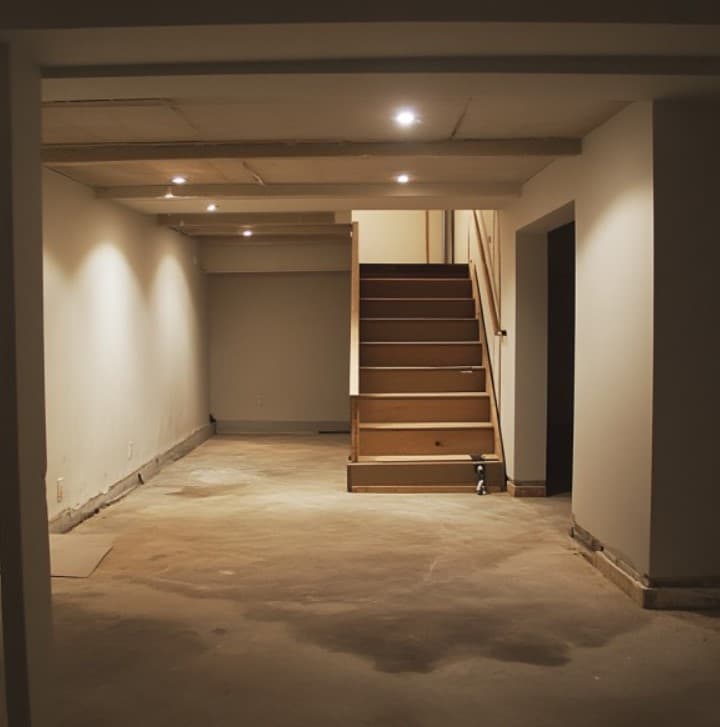
 Just as a submarine needs a watertight hull to withstand the pressures of the deep sea, your basement might require a moisture barrier behind its drywall to combat the persistent dampness inherent to subterranean spaces.
You’re probably aware of the potential damage caused by water seeping through your walls, but you might not know the best way to prevent it. Is amoisture barrierthe secret weapon you’ve been missing? Or, is it an unnecessary addition that’s not worth your time and money?
Let’s explore this issue further and help you make an informed decision.
Key Takeaways
- Basements are susceptible to moisture issues due to being the lowest point in a home and potential sources of ground moisture.
- Moisture barriers act as a protective shield against moisture seepage and are essential, especially in basements below-ground level.
- Installing a moisture barrier before hanging drywall helps prevent moisture from seeping into walls and affecting indoor air quality.
- Factors such as geographical location, climate, current basement conditions, and plans for the space should be considered when determining the need for a moisture barrier in a basement.
Understanding Moisture Barriers
To grasp the importance of moisture barriers, you need to understand that they act as a protective shield,preventing moisture from seeping into your basementdrywall. It’s like a raincoat for your walls, keeping the unwanted dampness out.
Water can be a real nightmare when it comes to your basement. It can seep into the drywall, causing mold and mildew, and even structural damage over time. That’s where moisture barriers come in. They’re made from plastic or foil sheeting, and you apply them directly to the basement walls before hanging the drywall. This keeps the moisture from ever reaching your walls in the first place.
Now, you might be wondering if you really need a moisture barrier in your basement. The answer is a resounding yes if any part of your basement is below ground level. This is because soil naturally holds moisture, and it can easily seep through the concrete of your basement walls. So, to keep yourbasement dryand your drywall safe, a moisture barrier is a must. It’s a small step that can save you a lot of time, money, and hassle down the line.
The Role of Basements in Home Moisture
Having discussed the importance of moisture barriers in your basement, let’s now explore why basements play a vital role in home moisture management. Your basement isn’t just a bonus space or storage area. It’s a key player in your home’s overall health, especially when it comes to managing moisture.
- Moisture Source: Your basement is the lowest point in your home. This means it’s naturally prone to ground moisture and potential flooding. It’s a primary source ofhome moisture that needs effective management.
- Condensation Hub: Basements are often cooler than the rest of the house. This temperature difference can lead to condensation, resulting in unwanted moisture that can trigger mold growth.
- Air Circulation: Since air circulates upwards, moist air from the basement can spread to other parts of your home. This could affect your indoor air quality and lead to problems like mold and mildew elsewhere in the house.
- Structural Integrity: Persistent moisture can wreak havoc on your home’s structural integrity. It can lead to wood rot, corrosion, and other damage if not properly controlled.
Moisture Barrier Vs. Drywall: a Comparison
In comparing a moisture barrier and drywall, it’s essential tounderstand how each one functions in your basementto protect your home from unwanted moisture and potential damage. A moisture barrier, as its name suggests, is designed to prevent moisture from seeping into your basement walls. Typically made from plastic or foil sheet, it’s placed behind the drywall to stop anywater vapor from coming into contact with the basement walls.
On the other hand, drywall, while not inherently waterproof, is a durable material that can effectively resist moisture up to a point. It’s made from a panel of gypsum plaster sandwiched between two thick sheets of paper. However, when exposed to substantial amounts of water or humidity over time, drywall can absorb moisture, leading to problems like mold, mildew, and structural damage.
Therefore, while drywall can withstand some moisture, it’s not enough to protect yourbasement from high humidity levels or potential leaks. That’s where a moisture barrier comes in handy. By installing a moisture barrier behind your drywall, you’ll provide an extra layer of protection against moisture damage. This combination offers a practical and effective solution to keep your basement dry and your home healthy.
Steps to Install a Moisture Barrier
Now that we’ve established the importance of a moisture barrier behind your drywall, let’s walk through the steps you’ll need to follow to install one. This process is fairly straightforward, but it will require your attention to detail to ensure it’s done right.
- Measure and Cut:Start by measuring the walls you’re going to install the barrier on. Once you’ve got the dimensions, cut your moisture barrier material to fit. It’s better to have a little extra than not enough, so aim to cut slightly larger than your measurements.
- Attach the Barrier:Use a staple gun or special adhesive to attach the barrier to your wall. Make sure it’s secure and covers the entire area to prevent any moisture from seeping through.
- Seal the Seams:Overlay the edges of each sheet by a few inches and use a moisture-resistant tape to seal the seams. This step is crucial to prevent moisture from finding its way through the cracks.
- Install the Drywall:Finally, you’re ready to install your drywall over the barrier. Remember, the barrier goes behind the drywall, between it and the wall studs.
Following these steps will ensure that your basement stays dry and free from potential water damage.
Deciding If Your Basement Needs One
You might be wondering if your basement really needs a moisture barrier behind the drywall. The decision depends on several key factors.
Firstly, consider your geographical location. If you live in an area with high humidity or frequent rainfall, installing a moisture barrier is a wise precaution. This barrier willprevent moisture from seeping through the walls and causing mold, mildew, and potential structural damage.
Next, assess the current condition of your basement. If it’s already damp or has a history of water problems, a moisture barrier is a good idea to prevent further damage.
Lastly, consider your future plans for the space. If you’re planning on finishing your basement and turning it into a living space, a moisture barrier is a must. It’s far easier to install this barrier during initial construction than to retrofit it later on.
Frequently Asked Questions
What Types of Moisture Barriers Are Available on the Market?
You’ve got a few options when it comes to moisture barriers. Polyethylene sheeting is a common choice due to its affordability and effectiveness.
Vapor barrier paint is another option; it’s easy to apply and works well in tight spaces.
There’s also foil-faced insulation, which serves as a barrier and insulator.
Lastly, you can consider rigid foam insulation. It’s pricier, but works well in basements where space isn’t an issue.
How Often Should I Replace My Basement’s Moisture Barrier?
You don’t typically need to replace your basement’s moisture barrier unless it’s damaged. If you notice signs of water infiltration like dampness, mold, or mildew, it’s time to check your barrier.
It’s also a good idea to inspect it every few years, just to be safe. If there’s any damage, you should replace it immediately to prevent moisture problems.
Ensure you choose a high-quality barrier to reduce the likelihood of needing replacements.
Can I Install a Moisture Barrier Behind Drywall by Myself, or Should I Hire a Professional?
Yes, you can install a moisture barrier behind drywall by yourself. It’s a doable DIY project if you’re handy and patient. However, if you’re unsure about the process or lack the necessary tools, it’s wise to hire a professional. They’ll ensure the barrier is installed correctly, preventing potential moisture damage.
What Are the Potential Consequences of Not Installing a Moisture Barrier in My Basement?
Without a moisture barrier, you’re risking serious damage. Studies show that nearly 60% of basements have a moisture problem. That excess moisture can cause your drywall to warp and rot, leading to expensive repairs.
It can also encourage mold growth, which is a health hazard. So, it’s not just your wallet at risk, but the wellbeing of your home and family. Installing a moisture barrier could save you a lot of headaches down the line.
Are There Any Alternatives to Using a Moisture Barrier Behind Drywall in a Basement?
Yes, there are alternatives to using a moisture barrier behind drywall in your basement. Instead of traditional moisture barriers, you could use water-resistant drywall or ‘green board’.
Additionally, you might consider basement wall systems that have built-in moisture barriers. However, it’s important to assess your basement’s specific needs and remember that these alternatives may not provide the same level of protection as a dedicated moisture barrier.
Conclusion
So, does your basement need a moisture barrier behind the drywall?
It’s a toss-up, depending on your home’s environment and the basement’s moisture levels. You’ve learned the role, the differences, and theinstallation process.
The final decision is now in your hands. Don’t rush it. Weigh out the pros and cons, but remember, it’s better to be safe than sorry. A dry, mold-free basement is worth the effort.

Ohio State Waterproofing has provided quality service with over 90,000 successful waterproofing and foundation repair installations and satisfied customers since our inception in 1978.
Ohio State Waterproofing’s philosophy for success is to provide honest, courteous and guaranteed service to every customer. Our reputation reflects this. Our well-trained waterproofing technicians are dedicated to complete customer satisfaction. This is achieved through fast, efficient processes as well as teamwork throughout this organization. You will always find a friendly representative willing to meet your needs at Ohio State Waterproofing.
We are a full service company that handles problems ranging from patching cracks to rebuilding basements. In addition, we hold three patents related to waterproofing that make us unique in the industry. These patents and our experience allow us to be able to do what every other waterproofer can do, but no one else can do what we do.
We are actively involved in the industry and community, including the National Association of Waterproofing Contractors, BHA, NARI, NAHB, NHIA, the BIA, the FHA and a number of consumer advocacy groups, as well as playing leading roles in a number of charitable functions.
But, most importantly, our highest degree of praise comes from the thousands of referrals we get from satisfied customers. Together they’ve made us a leader in the basement waterproofing and foundation repair industry.
