
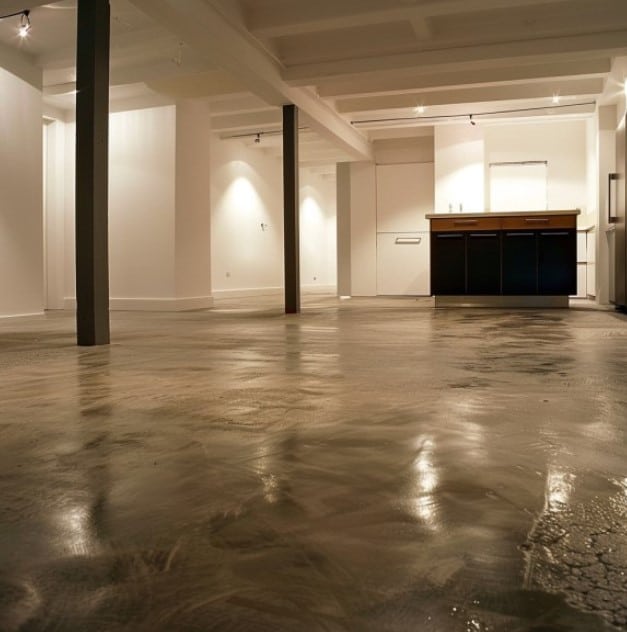
Isn’t it a nightmare when your basement becomes a mini lake after a heavy rainfall? You’re not alone. Many homeowners face the daunting task of bailing out water and salvaging belongings from their flooded basements.
It’s not just an inconvenience; it poses serious risks to your home’s structural integrity and can harbor harmful mold growth. But don’t panic; there are effective ways to waterproof your basement and prevent the havoc caused by flooding and moisture.
Stick around, and we’ll explore how you can nip this pesky problem in the bud.
Essential Basement Waterproofing Tips: Key Takeaways for HomeownersKey Takeaways
- Address external sources of moisture like rain or groundwater seepage.
- Use essential waterproofing materials such as sealants, paints, sump pumps, and drainage systems.
- Implement interior waterproofing techniques like concrete sealants and acrylic waterproofing paint.
- Employ exterior waterproofing solutions like French drains, gutter maintenance, and waterproof coatings on walls.
Understanding Basement Moisture Sources
Before you can effectively waterproof your basement, it’s crucial to understand the various sources of moisture that can cause problems. Moisture in basements often originates from two main sources: external and internal.
Externally, rain or groundwater can seep into your basement if it’s not adequately protected. This is especially common in homes with poor drainage systems or ones located in areas with high water tables. You’ll notice this type of moisture as damp patches on the walls or a wet floor after heavy rainfall.
Internally, moisture can come from condensation due to temperature differences between the basement and the rest of your house. Activities such as washing, cooking, or even just breathing can increase humidity levels, leading to condensation. You’ll often find this as water droplets on the windows or a musty smell.
Understanding these sources is the first step in combating basement moisture. Once you’ve identified the source, you can then tailor your waterproofing methods accordingly, ensuring effective, long-term protection for your basement. Remember, every basement is unique and what works for one mightn’t work for another. Therefore, it’s important to approach this task with a detailed, informed perspective.
Essential Waterproofing Materials
Having grasped the different sources of basement moisture, you’re now better equipped to select the right waterproofing materials tailored to your specific needs. These materials vary in terms of their application, effectiveness, and cost.
The first essential material is a waterproofing primer or sealant. Applied directly to the walls and floor of your basement, it creates a barrier that prevents water from seeping through. Make sure to choose a primer that’s specifically designed for basements to ensure maximum effectiveness.
Another key material is a water-resistant paint. While it doesn’t completely block water, it significantly reduces moisture absorption. It’s a cost-effective solution for minor dampness but may not suffice for more substantial leaks.
A sump pump, meanwhile, is crucial for areas prone to heavy rainfall or flooding. This device actively removes water from your basement, maintaining a dry environment.
Lastly, consider installing a French drain system. It diverts water away from your house, mitigating the risk of basement flooding. While it requires more effort to install, it’s highly effective in preventing water damage.
Interior Basement Waterproofing Techniques
Let’s delve into interior basement waterproofing techniques, a crucial aspect of maintaining a dry and safe basement environment. As a homeowner, you must understand these techniques to protect your basement from flooding and excess moisture.
Here are the two most effective interior waterproofing methods:
- Sealants:
- Concrete sealant: Applied to the walls and floors, this sealant makes your basement virtually impermeable to water. It’s ideal for minor condensation issues.
- Silicate-based sealant: This clear, non-toxic option bonds with concrete to form a waterproof barrier. It’s best for basements with no major leaks or cracks.
- Waterproofing Paint:
- Acrylic formula: This paint can withstand heavy water pressure, creating a strong barrier against moisture. It’s great for basements with damp walls.
- Oil-based formula: This paint is durable and resistant to mold and mildew. It’s perfect for basements with high humidity levels.
Each technique has its advantages, and the one you choose depends on the specific needs of your basement. Remember, interior waterproofing is a crucial part of maintaining a dry, safe basement environment. Don’t hesitate to engage professionals if you’re unsure about the right technique for your basement.
Exterior Basement Waterproofing Solutions
Shifting our focus to the exterior, it’s equally important to implement effective waterproofing solutions outside your basement to prevent water intrusion and protect the structural integrity of your home. Exterior waterproofing involves several steps that require professional attention and precision, as they’re typically more complex than interior methods.
Firstly, consider the installation of a good drainage system. This often includes a French drain, which captures water before it seeps into the basement and reroutes it safely away from your home. Additionally, gutter systems should be clean and fully functional to direct rainwater away from the foundation.
Secondly, applying a waterproof coating on the outside walls of your basement forms a barrier against water. Use a high-quality elastomeric coating, as it’s durable and can withstand harsh weather conditions.
Lastly, grading the soil around your home is key. The ground should slope away from the house to discourage water from pooling near the foundation, which could lead to seepage.
Maintenance Tips for a Dry Basement
After implementing these exterior waterproofing methods, consistent maintenance is crucial to keep your basement dry and prevent future water intrusion. You mustn’t overlook the significance of regular upkeep; it’s the linchpin that holds your waterproofing efforts together.
Here are some maintenance tips to help you maintain a dry basement:
- Regular Cleanups: Schedule routine cleanups to remove debris from your gutters and downspouts. This ensures that water can flow away from your home’s foundation effectively.
- Clear out leaves, twigs, or any other debris.
- Check for any leaks or holes and patch them up promptly.
- Routine Inspections: Regularly inspect your basement and the exterior of your home for signs of potential water intrusion.
- Look for cracks in the walls, floors, and foundation. If you spot any, repair them immediately to prevent water seepage.
- Check for damp spots or mold growth. These are often early signs of moisture problems.
Frequently Asked Questions
What Are the Potential Health Risks Associated With a Damp or Flooded Basement?
You’re exposed to several health risks with a damp or flooded basement. Mold and mildew can grow, causing allergies, asthma, and other respiratory problems.
Additionally, dampness attracts pests, like mosquitoes and rats, which carry diseases.
You’re also at risk of electrical shocks from water-damaged wiring.
To avoid these issues, it’s crucial to address any water problems promptly and efficiently.
How Often Should a Professional Inspection for Basement Waterproofing Be Conducted?
Asking how often a professional inspection for basement waterproofing should be conducted? It’s generally suggested you get one every 2-3 years.
However, if you’re noticing consistent issues like moisture or flooding, you should have it inspected immediately. Don’t wait until it’s too late, as water damage can lead to serious problems, including structural damage and health issues.
A regular check-up can save you a lot of trouble in the long run.
Can Basement Waterproofing Increase the Value of My Home?
You bet your boots it can! Waterproofing your basement not only helps prevent damage from flooding and moisture, it can also significantly increase the value of your home.
Potential buyers often see a waterproofed basement as a green light, knowing they won’t have to deal with water issues down the line. It’s a win-win situation – you’re enhancing your home’s functionality and boosting its market value at the same time.
Are There Specific Insurance Policies That Cover Damages Due to Basement Flooding?
Yes, there are specific insurance policies that cover basement flooding damage. It’s called flood insurance, separate from your standard homeowner’s insurance.
It’s crucial you understand that water damage from flooding isn’t typically covered under regular homeowner’s policies. You’ll need to purchase additional flood insurance, especially if you live in a high-risk flood zone.
Consult your insurance agent to ensure you’re adequately covered for any potential flood damage.
What Are the Signs That I Should Look for Indicating That My Basement Waterproofing Needs to Be Redone?
You should look for signs such as water stains on walls and floors, peeling paint, mold or mildew, a musty smell, and efflorescence. If your basement’s dry during dry weather but floods during rain, it’s a big sign you need to redo your waterproofing.
Don’t ignore these signs as they could lead to more serious damage. It’s always better to address these issues early to save time, money, and your home’s integrity.
Conclusion
In conclusion, don’t underestimate the power of proactive basement waterproofing.
The American Society of Home Inspectors states that 60% of U.S homes suffer from below-ground wetness.
By understanding moisture sources, utilizing essential materials, adopting interior and exterior waterproofing techniques, and maintaining a dry basement, you can significantly reduce this risk.
Remember, a dry basement not only provides peace of mind but also adds to your home’s long-term value.

Ohio State Waterproofing has provided quality service with over 90,000 successful waterproofing and foundation repair installations and satisfied customers since our inception in 1978.
Ohio State Waterproofing’s philosophy for success is to provide honest, courteous and guaranteed service to every customer. Our reputation reflects this. Our well-trained waterproofing technicians are dedicated to complete customer satisfaction. This is achieved through fast, efficient processes as well as teamwork throughout this organization. You will always find a friendly representative willing to meet your needs at Ohio State Waterproofing.
We are a full service company that handles problems ranging from patching cracks to rebuilding basements. In addition, we hold three patents related to waterproofing that make us unique in the industry. These patents and our experience allow us to be able to do what every other waterproofer can do, but no one else can do what we do.
We are actively involved in the industry and community, including the National Association of Waterproofing Contractors, BHA, NARI, NAHB, NHIA, the BIA, the FHA and a number of consumer advocacy groups, as well as playing leading roles in a number of charitable functions.
But, most importantly, our highest degree of praise comes from the thousands of referrals we get from satisfied customers. Together they’ve made us a leader in the basement waterproofing and foundation repair industry.

