
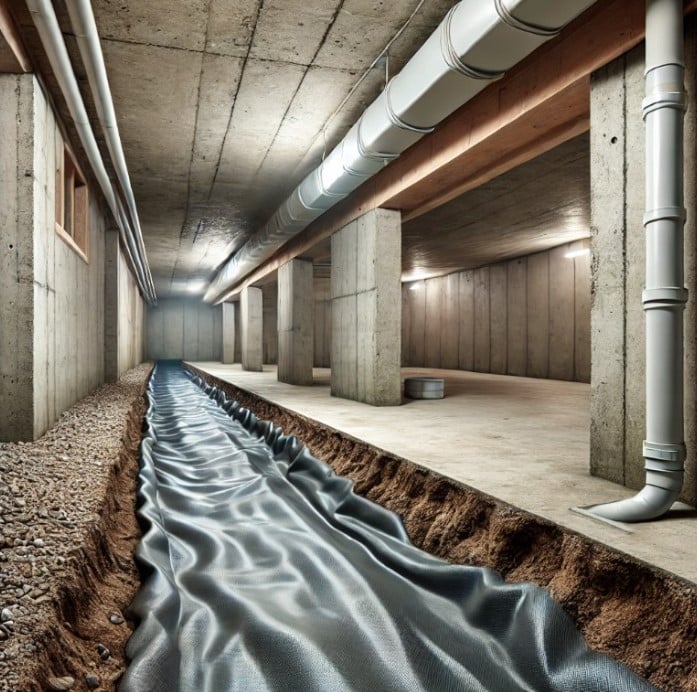
 Did you know that approximately 60% of U.S. homes suffer from below-ground wetness, according to the American Society of Home Inspectors?
Now, you might be thinking, ‘Can I waterproof my basement from the inside?’ This common question is often met with a variety of answers.
While some experts claim it’s entirely possible, others argue that it’s merely a temporary fix.
Let’s explore this topic further to determine the best course of action for your home’s specific needs.
Essential Insights and Actionable Takeaways
- Interior waterproofing methods are cost-effective and less disruptive compared to exterior solutions.
- Proper moisture source identification is crucial for effective basement waterproofing.
- Common interior waterproofing techniques include concrete coatings, silicate-based sealers, waterproofing paint, and plastic sheets.
- Hiring a professional to assess moisture levels and considering budget and home condition are important factors when choosing a waterproofing method.
Understanding Basement Waterproofing
To effectively waterproof your basement from the inside, it’s essential to first understand the process and importance of basement waterproofing. Proper waterproofing prevents water permeation, which can lead to structural damage or mold growth. It’s a combination of measures that keep your basement dry, ensuring the longevity of your property.
Waterproofing starts with identifying the source of moisture. It could be condensation, runoff, or groundwater swelling. You’ll need to examine the walls, floor, and joints for any signs of water leakage or dampness. Likewise, check the exterior of your home for any water pools or faulty gutters that could contribute to the problem.
Next, you’ll have to choose a suitable waterproofing method. It could be interior wall and floor sealers, interior water drainage, or exterior drainage combined with waterproof coating. Each method has its pros and cons, and the choice largely depends on the severity of the problem, your budget, and the basement’s condition.
Advantages of Interior Waterproofing
Why should you consider interior waterproofing for your basement? The reasons are numerous and substantial. Interior waterproofing offers you multiple benefits that can significantly improve your home’s safety, value, and comfort.
Here’s a quick overview in the form of a table:
| Advantage | Description | Impact |
| Cost-Effective | Interior waterproofing is generally less expensive than exterior waterproofing. | Saves you money |
| Less Invasive | It doesn’t require excavation around your home. | Reduces disruption and damage to your yard. |
| Accessibility | It can be done at any time of the year, unlike exterior waterproofing that depends on favorable weather conditions. | Offers flexibility and convenience. |
| Effective | It manages water that enters your basement, directing it to a sump pump or drain. | Reduces the risk of water damage and mold growth. |
| Increases Value | A dry, clean basement can increase your home’s resale value. | Provides a return on your investment. |
Common Interior Waterproofing Techniques
There are several effective interior waterproofing techniques you can employ to safeguard your basement from moisture and water damage. Let’s dive into the most common methods you can utilize to ensure your basement remains dry, even during the heaviest of rains.
- Concrete Waterproof Coatings: These are thick cement-like products that adhere permanently to concrete walls. They’re effective, but can’t be applied to previously painted surfaces.
- Silicate-Based Concrete Sealers: Also known as densifiers, they’re suitable for walls that haven’t been painted or sealed. They react chemically with the concrete to form a waterproof surface, but they don’t achieve a ‘finished’ look.
- Waterproofing Paint: This is a thicker version of acrylic paint. It’s easy to apply, but it’s a temporary solution and may peel off over time.
- Plastic Sheets and Panels: These are used in conjunction with an interior basement drainage system. They don’t stop water from getting through the wall, but they can guide water leakage into a drainage system.
Potential Drawbacks to Consider
While these interior waterproofing techniques provide effective solutions, it’s important to be aware of potential drawbacks that could impact their performance and longevity in your basement.
Firstly, one major concern is the potential for mold growth. Even with waterproofing, if your basement doesn’t have adequate ventilation, it can create an environment conducive to mold. This not only damages your home’s structure but can also lead to health issues.
Secondly, these waterproofing methods mightn’t be effective against severe water issues. If you’re dealing with significant flooding or structural damage, interior waterproofing may not be enough. It’s more of a band-aid solution, and you might need more extensive, exterior interventions.
Lastly, the cost can be a significant factor. While some methods are more budget-friendly, others, like professional-grade sealants, can be quite expensive. Moreover, if not applied correctly, you may need to redo the job, leading to increased costs.
How to Choose the Right Method
Choosing the right waterproofing method for your basement hinges on several key factors, such as the severity of your moisture problem, your budget, and your home’s specific needs and conditions. By taking these into account, you’ll be able to tailor a solution that effectively mitigates moisture issues while preserving the integrity of your home’s structure.
Here are four steps to guide you in selecting the right method:
- Assess the Moisture Level: Hire a professional to detect the source and severity of your basement’s moisture problem. This will determine whether you need a simple sealant or a more comprehensive waterproofing system.
- Consider Your Budget: Waterproofing can range from inexpensive sealants to costly drainage systems. Understand what you can afford and what level of investment is justified based on the severity of your problem.
- Understand Your Home’s Condition: Older homes may have more structural challenges that could complicate waterproofing. A professional assessment can help identify these issues.
- Explore Solutions: Research various waterproofing methods. From interior water drainage to crack injections, there’s a range of solutions available. Consult with professionals and choose the one that best suits your situation.
Frequently Asked Questions
Can Waterproofing Your Basement Increase the Value of Your Home?
Yes, you can increase your home’s value by waterproofing your basement.
It’s a smart investment that not only prevents costly water damage but also makes your basement a usable space.
Potential buyers will appreciate this enhancement, seeing it as a sign of a well-maintained home.
How Long Does the Process of Interior Basement Waterproofing Take?
Sure, you can! Depending on the extent of the moisture problem, interior basement waterproofing can take anywhere from a few days to a couple of weeks.
It’s a detailed process involving the installation of drains, sealants, and sometimes even a sump pump.
Remember, it’s not just about time, but quality work to prevent future water damage.
Always consult a professional to ensure the job’s done right.
Is It Possible to Waterproof a Basement in an Old Home?
Absolutely, you can waterproof an old home’s basement. Age doesn’t limit your ability to protect your basement from water damage.
It’s crucial to assess the condition of your walls and foundation first. Older homes may have different needs compared to newer ones. It might require more extensive preparation, but with the right waterproofing methods, you can successfully protect your old home’s basement from water intrusion.
Always hire an expert to ensure a proper job.
How Often Will the Interior Waterproofing Need to Be Redone?
It’s hard to specify an exact timeframe as it depends on the quality of the original job and the conditions in your basement. However, typically, interior waterproofing should last for many years, potentially even decades.
If you’re noticing dampness, it doesn’t necessarily mean a total redo. It could be a minor fix. But, if water’s pooling, you’re likely due for a serious reapplication or even a new method of waterproofing.
Are There Any Health Risks Associated With Not Waterproofing Your Basement?
Yes, there are health risks if you don’t waterproof your basement. Moisture can lead to mold growth, which can cause respiratory issues, especially for those with asthma or allergies.
Also, damp conditions can attract pests. It’s like inviting unwanted house guests who bring health hazards with them.
Conclusion
Absolutely, you can waterproof your basement from the inside. It’s an effective solution that provides numerous benefits, though it’s not without potential drawbacks. Choosing the right approach is key.
Remember, your basement is the foundation of your home – don’t let it become a leaking ship. Seek professional advice to ensure your chosen method is a perfect fit.
After all, when it comes to protecting your home, it’s better safe than sorry.

Ohio State Waterproofing has provided quality service with over 90,000 successful waterproofing and foundation repair installations and satisfied customers since our inception in 1978.
Ohio State Waterproofing’s philosophy for success is to provide honest, courteous and guaranteed service to every customer. Our reputation reflects this. Our well-trained waterproofing technicians are dedicated to complete customer satisfaction. This is achieved through fast, efficient processes as well as teamwork throughout this organization. You will always find a friendly representative willing to meet your needs at Ohio State Waterproofing.
We are a full service company that handles problems ranging from patching cracks to rebuilding basements. In addition, we hold three patents related to waterproofing that make us unique in the industry. These patents and our experience allow us to be able to do what every other waterproofer can do, but no one else can do what we do.
We are actively involved in the industry and community, including the National Association of Waterproofing Contractors, BHA, NARI, NAHB, NHIA, the BIA, the FHA and a number of consumer advocacy groups, as well as playing leading roles in a number of charitable functions.
But, most importantly, our highest degree of praise comes from the thousands of referrals we get from satisfied customers. Together they’ve made us a leader in the basement waterproofing and foundation repair industry.

