
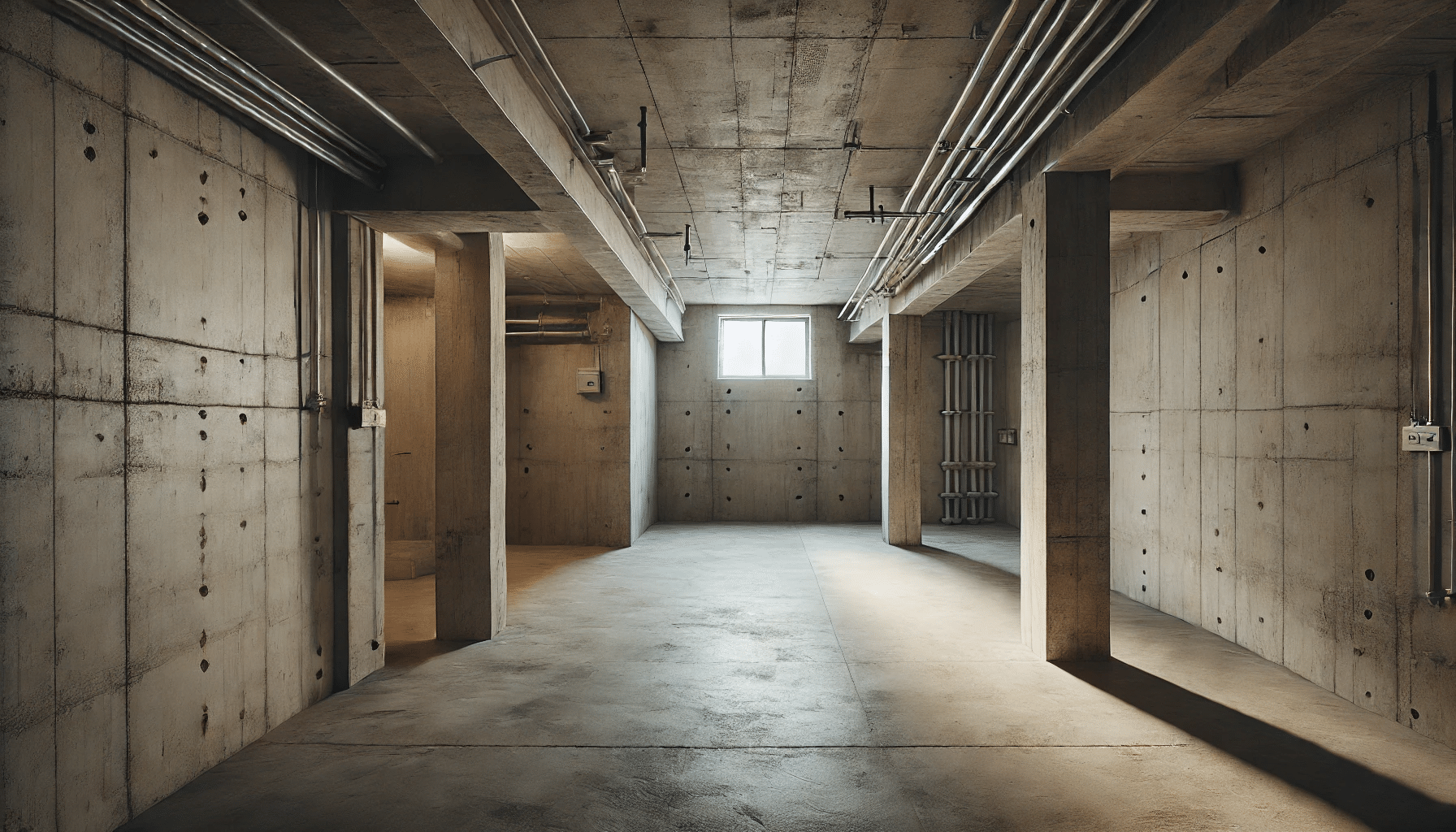
 Much like Michelangelo leaving his statues of ‘The Captives’ deliberately unfinished to convey the struggle of humanity to free the spirit from matter, you might wonder why builders often leave basements in an unfinished state. Is it a similar artistic statement, or does it serve a more pragmatic purpose?
As you navigate the labyrinth of home construction, it’s important to understand that every decision, including this one, is based on a range of factors; from construction economics and flexibility, to building codes and future home value. But, of course, there’s more to the story, and you’ll find the answers aren’t as simple as they may seem.
Key Takeaways
- Labor and material costs fluctuations impact builders’ decisions on finishing basements.
- Unfinished basements provide homeowners with flexibility for customization and creative design choices.
- Building codes and regulations play a crucial role in determining the scope and safety of finishing basements.
- Proper plumbing and wiring installation in unfinished basements require professional expertise to prevent future issues and ensure compliance.
Understanding Construction Economics
To truly grasp the complexities of construction economics, you need to understand its key drivers: labor costs, material costs, and market demand, which can significantly influence a builder’s decision, such as leaving basements unfinished.
Labor costs encompass both the wages paid to construction workers and the expenses related to workers’ insurance and benefits. It’s a hefty portion of a project’s total cost, often dictating the scope and timeline of a build. Material costs, on the other hand, cover everything from concrete and wood to fixtures and fittings. These costs can fluctuate dramatically based on market dynamics, including supply chain disruptions and tariffs.
Market demand plays a pivotal role too. If there’s a high demand for homes with finished basements, builders are more likely to invest in completing them. However, if the demand isn’t there, they might choose to leave them unfinished, cutting costs and reducing the home’s sale price.
In essence, construction economics is a delicate balancing act, requiring builders to constantly weigh labor and material costs against market demand. It’s a complex system, but understanding it can give you valuable insight into why builders make certain decisions, like leaving basements unfinished.
The Flexibility of Unfinished Basements
Often overlooked, unfinished basements offer homeowners the flexibility to customize these spaces to their unique needs and preferences. It’s like having a blank canvas where you can unleash your creativity. Whether you want a game room, home theater, gym, or a separate living space for your in-laws, the choices are endless.
Here’s a table showcasing a few options:
| Potential Use | Benefit | Estimated Cost |
| Home Theater | Enjoy movies without leaving your home | $10,000 – $30,000 |
| Game Room | A fun space for kids and adults | $1,000 – $5,000 |
| Home Gym | Convenient for fitness enthusiasts | $1,000 – $3,000 |
| In-law Suite | Perfect for multi-generational living | $40,000 – $125,000 |
Building Codes and Regulations
While the possibilities for your basement are virtually limitless, you’ll want to ensure your transformations adhere to local building codes and regulations. These rules are established to guarantee safety, health, and general welfare in relation to the construction and occupancy of buildings. They’re not just recommendations, they’re requirements.
In terms of basements, there are several key codes you’ll need to be aware of. For instance, emergency egress regulations require that finished basements have a safe, clear path to exit in case of a disaster. This could mean installing an egress window or door. Ceiling height regulations, typically requiring at least seven feet from floor to ceiling, are another critical factor that can limit your basement’s design options.
Codes also cover electrical and plumbing installations. You’ll need to ensure proper ventilation, correct installation of electrical outlets, and adequate insulation. Properly installed and insulated plumbing prevents water damage and mold growth.
Ignoring these codes can lead to hefty fines, difficulty selling your home, and potential safety hazards. It’s important to understand and follow these regulations from the outset to ensure your finished basement is safe, legal, and valuable.
Potential Plumbing and Wiring Challenges
Navigating the challenges of plumbing and wiring in your unfinished basement can seem like a daunting task, but understanding these potential pitfalls can help you avoid costly mistakes and ensure a smooth renovation process.
Often, builders leave basements unfinished due to the complexity of installing or upgrading plumbing and electrical systems. These systems, if not correctly installed, can lead to significant issues down the line, such as leaks or electrical fires.
Consider this table to understand some common challenges:
| Challenge | Plumbing Example | Wiring Example |
| Accessibility | Difficult to reach pipes behind walls | Wires may be hidden or unreachable |
| Code Compliance | Ensuring appropriate pipe sizes and materials | Meeting local electrical codes |
| Future Maintenance | Ensuring easy access for repairs | Planning for potential system upgrades |
When planning your basement renovation, you’ll need to work closely with professionals who can navigate these challenges. They’ll ensure that all installations meet code, are accessible for future maintenance, and are installed safely. It’s not a task to undertake lightly, but with careful planning and the right team, you’ll be able to successfully finish your basement.
Maximizing Future Home Value
Beyond ensuring a safe and code-compliant renovation, it’s equally important to consider how your finished basement could significantly enhance your home’s overall value. When you choose to finish your basement, you’re not just adding extra living space; you’re making a strategic investment.
Potential buyers often perceive a finished basement as a bonus, positively influencing their decision. Think about it: a finished basement can serve as a versatile space, accommodating a family room, home office, gym, or even a guest suite. This extra square footage, when tastefully finished, can substantially increase the value of your property.
However, it’s crucial to keep in mind that the quality of the renovation work will directly impact your return on investment. Using high-quality materials and ensuring professional installation are key to adding true value. Don’t cut corners; poor craftsmanship can devalue your home and might even lead to costly repairs in the future.
Frequently Asked Questions
What Are Some Creative Ways to Utilize an Unfinished Basement?
You’ve got an unfinished basement, but don’t see it as a drawback. Instead, consider it a blank canvas. You could transform it into a home gym, a personal cinema, or an entertainment room.
Maybe you’ve always wanted a wine cellar or a craft room. You could even create a cozy guest suite. Remember, it’s about making the space work for you and your needs. The possibilities are limited only by your imagination!
How Long Does It Typically Take to Finish a Basement?
You’re keen on finishing your basement, aren’t you?
Well, the time it typically takes to finish a basement depends on several factors. If you’re doing it yourself, it could take several months. With a contractor, it might take 6-8 weeks.
However, it’s crucial to remember, this timeline can vary greatly based on project complexity, availability of materials, and any unforeseen issues that may arise during construction. So, patience is key here.
Are There Any Specific Materials Recommended for Finishing a Basement to Prevent Potential Moisture Issues?
Absolutely, there are specific materials you’d want to use when finishing your basement to avoid moisture issues.
It’s vital to choose materials that resist mold and moisture, such as metal framing, moisture-resistant drywall, and specially designed basement subflooring. Insulation with a vapor barrier on both sides is also recommended.
Don’t forget to seal the concrete floor and walls properly. Remember, selecting the right materials is key to preventing future moisture problems.
What Are the Potential Health Hazards of Living in an Unfinished Basement?
Dwelling in an unfinished basement can be like playing Russian roulette with your health. Dampness often breeds mold and mildew, which can lead to respiratory issues, allergies, and even asthma.
Exposed insulation can release harmful particles and dust into the air, irritating your lungs and skin. Poor lighting and inadequate ventilation pose further risks.
Always ensure a basement is responsibly finished and properly maintained before using it as a living space.
Can an Unfinished Basement Affect the Overall Energy Efficiency of a House?
Yes, an unfinished basement can impact your home’s energy efficiency. Without proper insulation, it can lead to heat loss in winter and make your air conditioner work harder in summer.
Cracks or gaps can also let in drafts, further reducing efficiency. By finishing and properly insulating your basement, you’d be improving your home’s energy efficiency, potentially reducing your energy bills.
Conclusion
So, you see, leaving basements unfinished isn’t a result of lazy craftsmanship, oh no! It’s a clever blend of economic strategy, flexibility, compliance with pesky building codes, and a dash of potential plumbing and wiring nightmares.
And let’s not forget the grand finale – boosting your future home value into the stratosphere!
So next time you gaze upon an unfinished basement, see it not as an empty shell, but a canvas of boundless opportunities.

Ohio State Waterproofing has provided quality service with over 90,000 successful waterproofing and foundation repair installations and satisfied customers since our inception in 1978.
Ohio State Waterproofing’s philosophy for success is to provide honest, courteous and guaranteed service to every customer. Our reputation reflects this. Our well-trained waterproofing technicians are dedicated to complete customer satisfaction. This is achieved through fast, efficient processes as well as teamwork throughout this organization. You will always find a friendly representative willing to meet your needs at Ohio State Waterproofing.
We are a full service company that handles problems ranging from patching cracks to rebuilding basements. In addition, we hold three patents related to waterproofing that make us unique in the industry. These patents and our experience allow us to be able to do what every other waterproofer can do, but no one else can do what we do.
We are actively involved in the industry and community, including the National Association of Waterproofing Contractors, BHA, NARI, NAHB, NHIA, the BIA, the FHA and a number of consumer advocacy groups, as well as playing leading roles in a number of charitable functions.
But, most importantly, our highest degree of praise comes from the thousands of referrals we get from satisfied customers. Together they’ve made us a leader in the basement waterproofing and foundation repair industry.

