
 When it comes to protecting your home from water damage, you’re faced with a vital decision: should you opt for interior or exterior basement waterproofing? Interior methods are typically less expensive and disruptive, but can they provide the same level of protection as their exterior counterparts? On the other hand, exterior waterproofing offers thorough protection but often comes with a heftier price tag and more extensive construction work. To make an informed decision, it’s important to evaluate the pros and cons of each approach. Let’s explore the nuances to help you make the best choice for your home.
Key Takeaways
- Interior waterproofing is generally more affordable, less disruptive, and easier to install, making it cost-effective for managing existing water issues.
- Exterior waterproofing offers long-term protection, enhances structural durability, and increases property value, making it a better investment for preventing water intrusion.
- Both methods have limitations based on environmental conditions and specific home circumstances, so the best choice depends on individual needs and local weather patterns.
- Interior systems require more frequent maintenance and potentially higher long-term costs due to resealing and repairs, while exterior systems demand professional expertise and regular monitoring.
- Proper maintenance is crucial for both systems’ longevity, and timely repairs can prevent costly water damage and structural issues, regardless of the method chosen.
Understanding Basement Waterproofing
If you’ve ever dealt with a flooded basement, you’ll understand the importance of basement waterproofing.
It’s not merely about preventing water from seeping in during a storm. It’s about safeguarding your home’s structural integrity and your belongings from potential water damage.
Basement waterproofing is a process that aims to prevent water from entering your basement.
It’s an essential step in maintaining your home, especially if you live in an area prone to heavy rainfall or if your home has a high water table.
It not only keeps your basement dry but also prevents the growth of mold and mildew, which can lead to health issues.
There are two main types of basement waterproofing: interior and exterior.
Exterior waterproofing is done outside the house to prevent water from reaching the basement walls.
Interior waterproofing, on the other hand, is done inside the house to manage the water that makes it through.
Interior Basement Waterproofing Explained
Delving into interior basement waterproofing, it’s crucial to grasp its role in safeguarding your home. This process is your best defense against dampness, leaks, and the serious water damage that can occur inside your home’s lower level.
Now, you might be wondering, what exactly does interior basement waterproofing entail? We can break it down into three main components:
- Sealants: These are applied to your basement walls and floor to block out moisture. They’re your first line of defense and can even repair minor cracks or gaps.
- Drainage systems: If water does get in, it needs a way out. That’s where interior drainage comes into play. These systems collect water that seeps in and divert it away from your basement.
- Dehumidifiers: Basements are naturally humid places. A dehumidifier helps control this moisture and prevent dampness from building up in the first place.
Pros of Interior Waterproofing
Having understood the components of interior basement waterproofing, you may wonder about its advantages. One significant benefit is the cost. Compared to exterior waterproofing, the interior method is generally more affordable, making it an appealing choice for homeowners on a budget.
Interior waterproofing also has the advantage of being less disruptive. There’s no need to excavate around your home, which can be a big plus for those who value their landscaping or have structures close to the property line.
The work is done inside, so there’s less mess to deal with afterward.
Another pro is that interior waterproofing can address water issues from both below and at ground level. It’s particularly effective at managing high water tables and hydrostatic pressure.
You’ll also appreciate the ability to spot and fix any leaks promptly, as the waterproofing elements are accessible.
Cons of Interior Waterproofing
While interior waterproofing can be a great solution, it’s not without its drawbacks.
You might face potential structural damage, struggle with limited moisture control, and grapple with high maintenance costs.
Let’s unpack these challenges one by one to make sure you’re fully informed before making a decision.
Potential Structural Damage
One major drawback to interior waterproofing is the potential for structural damage. This isn’t just about a few cracks or damp spots on your walls. We’re talking about serious issues that could compromise the safety of your home.
Let’s get into the specifics:
- Foundation Weakening: When you waterproof from the inside, you’re not addressing water that’s already penetrated the exterior wall. That water is still there, slowly eroding your foundation. Over time, this can lead to a weakened structure and potential collapse.
- Efflorescence: This is a fancy word for those white, powdery deposits that appear on your walls over time. It’s caused by salts left behind when water evaporates. While it might seem like just a cosmetic issue, efflorescence can indicate serious water damage within your walls.
- Mold Growth: Interior waterproofing doesn’t always stop moisture from getting in. It often just slows it down. This means you mightn’t notice a problem until it’s gotten out of hand, like with mold growth.
Don’t underestimate the potential structural damage that could result from interior waterproofing. It’s essential to evaluate these risks before making your decision about which method of basement waterproofing is right for you.
Limited Moisture Control
Beyond the potential for structural damage, interior waterproofing can leave you grappling with limited moisture control. This method only manages water that’s already found its way into your home, which means you’re constantly playing catch-up.
You might be asking, “Isn’t controlling moisture the whole point of waterproofing?” Well, you’re not wrong. But the issue here is the level of moisture control. Interior waterproofing methods, like sealants and coatings, can only do so much. They can’t stop water from seeping in through cracks and crevices in your exterior walls. All they can do is manage the moisture once it’s inside.
So, how does this affect you? Let’s make it clearer with a quick table:
| Situation | Interior Waterproofing | Ideal Solution |
|---|---|---|
| Heavy Rain | Struggles to keep up | Keeps your basement dry |
| Minor Leaks | Manages well | Prevents leaks in the first place |
| Long-Term Humidity | Can’t handle it | Maintains a dry, comfortable environment |
The truth is, with interior waterproofing, you’re always a step behind. It’s a reactive solution, not a proactive one. You deserve better. You deserve a basement that’s not just dry, but that stays dry, no matter what.
High Maintenance Costs
In the long run, the maintenance costs of interior waterproofing can break the bank. You might be thinking that interior waterproofing is a one-time investment, but sadly, that’s not the case. It’s a recurring expense that you’ll have to bear every few years.
Here’s why:
- Periodic Resealing: Interior waterproofing isn’t permanent. Continuous exposure to moisture weakens the sealant over time, demanding reapplications. This regular resealing isn’t just time-consuming; it also adds to the total cost.
- Mold and Mildew Treatment: Interior waterproofing doesn’t always prevent the growth of mold and mildew. You’ll need professional assistance to deal with these pesky fungi, and that’s another expense to factor in.
- Damage Repair: Leaks might still occur, damaging your walls, floors, and possessions. Repairing these damages can seriously strain your wallet.
Exterior Basement Waterproofing Uncovered
Every home has its own set of unique challenges when it comes to keeping the basement dry, but exterior waterproofing solutions can often provide the most effective defense. You might be wondering, “What exactly is exterior basement waterproofing?” Well, it’s a series of procedures done outside your home to prevent water from entering your basement.
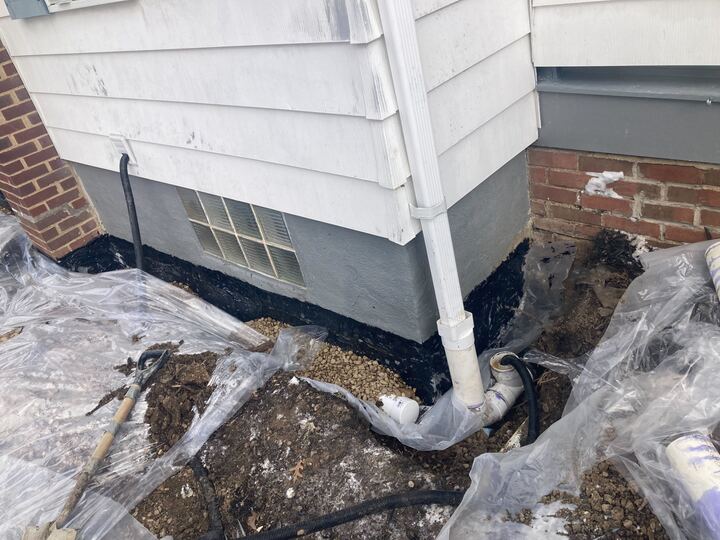
The process typically involves excavating around the house to the full depth of the foundation walls, then installing a waterproof coating or membrane topped by drainage panels. The goal is to guide water away from the foundation and keep your basement dry.
Let’s take a closer look:
| Steps | Exterior Waterproofing | Purpose |
|---|---|---|
| 1 | Excavation | To reach the foundation walls |
| 2 | Cleaning & Inspection | To verify the wall is in good condition |
| 3 | Application of waterproof coating | To block water penetration |
| 4 | Installation of drainage panels | To guide water away |
| 5 | Backfilling | To return the soil to its place |
Benefits of Exterior Waterproofing
You might be wondering, why should you even consider exterior waterproofing?
Well, it comes with a host of advantages that can make your life easier.
Let’s explore these benefits and how you can implement this system in your own home.
Exterior Waterproofing Advantages
Homeowners often overlook exterior waterproofing, but its benefits are significant.
It’s not just about avoiding a waterlogged basement; it’s also about preserving the structural integrity of your home.
- Long-Term Protection: Exterior waterproofing provides a reliable shield against water seepage, giving your basement long-term protection.
By applying a waterproof coating and installing a drainage system outside your basement walls, you’re fundamentally preventing water from ever reaching the interior.
- Structural Durability: Over time, water seeping into your home can compromise its structural integrity.
By waterproofing the exterior, you’re protecting the foundation from water damage, thereby enhancing the durability and longevity of your home.
- Healthier Living Environment: Damp basements can lead to mold growth, which can cause health issues for you and your family.
With exterior waterproofing, you’re eliminating the possibility of mold growth and creating a healthier living environment.
Implementing Exterior Waterproofing
Implementing exterior waterproofing comes with a multitude of benefits. It’s a proactive measure that tackles water issues at their source, keeping your basement dry and your home foundation robust.
The exterior waterproofing process involves excavating around your home to expose the foundation. Once exposed, a waterproof membrane is applied, preventing water from infiltrating your basement. This solution is designed to stop water before it even gets close to your home, reducing the risk of structural damage and mold growth.
One major benefit of exterior waterproofing is its longevity. With proper maintenance, it can protect your home for years. It’s also a great way to preserve your property’s value. Potential buyers often prefer homes with exterior waterproofing, as it shows that the homeowners have taken steps to prevent potential water damage.
However, it’s not just about practical benefits. Having a waterproofed basement can offer peace of mind. You don’t need to worry every time it rains, as your home is protected. That’s a level of security that’s worth investing in.
Drawbacks of Exterior Waterproofing
Despite its advantages, exterior waterproofing isn’t without its drawbacks. One of the main issues you’re likely to encounter is the invasive nature of the installation process. It’s not a minor task and can cause significant disruption to your home’s landscaping.
You’ll need to brace yourself for substantial excavation, which can affect your garden, pathways, or structures close to your home’s foundation.
Moreover, although it’s a long-term solution, it’s not a quick one. It’s a time-consuming process that requires professional expertise. You can’t just rush through it, and it may take several days, even weeks, depending on the extent of the issue and the size of your home.
Let’s break it down:
- Disruption: Your yard may be turned upside down during the waterproofing process, affecting your landscaping and potentially damaging plants and structures.
- Time-consuming: This isn’t a one-day project. It can take a while, disrupting your routine and causing inconvenience.
- Requires expertise: It’s not a DIY project. You’ll need to hire professionals who understand the process and can execute it properly, adding another layer of complexity to the process.
Despite these challenges, remember that exterior waterproofing is an investment in your home’s long-term health.
Cost Comparison: Interior Vs Exterior
Maneuvering the cost landscape of basement waterproofing can be a bit intimidating.
You’ll find that the prices differ considerably between interior and exterior methods. Generally, interior waterproofing is the less expensive option. This is mainly because it’s less labor-intensive and doesn’t require as much excavation.
You can expect to pay between $60 and $90 per linear foot for interior waterproofing, depending on the complexity of the job.
On the other hand, exterior waterproofing is more costly. It involves excavating around your home, applying a waterproof coating to the exterior walls, and installing drainage.
The average cost for this method ranges between $85 and $125 per linear foot.
Effectiveness: Interior Vs Exterior
While cost is a major factor when choosing a waterproofing method, it’s equally important to contemplate how effective each method is in keeping your basement dry. Both interior and exterior waterproofing have their own merit when it comes to effectiveness.
Interior waterproofing is usually more effective at managing water that’s already made its way into your basement. This method includes installing drains and sump pumps to remove water. It’s an ideal solution for managing high water tables or for homes prone to flooding.
However, it doesn’t stop water from entering in the first place, which might lead to potential damage over time.
Exterior waterproofing, on the other hand, is all about prevention. It aims to keep water out of your basement entirely. Here’s what it generally entails:
- Applying a waterproof barrier to the exterior walls
- Installing a drainage system to redirect surface water
- Addressing landscape issues that could contribute to water accumulation
Despite being more invasive and expensive, exterior waterproofing proves to be a long-term solution. It not only prevents water intrusion but also protects your foundation from potential damage.
However, it mightn’t be effective in areas with high water tables or in homes with structural issues.
Making the Best Choice for Your Home
When it comes to waterproofing your basement, the choice between interior and exterior methods is vital.
You’ll need to carefully consider the benefits and drawbacks of interior waterproofing.
Similarly, understanding the ins and outs of exterior waterproofing will help you make a decision that’s right for your home.
Comparing Interior Waterproofing
Deciding on the right interior waterproofing method can feel like traversing a labyrinth of options.
You’re looking for a solution that’s effective, affordable, and lasting. To help you make an informed decision, let’s break down the key considerations:
- Effectiveness: The best waterproofing method for you depends on your home’s specific needs.
If you’re dealing with high humidity, a simple dehumidifier might do the trick. For serious leaks or seepage, you’ll need more extensive solutions like interior drainage systems or sealants.
- Cost: Interior waterproofing tends to be more budget-friendly than exterior options, but the price can vary greatly depending on the extent of your water problem and the solutions you choose.
Always get estimates from a few contractors before making a decision.
- Longevity: You don’t want a quick fix that’ll need repairing again in a few years.
Look for solutions that offer long-term protection against water damage.
Understanding Exterior Waterproofing
In contrast to interior methods, exterior waterproofing aims to stop water from ever reaching your home’s foundation.
It’s a preventative measure, tackling the issue at its source. This method involves excavating around your home, applying a waterproof coating to the exterior walls, and installing a drainage system.
While it might sound disruptive, it’s often the best long-term solution, especially if you’re dealing with serious water infiltration.
It seals off your home from water before it can seep into your basement, protecting the integrity of your foundation. However, it’s not a DIY job and requires professional hands.
The cost can be considerably higher than interior methods, but consider it an investment in your home’s longevity.
It’s also a selling point if you ever decide to put your house on the market. Potential buyers will appreciate that you’ve taken steps to prevent basement water issues.
Frequently Asked Questions
How Long Does the Process of Basement Waterproofing Typically Take?
It’s not a one-size-fits-all answer. The length of basement waterproofing depends on the extent of the problem. However, you can usually expect the job to take between 1-2 days, or longer for complex issues.
What Kind of Maintenance Is Required After Basement Waterproofing?
After waterproofing, you’ll need to carry out regular inspections for leaks or cracks. It’s also essential you keep your gutters clean and guarantee your land slopes away from your house to prevent water accumulation.
Are There Any Health Risks Associated With Basement Waterproofing?
Yes, there can be health risks with basement waterproofing. You’re potentially exposed to harmful chemicals during installation. Always verify you’re using protective equipment and the area’s well-ventilated to minimize any potential health effects.
Can Basement Waterproofing Increase the Value of My Home?
Absolutely, basement waterproofing can increase your home’s value. It’s a practical upgrade that offers potential buyers peace of mind, knowing they won’t have to deal with future water damage or mold problems. It’s a worthwhile investment.
Does Homeowners Insurance Typically Cover Basement Waterproofing?
Typically, your homeowner’s insurance doesn’t cover basement waterproofing. It’s viewed as a home maintenance issue, not unexpected damage. However, it’s always best to check with your specific insurance provider for their exact coverage policies.
Conclusion
Choosing between interior and exterior basement waterproofing isn’t a one-size-fits-all decision. It’s aabout finding what’s best for your home. If you’re dealing with current water problems, interior waterproofing could be your cost-effective solution. If you’re looking to prevent future issues and maintain structural integrity, exterior waterproofing might be worth the investment. Remember, consider your budget, home’s condition, and local climate when making your decision.

Ohio State Waterproofing has provided quality service with over 90,000 successful waterproofing and foundation repair installations and satisfied customers since our inception in 1978.
Ohio State Waterproofing’s philosophy for success is to provide honest, courteous and guaranteed service to every customer. Our reputation reflects this. Our well-trained waterproofing technicians are dedicated to complete customer satisfaction. This is achieved through fast, efficient processes as well as teamwork throughout this organization. You will always find a friendly representative willing to meet your needs at Ohio State Waterproofing.
We are a full service company that handles problems ranging from patching cracks to rebuilding basements. In addition, we hold three patents related to waterproofing that make us unique in the industry. These patents and our experience allow us to be able to do what every other waterproofer can do, but no one else can do what we do.
We are actively involved in the industry and community, including the National Association of Waterproofing Contractors, BHA, NARI, NAHB, NHIA, the BIA, the FHA and a number of consumer advocacy groups, as well as playing leading roles in a number of charitable functions.
But, most importantly, our highest degree of praise comes from the thousands of referrals we get from satisfied customers. Together they’ve made us a leader in the basement waterproofing and foundation repair industry.

