
 Navigating the sea of home maintenance can be tricky, especially when it comes to managing water damage. You’ve probably heard terms like ‘waterproofing‘ and ‘French drains’ tossed around, and you might be wondering, what’s the difference?
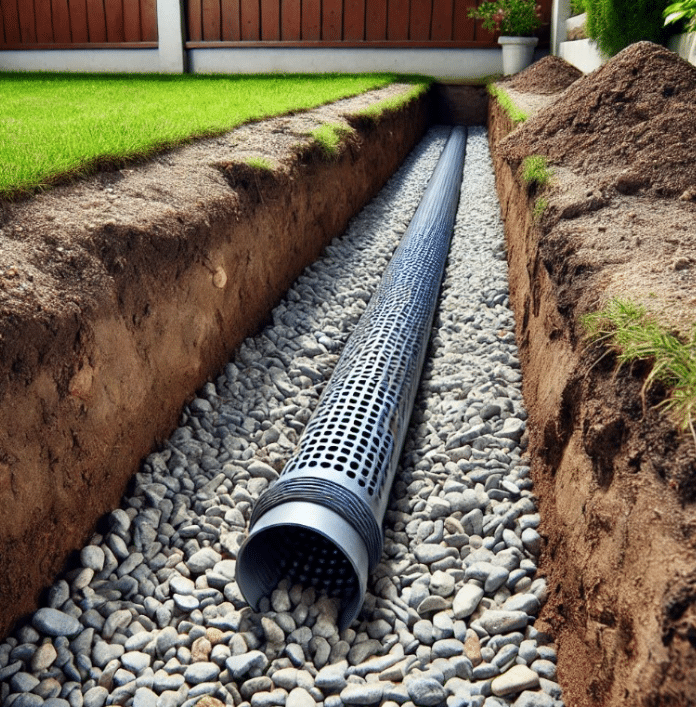
Well, while they both aim to protect your home from water damage, they’re not exactly two peas in a pod. Waterproofing involves creating a barrier to prevent water from entering your property, whereas a French drain is a trench filled with gravel or rock containing a perforated pipe that redirects surface water away from your property.
Intrigued to learn more? Stick around, as we dive deeper into the nitty-gritty of these two methods and explore which one might be the best fit for your home.
Waterproofing vs French Drains: Key Takeaways for HomeownersKey Takeaways
- Waterproofing involves making a structure water-resistant using membranes and coatings, while French drains redirect water away using a trench filled with gravel and a pipe.
- Correct installation and materials are crucial for the effectiveness of both waterproofing and French drains.
- French drains are pricier but highly effective, especially in areas with heavy rainfall, while waterproofing is more cost-effective but less effective in heavy rainfall.
- Location, budget, and specific water issues should be considered when deciding between waterproofing and French drains. Consulting with professionals for tailored advice is recommended.
Understanding Waterproofing
What exactly is waterproofing, you might ask? Well, in technical terms, waterproofing is the process of making an object or structure water-resistant so that it remains relatively unaffected by water or resisting the ingress of water under specified conditions.
To get into the nitty-gritty, it involves the use of membranes and coatings to protect contents and structural integrity. The waterproofing membrane is essentially a thin layer of water-tight material that’s laid over a surface. This layer is continuous and doesn’t allow water to pass through it. For instance, on a flat terrace, a waterproofing membrane could be laid above the structural slab and below the finish tiles.
In buildings, it’s typically used on the exterior of foundations and walls, roofs, and balconies – anywhere water could potentially penetrate and cause damage. You might also see it used in wet areas like bathrooms and kitchens.
In your home, it’s what keeps the rain outside, during a storm, instead of indoors with you. It’s what ensures your basement stays dry and mold-free. So, waterproofing isn’t just some fancy buzzword, it’s a vital part of any construction project.
Basics of French Drains
While waterproofing helps keep your home dry from the outside, French drains serve a similar function but from a different angle, tackling groundwater and surface water before it can make its way into your home.
A French drain is essentially a trench filled with gravel or rock and containing a perforated pipe that directs surface water and groundwater away from your home. The perforations are small holes that allow water to enter the pipe, which is then carried away from your home’s foundation.
You’ll usually install a French drain when you’re experiencing problems with water pooling in your basement or around the foundation of your home. The drain can be installed either indoors along the edge of your basement, or outdoors around the perimeter of your home.
The key to a successful French drain is the slope – it must be angled correctly to effectively direct water away from your home. This is where a professional’s expertise can be invaluable. They’ll ensure the drain is installed at the right depth and gradient to optimize water flow.
Key Differences Explored
Though they both aim to keep your home dry, the key differences between waterproofing and French drains lie in their methods, costs, and overall effectiveness.
Waterproofing involves applying a sealant to the walls of your home to prevent water from seeping in. It’s typically more cost-effective but may not be as effective in areas prone to heavy rainfall or flooding. On the other hand, a French drain is a gravel-filled trench that includes a perforated pipe to direct water away from your home. Although more expensive and complex to install, it’s highly effective in dealing with heavy rainfall.
To make these differences more concrete, let’s use a comparison table:
| Waterproofing | French Drains | |
| Method | Applying sealant | Gravel-filled trench |
| Cost | More cost-effective | More expensive |
| Effectiveness | Moderate in heavy rain | High in heavy rain |
Choosing the Right Solution
To ensure your home stays dry and damage-free, it’s essential to choose the right water management solution tailored to your specific circumstances and environment. Waterproofing and French drains each offer unique benefits, so your choice depends on your specific needs.
Several factors should guide your decision:
- Location:If you’re in an area with heavy rainfall, a French drain might be your best bet. It’s designed to divert water away from your home, reducing the risk of water damage.
- Foundation type:Waterproofing is particularly effective for homes with basements or those built on slopes. It helps prevent water seepage that could compromise your home’s structural integrity.
- Budget:While both methods are cost-effective in the long run, upfront costs differ. French drains are typically less expensive to install, but waterproofing, though pricier, can offer comprehensive protection.
It’s crucial to consult with a professional to assess your situation and offer expert advice. They’ll conduct a thorough inspection to determine the most suitable solution for you. Remember, the right choice isn’t just about immediate relief but also about long-term protection.
Case Studies: Waterproofing Vs French Drains
Let’s delve into real-life scenarios that illustrate the effectiveness of waterproofing and French drains in different circumstances.
Firstly, consider a case where a basement continually floods during heavy rainfall. Here, an exterior waterproofing system was installed. It entailed the application of a waterproofing membrane to the foundation walls, along with drainage boards to channel water away. After the installation, the basement remained dry even during significant downpours.
In another case, a homeowner with a damp, musty crawl space opted for a French drain. This system was installed around the perimeter of the crawl space, intercepting water before it entered. With a sump pump to evacuate collected water, the crawl space’s moisture levels dramatically decreased.
However, it’s important to note that situations aren’t always clear-cut. In a third scenario, a house with a sloping backyard experienced both surface runoff and groundwater seepage. Here, a combined approach was taken. Exterior waterproofing was applied to the foundation walls, and a French drain was installed to handle the surface water. This integrated solution successfully solved the homeowner’s water issues.
These cases underscore the need for a tailored approach, based on the specific water issue at hand.
Frequently Asked Questions
What Is the Cost Comparison Between Installing French Drains and Waterproofing?”
When you’re comparing costs between installing French drains and waterproofing, it’s not a one-size-fits-all answer. It depends on the extent of your water issues and the size of your home. French drains are generally cheaper, but if you’ve deep-seated water issues, waterproofing might be necessary which is more expensive.
It’s best to consult with a professional to thoroughly assess your situation and give you an accurate cost estimate.
How Does the Maintenance for Waterproofing and French Drains Differ?”
Waterproofing generally requires less maintenance than French drains. Once you’ve waterproofed your basement, you’re almost set. Just check occasionally for cracks or leaks.
On the other hand, French drains need regular cleaning to remove debris and prevent clogging. You’ll also have to inspect for signs of damage or wear.
Are There Any Potential Negative Impacts on the Environment From Using Either Waterproofing or French Drains?”
While you’re considering the environmental footprint of waterproofing and French drains, it’s important to remember there can be impacts. Waterproofing chemicals may potentially seep into the soil, affecting local flora and fauna.
French drains, on the other hand, can alter the natural water flow, which might disrupt ecosystems. However, with careful planning and responsible practices, you can mitigate these potential negatives.
It’s all about balance and respect for our natural world.
Can Both Waterproofing and French Drains Be Installed in an Already Constructed House?”
Yes, you can install both waterproofing and French drains in an already constructed house. Waterproofing is typically applied to the exterior basement walls to prevent water intrusion.
French drains, on the other hand, are installed around the house or inside the basement to redirect water away from the home.
It’s a complex process, but with the right experts, it can be effectively done without causing significant disruption to your home.
Are There Any Specific Climates or Geographical Areas Where One Solution Is More Effective Than the Other?”
Yes, geography impacts effectiveness. In damp, rainy regions, you’d benefit more from waterproofing as it prevents moisture seepage. It’s like wearing a raincoat in Seattle; you’re directly addressing the issue.
However, in areas with poor soil drainage, like New Orleans with its high water table, a French drain is your best bet. It’s akin to having gutters to redirect rainwater.
Conclusion
In choosing between waterproofing and French drains, it’s like picking your favorite tool from a toolbox – it depends on the job. Waterproofing typically prevents water intrusion from the start, whereas French drains divert water that’s already present.
Each has its unique advantages, and ultimately, the right solution will depend on your property’s specific needs and circumstances. It’s crucial to consult with an experienced professional to make the right choice for your home.

Ohio State Waterproofing has provided quality service with over 90,000 successful waterproofing and foundation repair installations and satisfied customers since our inception in 1978.
Ohio State Waterproofing’s philosophy for success is to provide honest, courteous and guaranteed service to every customer. Our reputation reflects this. Our well-trained waterproofing technicians are dedicated to complete customer satisfaction. This is achieved through fast, efficient processes as well as teamwork throughout this organization. You will always find a friendly representative willing to meet your needs at Ohio State Waterproofing.
We are a full service company that handles problems ranging from patching cracks to rebuilding basements. In addition, we hold three patents related to waterproofing that make us unique in the industry. These patents and our experience allow us to be able to do what every other waterproofer can do, but no one else can do what we do.
We are actively involved in the industry and community, including the National Association of Waterproofing Contractors, BHA, NARI, NAHB, NHIA, the BIA, the FHA and a number of consumer advocacy groups, as well as playing leading roles in a number of charitable functions.
But, most importantly, our highest degree of praise comes from the thousands of referrals we get from satisfied customers. Together they’ve made us a leader in the basement waterproofing and foundation repair industry.
