
In the realm of home maintenance, it’s crucial to recognize the signs indicating that your basement requires a professional waterproofing solution. Perhaps you’ve noticed a musty odor that just won’t go away. That’s often the first sign of excess moisture accumulating in your basement.
Damp spots on your walls or a white, chalky substance known as efflorescence appearing on the concrete are other telltale signs you shouldn’t ignore.
Water stains on your basement floor or walls are another clear indicator. These stains typically appear after a heavy rain or when snow begins to melt, and they’re a sure sign that water is finding its way in. Moreover, if you’re noticing cracks in the walls or floors of your basement, that’s another red flag. Cracks can allow water to penetrate your basement, leading to potential damage and dampness.
Lastly, if your basement feels humid, it’s likely that you need a waterproofing solution. High humidity can lead to mold growth, which poses a significant health risk. By identifying these signs early, you’re taking a critical step towards maintaining the structural integrity and safety of your home.
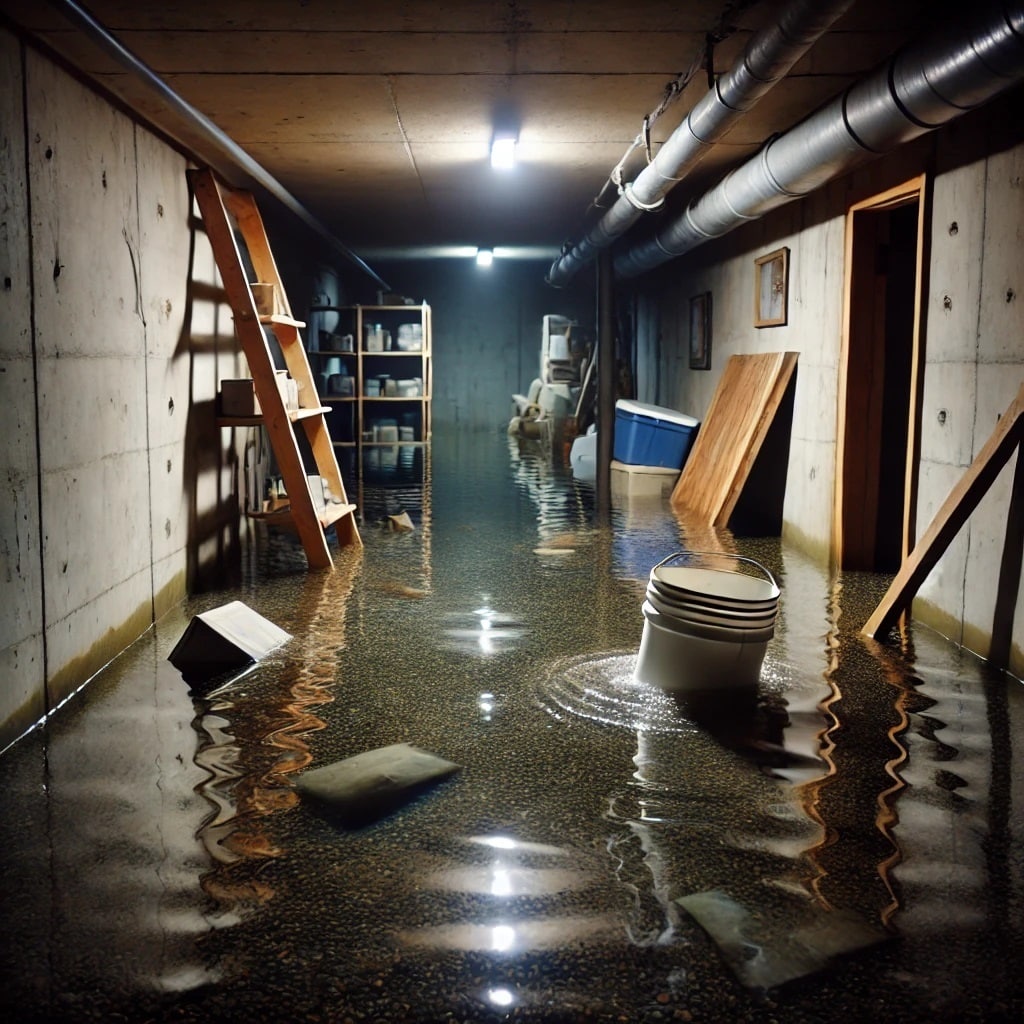
Signs of flooding in my basement
Spotting signs of flooding in your basement early on can prevent extensive damage and protect your home’s structural integrity. To identify potential flooding issues, pay close attention to these key indicators.
Firstly, if you’re noticing a persistent musty smell, it’s likely you have moisture build-up, often a precursor to flooding. Likewise, the presence of mold or mildew, especially in corners or on walls, indicates excessive dampness. It’s crucial to eradicate it promptly because, in addition to potential flooding, it could lead to health issues.
Secondly, check for water stains on walls, floors, or ceilings. If you observe dark patches or discoloration, water is seeping in and you might be on the brink of a flood. Similarly, if your basement floor feels damp or you see puddles with no apparent source, it’s a clear sign of water intrusion.
Frequently, understanding the warning signs can help you predict if your basement is at risk of flooding. Here’s what you need to keep an eye out for:
- Moisture or water stains: If you’re noticing damp spots on your walls or floors, it’s a clear sign of water seepage. This can escalate quickly and result in a flooded basement.
- Mold growth: Mold thrives in damp environments. If you’re seeing mold or smelling a musty odor, it’s likely that your basement has excess moisture that could lead to flooding.
- Cracks in the walls or floor: These are potential pathways for water to enter your basement. Even small cracks can allow enough water in to cause a flood.
Take these signs seriously. If they’re present, it’s essential to get your basement professionally assessed and waterproofed to prevent possible flooding. Ignoring these warning signs could lead to serious damage to your home and belongings, not to mention the potentially high costs of repairs.
You mightn’t be able to prevent every flood, but by staying vigilant, you can certainly minimize the risk.
Controlling indoor flooding in your basement
To effectively control indoor flooding in your basement, you need to understand the primary causes and implement preventative measures to mitigate the risk. The main causes of basement flooding include poor drainage, sump pump failure, and cracks in the foundation.
To control flooding, firstly, ensure your home’s drainage system is functioning properly. This includes your gutters and downspouts, which should direct water away from your home’s foundation. If they’re not, you’ll need to fix them or install new ones.
Secondly, if you’ve a sump pump, regular maintenance is critical. A malfunctioning sump pump can’t remove excess water, resulting in flooding. Have it checked and serviced regularly, especially before heavy rain seasons.
Lastly, inspect your basement’s foundation for cracks. Even small cracks can let in a significant amount of water. If you find any, it’s best to have them repaired by a professional.
Interior waterproofing
While controlling indoor flooding is indeed essential, it’s equally important to focus on interior waterproofing, a proactive measure that can significantly reduce the risk of water damage in your basement. With interior waterproofing, you’re not just keeping water out, you’re also managing any water that does find its way into your home. This process ensures that your basement remains dry and safe for use.
There are several signs that your basement may require interior waterproofing:
- Persistent dampness or a musty smell, which may indicate an excess of moisture in your basement
- The appearance of mold or mildew on walls, floors, or objects stored in the basement
- Water stains or efflorescence on walls and floors, indicating a history of water seepage
If you notice any of these signs, it’s important to act quickly. Persistent moisture can lead to structural damage, health problems, and a decrease in property value. Interior waterproofing solutions, such as installing a sump pump or an interior drain, can help manage the water and protect your basement from further damage. Remember, taking proactive steps now can save you from costly repairs in the future.
Frequently Asked Questions
What Are the Health Risks Associated With a Non-Waterproofed Basement?
You’re at risk if your basement isn’t waterproofed and there are signs of moisture. Health issues can arise from mold and mildew growth, which thrive in damp conditions. These can cause allergies, respiratory problems, and even toxic mold syndrome.
Dampness also encourages pests, which bring their own health risks. In worst cases, structural damage can occur, potentially leading to physical harm.
It’s crucial to address these issues for your health’s sake.
How Does the Geographical Location of My Home Affect the Need for Basement Waterproofing?
Your home’s geographical location significantly affects your basement’s waterproofing needs. If you’re in a rainy or flood-prone area, water intrusion is more likely.
Constant dampness, a musty smell, or visible mold growth are clear signs you need to waterproof your basement.
Conversely, if you’re in a dry region, waterproofing mightn’t be urgent. However, it’s still a good idea to be proactive to prevent future issues.
Are There Any Potential Structural Issues That Can Arise From Not Waterproofing My Basement?
Ignoring basement waterproofing can lead to serious structural issues. You’ll notice moisture seeping into the walls, causing them to weaken over time.
Dampness can also promote mold growth, which deteriorates your home’s foundation. These problems may eventually lead to a sagging house structure.
It’s important to address any signs of water damage early to prevent costly, extensive repairs in the future.
What Maintenance Is Required Once My Basement Has Been Waterproofed?
Once your basement’s been waterproofed, it’s important to keep up with maintenance. You’ll need to regularly check for cracks or damage in the waterproofing system.
Don’t forget to clean your gutters and downspouts to prevent water buildup. Also, ensure your landscape slopes away from your home.
If you notice any issues, don’t hesitate to contact a professional. Regular maintenance helps your waterproofing last longer and keeps your basement dry.
How Often Should I Inspect My Basement for Signs of Water Damage or Potential Flooding?
You should inspect your basement for water damage at least once every season. Changes in weather can cause unexpected leaks or flooding. Look for damp walls, a musty smell, or mold growth.
If you notice any of these signs, it’s time to consider waterproofing. Don’t wait until your basement floods to take action. Regular inspection can help you spot potential problems early and save you from costly repairs.
Conclusion
In conclusion, don’t ignore the signs of a potential damp basement. Musty smells, damp spots, and pooling water are red flags your basement needs waterproofing. Avoid potential costly damage and protect your property value by taking action.
Remember, creating a healthy living environment in the basement starts with recognizing signs of moisture and implementing proper waterproofing. Your home’s health is paramount – act now to ensure its longevity.

Ohio State Waterproofing has provided quality service with over 90,000 successful waterproofing and foundation repair installations and satisfied customers since our inception in 1978.
Ohio State Waterproofing’s philosophy for success is to provide honest, courteous and guaranteed service to every customer. Our reputation reflects this. Our well-trained waterproofing technicians are dedicated to complete customer satisfaction. This is achieved through fast, efficient processes as well as teamwork throughout this organization. You will always find a friendly representative willing to meet your needs at Ohio State Waterproofing.
We are a full service company that handles problems ranging from patching cracks to rebuilding basements. In addition, we hold three patents related to waterproofing that make us unique in the industry. These patents and our experience allow us to be able to do what every other waterproofer can do, but no one else can do what we do.
We are actively involved in the industry and community, including the National Association of Waterproofing Contractors, BHA, NARI, NAHB, NHIA, the BIA, the FHA and a number of consumer advocacy groups, as well as playing leading roles in a number of charitable functions.
But, most importantly, our highest degree of praise comes from the thousands of referrals we get from satisfied customers. Together they’ve made us a leader in the basement waterproofing and foundation repair industry.

