
 If you’re noticing the telltale signs of dampness in your basement – damp walls, musty smells, or even mold growth, it’s high time you considered implementing some superior basement waterproofing solutions. You’ve got several options, from installing proper drainage systems and using interior waterproofing coatings to setting up a sump pump. Each approach has its unique benefits and roles in keeping your home dry and safe. But, how do you know which solution is the best fit for your home? Stick around, and you’ll find the answers you need to make an informed decision.
Key Takeaways
- Improve interior conditions with ventilation enhancements, dehumidifiers, and waterproofing coatings on walls and floors.
- Install effective drainage systems such as French drains and gutters to divert water away from the house.
- Apply waterproof coatings to exterior walls and ensure regular maintenance of gutters and drains to prevent water penetration.
- Use sump pumps to remove accumulated water in the basement, with regular monitoring during rainy seasons for optimal functionality.
- Consider professional application of waterproofing techniques and regular checks of dehumidifiers and drainage systems for best results.
Identifying Basement Moisture Issues
Before tackling any waterproofing solutions, it’s crucial to first identify the source of basement moisture issues. You don’t want to apply a solution that doesn’t address the root of the problem. So, roll up your sleeves, grab a flashlight, and let’s go moisture hunting.
Moisture in your basement can come from two major sources: interior and exterior.
Interior moisture is often due to condensation. You’ll see it as water droplets forming on cold surfaces. If your basement smells musty and feels damp, that’s a clear sign of condensation. Fixing this might require improving ventilation or installing a dehumidifier.
Exterior moisture, on the other hand, comes from water outside your house seeping in. It could be due to rain, groundwater, or melting snow. You’ll often see it as wet spots or water trickling down the walls.
If your basement floor is damp or if water pools in certain areas after rain, you’re likely dealing with this type. Resolving exterior moisture issues could involve regrading the land around your house or waterproofing your exterior walls.
Importance of Proper Drainage
In light of the moisture issues outlined earlier, let’s turn our attention to the role of proper drainage. Ensuring your home’s drainage system is functioning effectively is essential.
After all, it’s the first line of defense in keeping your basement dry and safe. When it rains, water tends to seep into the ground, pooling around your home’s foundation. Without proper drainage, this moisture can infiltrate your basement, leading to the dampness and mold growth we’ve already discussed.
But don’t worry, you can prevent these problems. An effective drainage system diverts water away from your house, reducing the risk of basement moisture issues.
There are various types of drainage systems to take into account. Exterior drainage systems, like French drains, direct water away from your home’s foundation.
Alternatively, gutters and downspouts work to channel rainwater safely away from your property.
Interior Waterproofing Techniques
While exterior measures are essential, it’s equally important to take into account interior waterproofing techniques. These methods work from the inside out to keep your basement dry and your home safe.
One of the most effective interior methods is applying waterproofing coatings. These are thick, cement-like products that adhere to concrete walls and floors, forming a waterproof barrier. You can apply it yourself, but it’s best to hire a professional to guarantee it’s done correctly.
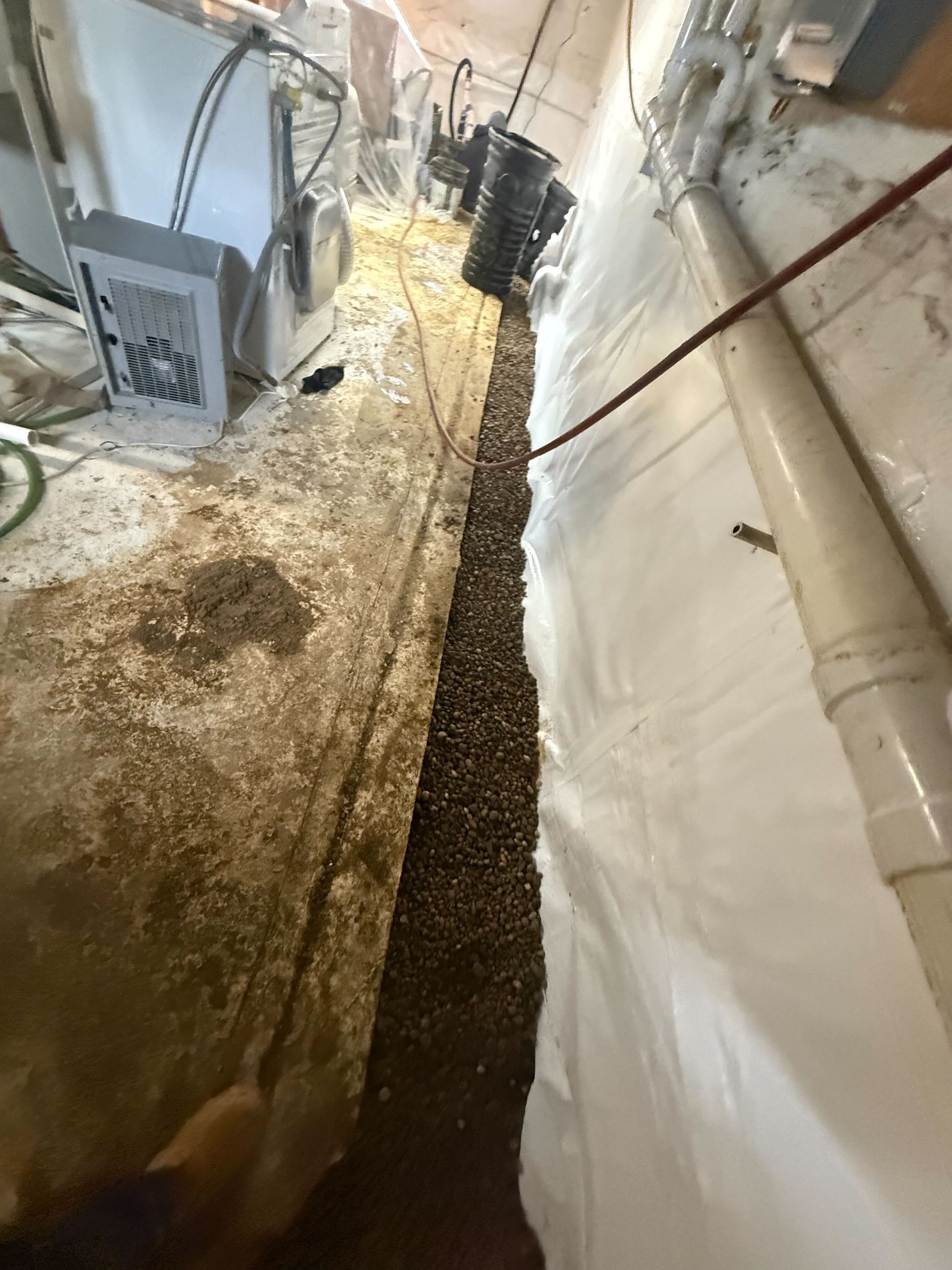
Another technique is installing interior water drainage. This involves creating a channel around the perimeter of your basement, which leads to a sump pump. The pump then expels the water outside. It’s a more labor-intensive process, but it can be a real game-changer in preventing water damage.
Lastly, consider the use of dehumidifiers to control moisture levels. Too much humidity can lead to condensation, which can cause mold and mildew. A good dehumidifier helps maintain the right balance.
Exterior Waterproofing Solutions
Diving right into exterior waterproofing, it’s crucial to tackle this head-on to prevent water from entering your basement in the first place. This method is more intensive than interior solutions, but it’s often the most effective.
Your first line of defense is a good gutter system. It directs rainwater away from your home, reducing the amount that can seep into your basement. Next, consider applying a waterproof coating or membrane to the exterior walls of your basement. This barrier prevents water from penetrating the concrete.
But let’s break it down further in a handy table:
| Solution | Description |
|---|---|
| Gutter System | Route rainwater away from the house. |
| Waterproof Coating | Apply to exterior walls to prevent penetration. |
| French Drain | Install at the base of your home to redirect water. |
Lastly, installing a French drain at the base of your home is another great solution. It catches water before it can reach your basement and redirects it safely away. Exterior waterproofing solutions may require more work, but they’ll offer you a drier and safer home. And that’s something you can’t put a price on.
Sump Pump Installation Guide
Finding your way through the world of sump pumps can be like finding your way through a labyrinth without a map, but we’re here to guide you. A sump pump, an essential tool for basement waterproofing, works by pumping out water that’s accumulated in a sump basin and directing it away from your home.
You’ll first need to choose the right pump. Submersible pumps are your best bet for a quiet operation, while pedestal pumps, though noisier, are more easily serviced and have a longer lifespan.
Once you’ve made your choice, you’ll need to dig a hole in the lowest part of your basement, large enough to fit your sump basin. Ensure the pump is level and secure before you connect it to the discharge pipe.
Test the pump by pouring water into the pit and watching it work. Finally, make sure to keep an eye on your pump, particularly during rainy seasons.
Don’t be intimidated by sump pump installation. With the right tools and a bit of patience, you’ll have a dry, safe basement in no time.
Frequently Asked Questions
What Is the Cost of Basement Waterproofing per Square Foot?
You’re likely to spend between $3 to $10 per square foot for professional basement waterproofing. However, these costs can vary based on your specific needs and the complexity of the job. Always get multiple estimates.
How Long Does a Professional Basement Waterproofing Job Typically Last?
You’d be amazed, but a professional basement waterproofing job can last over 10 years! It’s a long-term investment that protects your home, keeps it dry and safe, and saves you from costly water damage repairs.
Can I Waterproof My Basement Myself or Do I Need a Professional?
Yes, you can waterproof your basement yourself. However, it’s important to know your limitations. If you’re unsure or the job’s too big, it’s best to hire a professional to guarantee it’s done correctly.
Does Homeowners Insurance Typically Cover Basement Waterproofing?
Unfortunately, you’re out of luck. Homeowners insurance typically doesn’t cover basement waterproofing. It’s viewed as a maintenance issue, not an accidental event. Check your policy or contact your insurer for specific coverage details.
Will Waterproofing My Basement Increase My Homes Resale Value?
Absolutely, waterproofing your basement can increase your home’s resale value. It’s seen as a proactive measure, reducing potential future issues. Buyers appreciate the added assurance of a dry, safe basement, making your home more attractive.
Conclusion
So, don’t let your basement turn into a damp, moldy nightmare. With the right drainage, interior and exterior waterproofing, and a trusty sump pump, you can keep your home bone-dry and safe. Remember, these solutions are your home’s shield against moisture issues. Regular maintenance is the secret sauce to ensuring their longevity. After all, prevention is better than cure. Keep moisture at bay and enjoy a healthy, happy home, come rain or shine.

Ohio State Waterproofing has provided quality service with over 90,000 successful waterproofing and foundation repair installations and satisfied customers since our inception in 1978.
Ohio State Waterproofing’s philosophy for success is to provide honest, courteous and guaranteed service to every customer. Our reputation reflects this. Our well-trained waterproofing technicians are dedicated to complete customer satisfaction. This is achieved through fast, efficient processes as well as teamwork throughout this organization. You will always find a friendly representative willing to meet your needs at Ohio State Waterproofing.
We are a full service company that handles problems ranging from patching cracks to rebuilding basements. In addition, we hold three patents related to waterproofing that make us unique in the industry. These patents and our experience allow us to be able to do what every other waterproofer can do, but no one else can do what we do.
We are actively involved in the industry and community, including the National Association of Waterproofing Contractors, BHA, NARI, NAHB, NHIA, the BIA, the FHA and a number of consumer advocacy groups, as well as playing leading roles in a number of charitable functions.
But, most importantly, our highest degree of praise comes from the thousands of referrals we get from satisfied customers. Together they’ve made us a leader in the basement waterproofing and foundation repair industry.

