

Who Are the Most Trusted Waterproofing Contractors Near Me for Basement Waterproofing and Foundation Repair in Cleveland, Ohio?
When seeking the most trusted waterproofing contractors for basement waterproofing and foundation repair in Cleveland, Ohio, homeowners should prioritize providers with deep local soil and weather knowledge, reliable technologies, clear warranties, and transparent inspection processes. Companies like Ohio State Waterproofing exemplify these qualities, offering solutions that prevent long-term structural damage and protect indoor air quality. This article explains how trusted contractors diagnose problems, what services effectively stop leaks and stabilize foundations, and how homeowners can evaluate bids and warranties before committing to work. Readers will learn the common warning signs of basement water damage and foundation problems, the range of interior and exterior waterproofing and foundation repair solutions available, and how quality is ensured through patented solutions, transferable lifetime warranties, and free inspections that produce a tailored plan. The guide closes with practical selection criteria and step-by-step instructions for scheduling a free inspection with a verified local provider, including clear contact options for homeowners in Cleveland and surrounding areas.
Why Are Ohio State Waterproofing and Other Top Contractors Trusted in Cleveland?
Trusted waterproofing contractors earn confidence through a combination of local expertise, proven technologies, transparent policies, and consistent follow-through on repair and prevention plans. These firms diagnose how Cleveland’s soil and weather contribute to leakage and structural stress, then connect diagnosis to durable solutions such as interior drainage, perimeter systems, and wall reinforcements. Clear communication about scope, expected outcomes, and warranty coverage reduces homeowner uncertainty and prevents scope creep, while visual documentation and post-job follow-up verify results. The next sections examine local expertise and how customer evidence supports contractor trustworthiness.
What Local Expertise Do Trusted Waterproofing Contractors Have in Cleveland’s Unique Soil and Weather?
Local expertise means understanding how Cleveland’s freeze–thaw cycles, heavy lake-effect precipitation, and clay-rich soils increase hydrostatic pressure and frost heave risks that drive basement leaks and foundation settlement. Contractors use soil and site assessments to choose between interior drainage systems and exterior excavation or to recommend targeted piering for settlement problems. Knowing how seasonal moisture patterns interact with yard grading and drainage lets crews design solutions that perform year-round rather than applying temporary surface fixes. This local understanding shortens diagnosis time and reduces unnecessary work by pairing the correct method to the site conditions.
Soil Type and Foundation Infiltration Impact
The focus of this research is how soil type affects the infiltration next to the foundation and, consequently, how it impacts the performance of the building envelope.
How Do Customer Reviews and Satisfaction Prove Contractor Trustworthiness?
Customer reviews, project photos, and documented warranty claims offer tangible evidence of workmanship and follow-through that prospective homeowners should examine when vetting contractors. Look for recent reviews covering similar projects—basement waterproofing, crawl space encapsulation, or foundation repair—and for visual before-and-after examples that confirm the scope and quality of repairs. Consistent mentions of responsiveness, clear estimates, and warranty fulfillment are stronger trust signals than isolated praise, and structured presentation of case studies helps compare outcomes across providers. These evaluation habits improve the chance of selecting a contractor who delivers both durable repairs and reliable post-installation support.
What Basement Waterproofing and Foundation Repair Services Do Trusted Cleveland Contractors Offer?
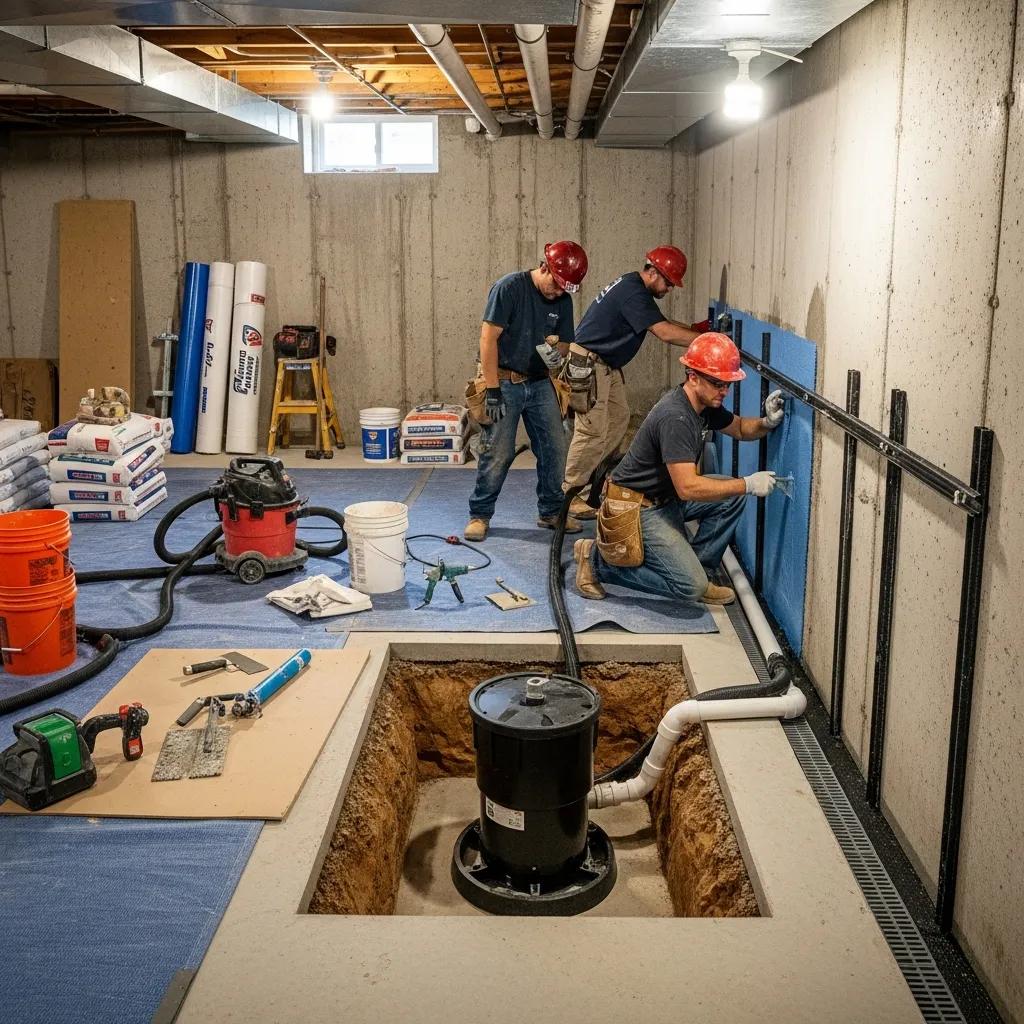
Trusted contractors offer a comprehensive set of services that map specific symptoms to engineered solutions: interior drainage and sump systems for seepage, exterior membrane and excavation for pervasive outside infiltration, foundation piers for settlement, and wall reinforcement for bowing or cracked walls. Technicians combine diagnostic tools and structural analysis to recommend the least-invasive effective approach and then document options and expected longevity for homeowners. Below are the core service categories with brief definitions and comparative guidance, followed by a concise comparison table to clarify use cases.
Interior and exterior waterproofing, foundation stabilization, crawl space encapsulation,mold prevention/remediation, and concrete leveling are the typical services provided by experienced Cleveland contractors. These services address water entry, structural movement, and indoor air quality impacts; each service is chosen based on a site-specific inspection. Contractors may also use proven product solutions as part of a system—examples such as SmartPower Battery Backup for sump systems or StablWall for wall reinforcement illustrate technologies that can be specified where appropriate. Choosing the right combination depends on the cause (hydrostatic pressure, soil movement, plumbing leaks), access constraints, and long-term homeowner goals.
Different approaches serve different conditions; the table below compares interior and exterior waterproofing to help homeowners weigh trade-offs.
| Solution | Installation / Typical Use-Case | Typical Pros & Cons |
|---|---|---|
| Interior drainage + sump pump | Used for basement seepage from perimeter or floor cracks; installs interior drain tile and pump | Pros: less exterior disturbance, quicker install; Cons: does not address exterior water entry path |
| Exterior membrane + excavation | Used when outside infiltration or severe hydrostatic pressure exists; installs waterproof membrane and exterior drain | Pros: addresses source of infiltration; Cons: more invasive and costlier |
| Wall reinforcement (carbon fiber, StablWall) | Used for bowed or deteriorating walls needing lateral support | Pros: restores wall stability with minimal excavation; Cons: may require long-term monitoring |
| Sump pump battery backup (SmartPower Battery Backup) | Protects pumps during outages and heavy storms | Pros: reduces failure risk during power loss; Cons: additional maintenance and periodic battery replacement |
This comparison clarifies how solutions differ by access, invasiveness, and scope. The next subsection explains interior vs exterior options in more detail.
Which Interior and Exterior Basement Waterproofing Solutions Are Most Effective?
Interior drainage systems redirect infiltrating water to a sump pump and are highly effective for managing clear seepage or periodic high groundwater that enters through floor/foundation joints. Exterior excavation with a membrane and perimeter drain confronts the source of infiltration and suits properties with severe surface runoff or high external hydrostatic pressure. Sump pumps, interior drainage, and vapor barriers typically require less yard disturbance and faster installation, while exterior work can offer a more permanent fix where site grading or exterior sources drive leaks. SmartPower Battery Backup is an example of a system component that supports interior solutions by protecting sump operation during power outages, improving reliability for homeowners.
Exterior Foundation Wall Waterproofing Methods
The first step in waterproofing any foundation wall is external waterproofing. This involves excavating the soil around the foundation and applying a waterproofing membrane or coating to the exterior surface of the wall.
How Do Foundation Repair Services Address Cracks, Bowed Walls, and Structural Issues?
Foundation repair methods match the failure mode: vertical cracks from settlement often require stabilizing piers or targeted epoxy or grout injection, while bowed walls commonly need reinforcement such as carbon fiber strips or an engineered system like StablWall to restore lateral strength. Helical or driven pier systems transfer load to competent soils beneath weakening strata, arresting further settlement and stabilizing slab-bearing loads. A proper structural assessment defines load paths and prescribes monitoring or staged remediation when multiple mechanisms contribute to movement. Timely intervention prevents minor cracks from becoming major structural repairs by stopping ongoing soil-driven movement.
What Crawl Space Waterproofing and Mold Prevention Services Are Available?

Crawl space solutions typically include encapsulation with a continuous vapor barrier, installation of a proper perimeter drainage system when needed, dehumidification, and targeted mold remediation where microbial growth is present. Encapsulation isolates the space from ground moisture and improves indoor air quality, while dehumidifiers or systems like E-Z Breathe can control humidity and support HVAC efficiency. Contractors document pre- and post-conditions and recommend maintenance practices to preserve the vapor barrier and drainage components. Proper crawl space work reduces energy loss, lowers mold risk, and protects floor joists and subflooring from decay.
How Can Homeowners Identify Signs That They Need Trusted Waterproofing Contractors Near Me?
Recognizing warning signs early allows homeowners to prioritize inspections and select appropriate repairs before problems escalate into structural or health hazards. Trusted contractors teach homeowners to distinguish urgent signs—like active flooding or severe bowing—from issues that can be scheduled promptly, such as persistent dampness or efflorescence. The diagnostic checklist that follows helps homeowners spot evidence of water intrusion and foundation movement and clarifies recommended response timelines. After recognizing signs, the next section explains how professionals diagnose and map symptoms to corrective solutions.
Common warning signs require different urgency levels; the list below summarizes high-value indicators that should trigger a contractor visit.
- Persistent dampness or water stains on walls or floors that do not dry within 24–48 hours.
- White, powdery efflorescence on masonry indicating ongoing moisture movement through concrete.
- Cracked or shifting moldings and interior trim along walls or windows suggesting settlement or movement.
- Musty odors or visible mold growth that imply long-term moisture and potential indoor air quality issues.
- Bowing or bulging basement walls indicating lateral soil pressure and structural compromise.
- Standing water in the basement after moderate rain, signaling inadequate drainage or sump failure.
- New vertical or diagonal foundation cracks that widen over time, suggesting active movement.
These signs guide urgency: active flooding or major bowing requires immediate action, while small stains merit scheduled inspection. The next subsection describes the diagnostic pathway trusted contractors follow.
What Are the Common Warning Signs of Basement Water Damage and Foundation Problems in Cleveland?
In Cleveland, homeowners should watch for damp basements after lake-effect storms, frost heave evidence in finished basements, and patterns of staining that follow the floor-wall joint or exterior grade lines. Persistent musty smells can indicate chronic moisture; efflorescence signals capillary water movement through concrete, and new or widening cracks point to active settlement or lateral loads. Recognizing the pattern of symptoms—seasonal versus persistent—helps determine whether surface grading, interior drains, or structural piers are likely required. When multiple signs appear together, urgency increases and a timely inspection is the prudent next step.
How Do Trusted Contractors Diagnose and Recommend Solutions for These Issues?
Trusted contractors follow a step-by-step diagnostic process combining visual inspection, moisture mapping, and structural assessment to identify both symptoms and root causes. Typical steps include exterior and interior visual surveys, moisture meter readings and probes, evaluation of grading and gutters, and where needed, structural load analysis to determine if piering or wall reinforcement is required. After diagnosis, contractors present an itemized plan with prioritized options, expected timelines, and warranty information so homeowners can compare solutions objectively. Free inspections often provide this documented scope and allow homeowners to make informed decisions about next steps.
How Do Trusted Waterproofing Contractors in Cleveland Ensure Quality and Long-Term Protection?
Quality assurance relies on combining proven products, documented procedures, transparent warranties, and post-installation service to preserve performance over time. Contractors select system components with track records for reliability and pair installations with clear maintenance guidance. Warranties—especially lifetime transferable warranties—and patented engineering solutions reduce homeowner risk and add resale value when they are verifiable and honored. The table below summarizes how common policies and products translate into homeowner benefit, and the following subsection explains warranty and patented-solution advantages in more detail.
A clear breakdown of warranty and product benefits helps homeowners compare the long-term value of competing offers.
| Policy or Product | Benefit | What the Homeowner Gets |
|---|---|---|
| Lifetime transferable warranty | Long-term protection and resale value | Coverage that can transfer to new owner, supporting property value |
| Patented solutions | Proven engineering with documented performance | Reduced risk of repeat failures due to method limitations |
| SmartPower Battery Backup | Operational continuity during outages | Reduced likelihood of sump pump failure in storms |
| E-Z Breathe / Encapsulation products | Moisture control and improved air quality | Lower humidity, fewer mold problems, energy benefits |
This table clarifies how policies and products contribute to durable outcomes. Next we review warranty specifics and how inspections underpin trust.
What Are the Benefits of Patented Solutions and Lifetime Transferable Warranties?
Patented engineering and proprietary components offer reproducible performance characteristics that simplify specification and long-term expectations for homeowners. A lifetime transferable warranty provides a clear guarantee mechanism that addresses future ownership changes and speaks to the contractor’s confidence in the solution. Homeowners should verify what warranty items cover—labor, parts, and transfer conditions—and ask for documentation describing maintenance requirements. Confirming warranty terms before work begins reduces the risk of post-installation disputes and preserves the home’s value when the property changes hands.
Basement Waterproofing Warranty Statute of Limitations
The court applied a three-year statute of limitations which began on the date of the contractor’s refusal to repair.84 The warranty on the waterproofing of the basement.
How Do Free Inspections and Personalized Consultations Build Customer Trust?
Free inspections and personalized consultations create transparency by documenting the problem, offering multiple remediation options, and estimating costs and timelines without pressure. During an inspection, homeowners receive a prioritized scope that distinguishes urgent repairs from preventative measures, and contractors explain expected outcomes and maintenance responsibilities. This consultative approach reduces unnecessary work and aligns homeowner expectations with engineering realities, which builds trust through clarity. Homeowners should expect a written scope, clear pricing options, and a proposed timeline as deliverables from the inspection visit.
How Can Homeowners Choose and Contact the Most Trusted Waterproofing Contractors Near Me?
Selecting a reliable contractor requires systematic verification: confirm documented warranties, review recent project photos and references, verify that the proposed solution matches the diagnosed cause, and prioritize clear, itemized estimates over low-ball bids. Prepare a list of questions about expected longevity, maintenance, and what is included in the estimate to support apples-to-apples comparisons. Finally, schedule an inspection to receive a documented plan; the following subsections provide a concise selection checklist and step-by-step scheduling guidance, including how to prepare for the inspection and the specific contact options for a verifiable local provider.
What Criteria Should Be Used to Select Reliable Waterproofing Companies in Cleveland?
Use a prioritized checklist to evaluate contractors objectively: verify documented warranty terms and whether warranties are transferable; request recent project photos and references for similar work; ensure the proposed method addresses the root cause rather than masking symptoms; and assess the clarity and itemization of the written estimate. Ask how the contractor documents work (photos, reports), what maintenance is required, and how follow-up service is handled. Comparing these factors reduces the risk of selecting a contractor who offers low initial cost but limited long-term protection.
- Verify warranty documentation and transferability.
- Request recent project examples and references for similar conditions.
- Confirm that the proposed solution targets the diagnosed cause.
- Require an itemized written estimate with timelines and maintenance guidance.
This checklist helps homeowners weigh reliability versus price and prepares them to ask informed follow-up questions.
How Can You Schedule a Free Inspection with Ohio State Waterproofing and Other Trusted Contractors?
To schedule a free inspection, gather basic property information (address, description of symptoms, photos if available) and contact the contractor to request a no-cost site visit. Prepare a short list of questions about warranty coverage, product examples you want to discuss (for instance, SmartPower Battery Backup, E-Z Breathe, StablWall, DuraShield), and any access or scheduling constraints. During the inspection expect a documented diagnosis, prioritized options, and an itemized estimate to compare against other bids.
- Prepare info: Note symptoms, photos, and any recent water events.
- Contact: Call the verified provider phone number to request a free inspection.
- During visit: Expect moisture readings, visual inspection, and a written scope.
- After visit: Review the itemized quote, warranty details, and maintenance needs before deciding.
Ready to get started? For homeowners in Cleveland considering a documented consultation, we at Ohio State Waterproofing are here to help. You can reach us directly by phone at 330-467-1055, or visit us at our local mailing address: 365 Highland Road Macedonia, Ohio 44056. We encourage you to use your free inspection to compare our documented scopes and warranty terms before authorizing any work, ensuring you feel completely confident in your decision.

Ohio State Waterproofing has provided quality service with over 90,000 successful waterproofing and foundation repair installations and satisfied customers since our inception in 1978.
Ohio State Waterproofing’s philosophy for success is to provide honest, courteous and guaranteed service to every customer. Our reputation reflects this. Our well-trained waterproofing technicians are dedicated to complete customer satisfaction. This is achieved through fast, efficient processes as well as teamwork throughout this organization. You will always find a friendly representative willing to meet your needs at Ohio State Waterproofing.
We are a full service company that handles problems ranging from patching cracks to rebuilding basements. In addition, we hold three patents related to waterproofing that make us unique in the industry. These patents and our experience allow us to be able to do what every other waterproofer can do, but no one else can do what we do.
We are actively involved in the industry and community, including the National Association of Waterproofing Contractors, BHA, NARI, NAHB, NHIA, the BIA, the FHA and a number of consumer advocacy groups, as well as playing leading roles in a number of charitable functions.
But, most importantly, our highest degree of praise comes from the thousands of referrals we get from satisfied customers. Together they’ve made us a leader in the basement waterproofing and foundation repair industry.
