
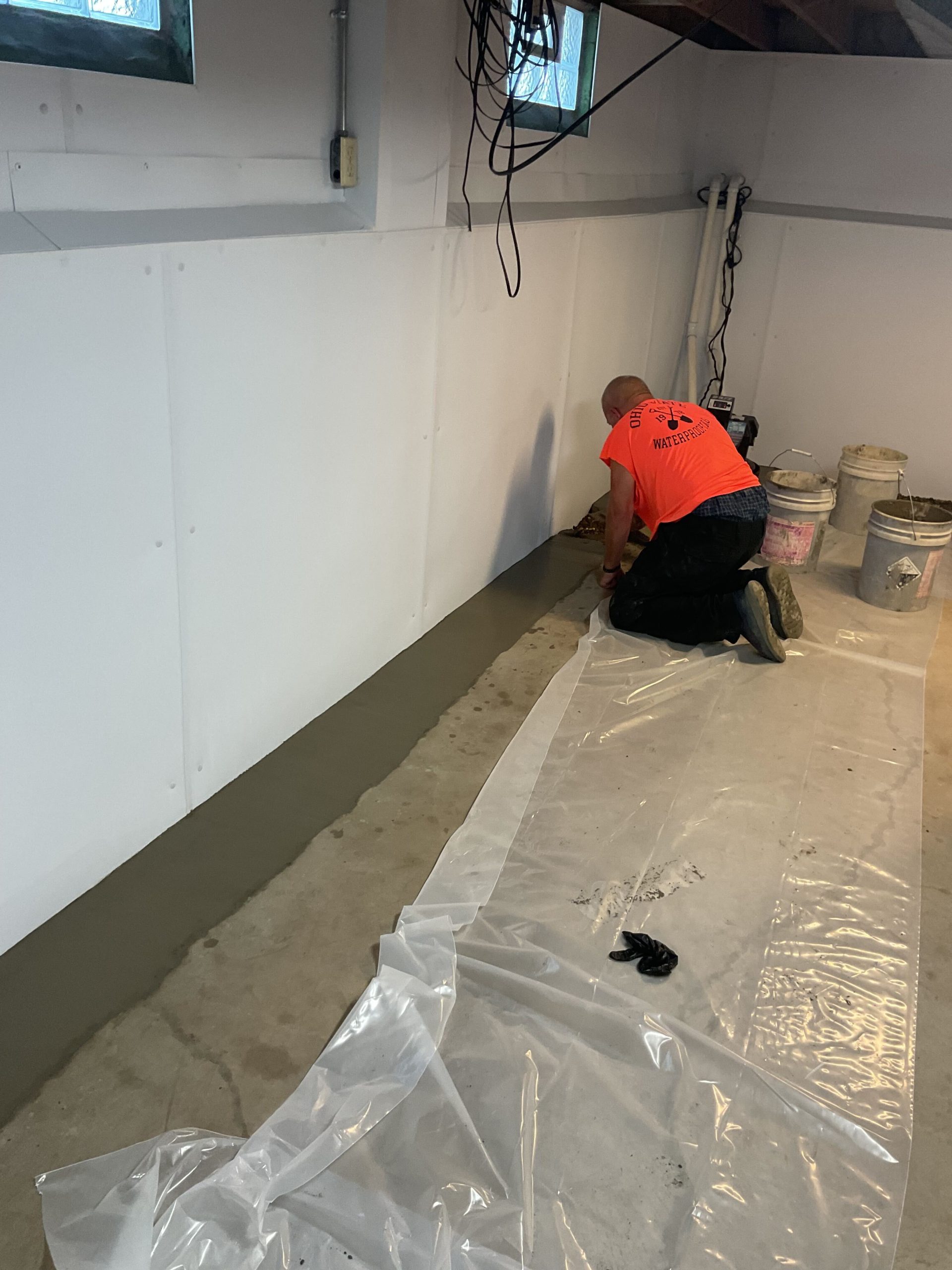
 Is it true that a combination of interior and exterior basement waterproofing methods provides the best long-term protection? You might consider exterior approaches, like excavation and the application of rubberized asphalt compounds, to prevent water from breaching your foundation. Meanwhile, interior strategies, such as using sealants or installing a sump pump, can tackle any moisture that does penetrate. But what about proper drainage and regular inspections for cracks? As you weigh these options, the question remains: what’s the most effective thorough approach to protect your basement from water damage and mold growth?
Key Takeaways
- Exterior waterproofing techniques, such as rubberized asphalt membranes, offer long-term protection by preventing water intrusion.
- Interior sealants can effectively prevent moisture penetration, with epoxy and polyurethane sealants offering durable and flexible solutions.
- Installing a sump pump assists in water removal, crucial for basements prone to flooding.
- Regular inspections and maintenance of the foundation, gutters, and basement windows can prevent water seepage and structural damage.
- Utilizing dehumidifiers can control humidity levels, preventing mold growth and maintaining a comfortable indoor environment.
Understanding Basement Waterproofing
Water damage, a homeowner’s nightmare, can often be avoided with proper basement waterproofing. You may think it’s an unnecessary expense, but consider the potential cost of ignoring it. Water seepage not only damages your property, but it can also lead to harmful mold growth, compromising your home’s structural integrity and your family’s health.
Understanding basement waterproofing starts with recognizing the signs of water intrusion. Look out for damp spots, moldy odors, or efflorescence – a white, powdery substance that indicates water seepage.
Be aware of what’s happening outside too. If your garden slopes towards your house, rainwater could be directed towards your basement, increasing the risk of seepage.
Basement waterproofing involves several methods. Exterior waterproofing is highly effective, but it’s also the most expensive. It involves digging around your home’s foundation to apply a waterproof coating.
Drainage improvements can also help, by redirecting water away from your home.
It’s not a DIY job. Engage a reputable waterproofing contractor who can accurately diagnose the problem and recommend an effective solution.
Interior Waterproofing Techniques
Now, let’s move onto the application of sealants and how to choose the right waterproofing materials for your basement.
You’ll need to understand the process thoroughly to guarantee a dry, secure basement.
Sealant Application Process
Opting for interior waterproofing, your first step involves applying a robust sealant. It’s a critical process, as it guarantees your basement walls remain dry and resistant to potential water damage. So, let’s break down the process for you.
Start by prepping your basement walls. They need to be clean and dry. Any dirt, dust, or existing paint must be removed. You can use a stiff brush or a pressure washer for this job, but remember, the cleaner the surface, the better the sealant will adhere. It’s time well spent.
Next, apply the sealant. Use a thick, even coat, covering every nook and cranny. Most sealants can be applied using a standard paint roller or brush, but always check the manufacturer’s instructions. Make sure you’re wearing protective clothing – this stuff can be sticky and sometimes toxic.
Allow the first coat to dry thoroughly. This may take several hours or even a day. Then, apply a second coat for extra protection. This double layer will guarantee a solid, watertight barrier between your basement and any potential water intrusion.
In this way, the sealant application process can provide long-term protection for your basement, preventing damage and maintaining its condition.
Choosing Waterproofing Materials
Having chosen to waterproof your basement from the inside, your next step is to select the right waterproofing materials. This choice is vital because the materials you use dictate how effectively your waterproofing efforts hold up over time.
You’ve got a few options here. Concrete sealers are a popular choice. They’re easy to apply and penetrate deep into the concrete to form a durable, waterproof barrier.
Remember, though, they’re not ideal for basements with serious water issues as they don’t handle hydrostatic pressure well.
Epoxy and polyurethane sealants, on the other hand, are great for sealing cracks. Epoxy is incredibly tough and bonds securely to the concrete, while polyurethane is flexible, expanding and contracting with the crack.
Then there’s waterproofing paint. It’s a thicker version of acrylic wall paint and is best used as a supplemental waterproofing method.
Lastly, consider a waterproofing membrane. It’s a rubberized asphalt solution that’s applied to the interior foundation walls. It’s durable, capable of handling minor shifting in the foundation, and it’s highly resistant to hydrostatic pressure.
Whatever you choose, just make sure it’s suitable for your basement’s specific needs.
Exterior Waterproofing Methods
Now let’s turn our attention to exterior waterproofing methods.
It’s important for you to understand how these techniques work, as they can be an essential part of keeping your basement dry.
From choosing the most suitable method to knowing the practical steps involved, we’ll guide you through each detail.
Understanding Exterior Waterproofing
If you’re battling against a damp or flooded basement, exterior waterproofing might be the solution you need. This method involves applying a waterproof barrier to the outside walls of your basement to prevent water from seeping in.
You might wonder why you’d choose exterior waterproofing over interior methods. The main advantage is that it tackles the problem at the source. Instead of merely managing water that’s already gotten inside, it stops water from entering in the first place. This can save you a lot of hassle and potentially costly damage in the long run.
Exterior waterproofing typically involves excavation around your home to access the foundation walls. The walls are then cleaned and inspected for cracks or damage. A waterproof coating, often a rubberized asphalt compound, is applied, followed by installing a drainage system to divert water away from the foundation.
While it’s more disruptive and typically pricier than interior methods, exterior waterproofing provides a more robust and long-lasting solution.
It’s especially advisable if you live in an area prone to heavy rains or you have a high water table. It’s a solid investment in the health of your home and your peace of mind.
Choosing Suitable Waterproofing Techniques
Selecting the right exterior waterproofing method for your home can feel overwhelming, but it doesn’t have to be. It starts with understanding your home’s specific needs and the various options available.
Exterior waterproofing, often the best solution for long-term protection, involves several techniques. Let’s break down some of the most effective ones.
First, there’s the excavation method. This involves digging around your home’s foundation, applying a waterproof coating, and installing a drainage system. It’s a thorough solution, but it can be costly and disruptive to your landscape.
Then, you’ve got exterior drain tiles. These are installed around your home’s foundation to direct water away, preventing it from entering your basement. It’s less intrusive than excavation, but still requires some digging.
Another option is waterproofing membranes. These are thick coats of waterproof material applied to your home’s exterior walls. They’re highly effective, but their success depends on professional installation.
Lastly, consider sodium bentonite clay. This natural material is used to create a barrier between your home and groundwater. It’s eco-friendly and affordable, but it’s not suitable for all soil types.
Importance of Proper Drainage
Ever wondered why proper drainage is so crucial in basement waterproofing? It’s because without it, you’re inviting a host of problems. Let’s explore the specifics, shall we?
Firstly, your basement is the lowest point in your home, making it a magnet for water. Poor drainage causes water to pool, which can lead to structural damage. Over time, this water can seep into your basement, damaging walls, flooring, and any items stored there.
Secondly, improper drainage can trigger mold growth. Damp, dark basements are the perfect breeding ground for mold. Not only can mold ruin your belongings, but it can also pose serious health risks, including respiratory issues and allergic reactions.
Thirdly, adequate drainage systems help maintain your home’s foundation. Water can erode the soil around your home, causing your foundation to settle and crack. Proper drainage diverts this water, protecting your home’s structural integrity.
In short, proper drainage is essential in basement waterproofing. It keeps your home safe, healthy, and dry.
The Role of Dehumidifiers
While a good drainage system protects your home from the outside, it’s equally important to address humidity inside the basement. Excessive moisture can cause a host of problems, from mold growth to structural damage. That’s where a dehumidifier comes in.
A dehumidifier is a device that reduces the level of humidity in the air. It’s like a vacuum that sucks in air, removes the moisture, and then releases the dry air back into the room. This process helps to maintain an ideal level of humidity, preventing the damp, musty odors often associated with basements.
When choosing a dehumidifier, consider the size of your basement and the device’s capacity. You’ll need a larger, more powerful unit for a big basement or one that’s particularly damp.
Regularly empty the device’s water collection tank, or opt for a model that can be connected to a drain for continuous operation.
Preventive Measures for Water Intrusion
Nearly every homeowner will face the problem of water intrusion at some point. To prevent this, there are measures you can take.
First, maintain your gutters. They’re designed to channel water away from your home’s foundation. If they’re clogged or broken, they can’t do their job.
Another preventive measure is to guarantee your lawn slopes away from your home. A flat or downward slope could lead to water pooling around your foundation, increasing the risk of intrusion.
If your lawn currently slopes towards your house, consider hiring a landscaping service to rectify this issue.
Basement windows should also be well-sealed. If they’re not, they can allow water to seep in. Weather stripping or caulking can help create a watertight barrier.
Frequently Asked Questions
What Are the Cost Implications of Basement Waterproofing?
You’ll find that basement waterproofing costs vary depending on the method used. It’s an investment, but consider the expense of potential water damage repairs. Weighing these factors helps you make the best long-term financial decision.
Can I Do Basement Waterproofing Myself or Do I Need a Professional?
You can tackle minor waterproofing tasks yourself. However, for extensive issues, it’s advisable to hire a professional. They’ve got the expertise and tools to guarantee long-term protection against water damage. DIY may not always be foolproof.
How Long Does the Waterproofing Process Usually Take?
The length of the waterproofing process varies. It depends on your basement’s size and the method used. Typically, it can take a few days to a week. It’s quicker if you’re applying a waterproofing paint yourself.
What Are the Signs That My Basement Needs Waterproofing?
You’ll know your basement needs waterproofing if you spot signs like damp walls, a musty smell, mold growth, or water puddles. Around 60% of basements have a moisture issue, so it’s essential to act quickly.
Will Basement Waterproofing Increase the Value of My Home?
Absolutely, basement waterproofing can greatly enhance your home’s value. It’s a practical investment, safeguarding your property from potential damage, reducing maintenance costs, and providing peace of mind for future residents or buyers.
Key Takeaways for Effective Basement WaterproofingConclusion
So, you’ve got the scoop on basement waterproofing. Remember, the best methods involve a mix of interior and exterior strategies. Don’t underestimate the power of proper drainage, dehumidifiers, and routine inspections. They’re not just extras; they’re essential for long-term protection. By taking these proactive steps, you’re not just protecting your basement, but you’re investing in the overall health and longevity of your home. Waterproofing isn’t a theory; it’s a practical solution for safeguarding your property.

Ohio State Waterproofing has provided quality service with over 90,000 successful waterproofing and foundation repair installations and satisfied customers since our inception in 1978.
Ohio State Waterproofing’s philosophy for success is to provide honest, courteous and guaranteed service to every customer. Our reputation reflects this. Our well-trained waterproofing technicians are dedicated to complete customer satisfaction. This is achieved through fast, efficient processes as well as teamwork throughout this organization. You will always find a friendly representative willing to meet your needs at Ohio State Waterproofing.
We are a full service company that handles problems ranging from patching cracks to rebuilding basements. In addition, we hold three patents related to waterproofing that make us unique in the industry. These patents and our experience allow us to be able to do what every other waterproofer can do, but no one else can do what we do.
We are actively involved in the industry and community, including the National Association of Waterproofing Contractors, BHA, NARI, NAHB, NHIA, the BIA, the FHA and a number of consumer advocacy groups, as well as playing leading roles in a number of charitable functions.
But, most importantly, our highest degree of praise comes from the thousands of referrals we get from satisfied customers. Together they’ve made us a leader in the basement waterproofing and foundation repair industry.
