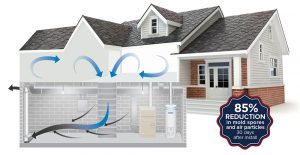
As part of our basement waterproofing services, Ohio State Waterproofing will locate and remove any sources of basement mold. Without water and dampness to grow, the mold will dry up die. As long as the source of moisture does not come back, neither will the mold.
Complete waterproofing will stop mold from growing back or ever appearing in the first place. If your basement hasn’t been waterproofed yet, explore our basement waterproofing options online.
One common issue is when the basement foundation is cracked or damaged, which lets water seep in that allows mold to thrive. Our high-pressure foundation crack injections can fix these problems quickly and easily. In some extreme cases, the foundation is too damaged for repair, and a foundation replacement is necessary.
If you’re not sure which service you may need, contact us for a FREE inspection!
Ohio State Waterproofing also has a great selection of waterproofing products that can remove moisture from the air or prevent it from invading your basement in the first place!
After the moisture source that is feeding the mold is removed, the mold will quickly die and become easier to clean. With a simple wire brush, scrape the mold off the surface until it’s completely removed. Then simply wash the surface with either a combination of bleach and water, or a household mold removal product, available from most hardware stores.
Removing mold without waterproofing your basement won’t do any good. Even after you clean it, if the water source remains, the mold will come back. If you find new mold growth after waterproofing, it could mean there’s a new source of water.
 CALL OHIO STATE NOW!
basement mold removal and waterproofing, remove mold basement, mold removal and prevention, basement mold clean up, basement mold solutions, mold in basement removal, basement mold control, basement mold prevention, basement waterproofing and mold removal, basement mold removal, mold damage ohio city, mold mitigation
Mold thrives in specific conditions, primarily where there is a consistent source of moisture. Understanding these conditions is crucial for effective prevention and remediation. High humidity levels, water leaks, and poor ventilation can create an ideal environment for mold spores to settle and grow.
To combat mold growth, homeowners should regularly monitor humidity levels, especially in areas like basements and bathrooms. Utilizing dehumidifiers, ensuring proper ventilation, and promptly addressing leaks can significantly reduce the likelihood of mold infestations in the home.
Exposure to mold can lead to a variety of health issues, particularly for individuals with allergies or respiratory conditions. Symptoms may include sneezing, coughing, skin irritation, and in severe cases, respiratory infections. Understanding these risks is vital for homeowners to take mold seriously.
According to the Centers for Disease Control and Prevention (CDC), prolonged exposure to mold can exacerbate asthma symptoms and lead to chronic respiratory issues. It's essential to address mold problems swiftly to protect the health of your family and prevent long-term health complications.
There are several types of mold that can commonly be found in residential settings, including Aspergillus, Cladosporium, and Stachybotrys, often referred to as black mold. Each type has its own characteristics and potential health effects, making it important for homeowners to recognize them.
For instance, black mold is notorious for its toxicity and can pose serious health risks if left untreated. Identifying the specific type of mold present in your home can aid in determining the most effective removal strategies and necessary precautions to take during the remediation process.
Implementing preventive measures is key to avoiding mold infestation in your home. Regular inspections, proper drainage, and routine maintenance of plumbing systems can help mitigate the risk of mold growth. Homeowners should be proactive in identifying potential moisture sources before they become a problem.
Additionally, sealing cracks in walls, maintaining gutters, and ensuring that appliances that produce moisture, like dryers and dishwashers, are properly vented can significantly reduce the chances of mold taking hold. By taking these steps, homeowners can create a less hospitable environment for mold.
