
 When you’re faced with the decision between interior and exterior waterproofing for your home, you might feel a bit overwhelmed. Both methods have their benefits and drawbacks, and the right choice will largely depend on your home’s specific needs. Interior waterproofing can be less invasive and more cost-effective, yet it might not tackle the root cause of your water issues. On the other hand, while exterior waterproofing can provide a more thorough solution, it often comes with a heftier price tag and more disruptive installation process. So how do you decide which route is the best for your home? Let’s explore this further.
Key Takeaways
- Interior waterproofing is cost-effective and good for managing high water tables, but doesn’t address root moisture causes.
- Exterior waterproofing prevents moisture intrusion at the source, enhancing structural longevity but comes with higher costs.
- Older homes or those with specific landscape considerations may benefit more from exterior waterproofing.
- While interior options are less expensive upfront, the long-term cost savings of exterior waterproofing should be evaluated.
- The choice between interior and exterior waterproofing depends on the specific moisture issues and the best approach for their resolution.
Understanding Interior Waterproofing
Why is interior waterproofing so crucial? Imagine this: you’ve invested a considerable amount of time, energy, and money in creating a warm, welcoming space in your basement or lower level.
However, without proper interior waterproofing, all your investment could be wasted due to water intrusion and subsequent damage.
Water can penetrate your home in a variety of ways, including through cracks in walls and floors, as a result of high humidity, or due to inadequate drainage systems.
When it does, it can lead to structural damage, mold and mildew growth, and even health problems for you and your family.
That’s where interior waterproofing comes into play.
Interior waterproofing involves the application of waterproofing materials to the inside of your home’s foundation.
It’s designed to stop water from getting into your home and causing damage, keeping your living spaces dry and safe.
Interior waterproofing is particularly crucial for homes in damp climates, or those with basements and lower levels susceptible to water intrusion.
Pros and Cons of Interior Waterproofing
Maneuvering the landscape of interior waterproofing can be complex, with various pros and cons to contemplate. A key advantage you’ll appreciate is its cost-effectiveness. Unlike exterior solutions, interior waterproofing often doesn’t involve extensive excavation, typically leading to lower labor costs.
It’s usually easier to maintain and repair, too. This method also works well in managing high water tables and water seepage, providing you with a drier, more comfortable living space.
However, not all is rosy with interior waterproofing. One major drawback is that it doesn’t address the root cause of the moisture problem, which often lies outside your home.
It’s more of a management solution than a preventative one, making it potentially unsuitable for long-term, thorough moisture control. It’s also less effective for structural issues related to water damage.
Additionally, the installation can be disruptive and messy, requiring you to clear out the affected areas and possibly live with some construction noise and dust.
Unpacking Exterior Waterproofing
Diving into exterior waterproofing, it’s vital to grasp that this method tackles the moisture issue at its source – outside your home. Instead of addressing water intrusion once it’s inside, this approach aims to prevent water from entering in the first place.
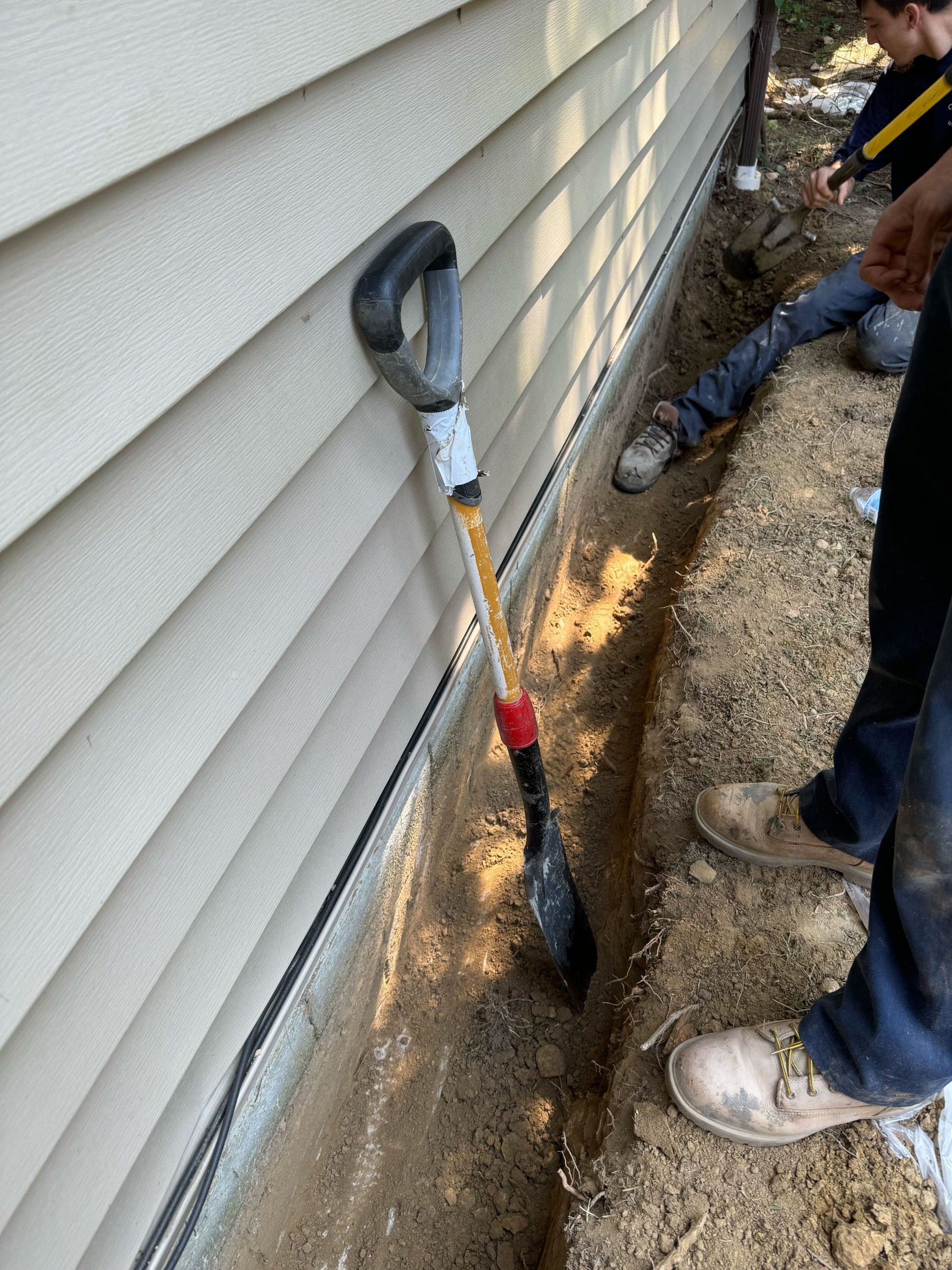
Exterior waterproofing involves excavating around the home’s foundation, typically down to the footer. Once exposed, the walls are cleaned and inspected for cracks or defects. Any identified issues are then repaired using hydraulic cement, which expands as it dries to seal the cracks effectively.
Following this, a waterproofing membrane is applied to the exterior walls. This barrier is designed to keep water from penetrating the foundation.
A drainage system, usually a French drain, is also installed around the perimeter of your house. This system collects water from the soil and diverts it away from your home, further preventing moisture intrusion.
In essence, exterior waterproofing is a thorough solution that addresses both surface water and groundwater issues, providing a robust shield against water damage.
However, it’s significant to mention that it’s generally more labor-intensive and costlier than interior waterproofing. But, if implemented correctly, it can offer long-lasting protection for your home.
Advantages and Disadvantages of Exterior Waterproofing
When evaluating the merits of exterior waterproofing for your home, it’s essential to weigh both the advantages and disadvantages.
On the plus side, this type of waterproofing offers thorough protection against water damage. Exterior waterproofing acts as a barrier, stopping water from penetrating your home’s foundation. This can be especially beneficial in areas prone to heavy rain or flooding. Additionally, exterior waterproofing can enhance the longevity of your home’s structure.
But, there’s a flip side. Exterior waterproofing can be more expensive than interior options. It involves excavating around your home, which can be disruptive and time-consuming.
You’ll need to take into account the landscape around your house, as this process can potentially damage plants and structures.
Maintenance can also be more challenging with exterior waterproofing. If the waterproofing membrane gets damaged, repairs can be costly and invasive.
It’s important to guarantee that the installation is done correctly the first time to avoid future issues.
Factors to Consider When Choosing
Exploring the wide range of waterproofing options can seem intimidating. But don’t worry! Here are some factors to weigh that will help you make the best choice for your home.
First, evaluate your home’s age and construction. Older homes may have more structural issues that could benefit from exterior waterproofing.
Similarly, if your house is built on a slope, you’ll likely need exterior solutions to prevent water from seeping in.
Next, think about your budget. Interior waterproofing tends to be less expensive, but it may not address the root cause of your water issues.
Conversely, exterior waterproofing can be more costly upfront but could save you money in the long run by preventing costly damage.
Frequently Asked Questions
What Is the Average Cost Difference Between Interior and Exterior Waterproofing?
You’re asking about cost differences. Generally, exterior waterproofing is more expensive than interior. It varies based on job size, but it’s typically 20-30% more. However, remember, each project’s unique circumstances can affect this estimate.
Can I Perform DIY Interior or Exterior Waterproofing, or Should I Hire Professionals?
You can tackle DIY waterproofing if you’re handy, but it’s risky. Professionals guarantee the job’s done right, preventing future damage. It’s costlier upfront, but hiring pros can save you significant money and stress down the line.
How Long Does Each Type of Waterproofing Solution Typically Last?
You’re asking about durability. Typically, interior waterproofing solutions can last around 10-15 years while exterior ones can last over 20 years. However, it’s essential to maintain them properly for the best longevity.
Are There Any Specific Maintenance Activities Required After Either Interior or Exterior Waterproofing?
Yes, maintenance is required. For interior waterproofing, you’ll need to regularly check and clean your sump pump. With exterior waterproofing, you should inspect the drainage system and clear debris from gutters and downspouts.
How Does the Choice of Waterproofing Method Impact a Buildings Resale Value?
Your choice of waterproofing method can greatly impact your building’s resale value. A well-executed waterproofing, either interior or exterior, increases buyer confidence and can boost the property’s value. It’s an investment worth considering.
Conclusion
Choosing between interior and exterior waterproofing isn’t a one-size-fits-all decision. It’s about weighing the pros and cons, considering your budget, and understanding the nature of your home’s moisture issues. While interior solutions may be more affordable and easier to maintain, they don’t address root causes. On the other hand, exterior waterproofing offers thorough protection, but at a higher cost. So, assess your unique needs before making a final choice.

Ohio State Waterproofing has provided quality service with over 90,000 successful waterproofing and foundation repair installations and satisfied customers since our inception in 1978.
Ohio State Waterproofing’s philosophy for success is to provide honest, courteous and guaranteed service to every customer. Our reputation reflects this. Our well-trained waterproofing technicians are dedicated to complete customer satisfaction. This is achieved through fast, efficient processes as well as teamwork throughout this organization. You will always find a friendly representative willing to meet your needs at Ohio State Waterproofing.
We are a full service company that handles problems ranging from patching cracks to rebuilding basements. In addition, we hold three patents related to waterproofing that make us unique in the industry. These patents and our experience allow us to be able to do what every other waterproofer can do, but no one else can do what we do.
We are actively involved in the industry and community, including the National Association of Waterproofing Contractors, BHA, NARI, NAHB, NHIA, the BIA, the FHA and a number of consumer advocacy groups, as well as playing leading roles in a number of charitable functions.
But, most importantly, our highest degree of praise comes from the thousands of referrals we get from satisfied customers. Together they’ve made us a leader in the basement waterproofing and foundation repair industry.

