
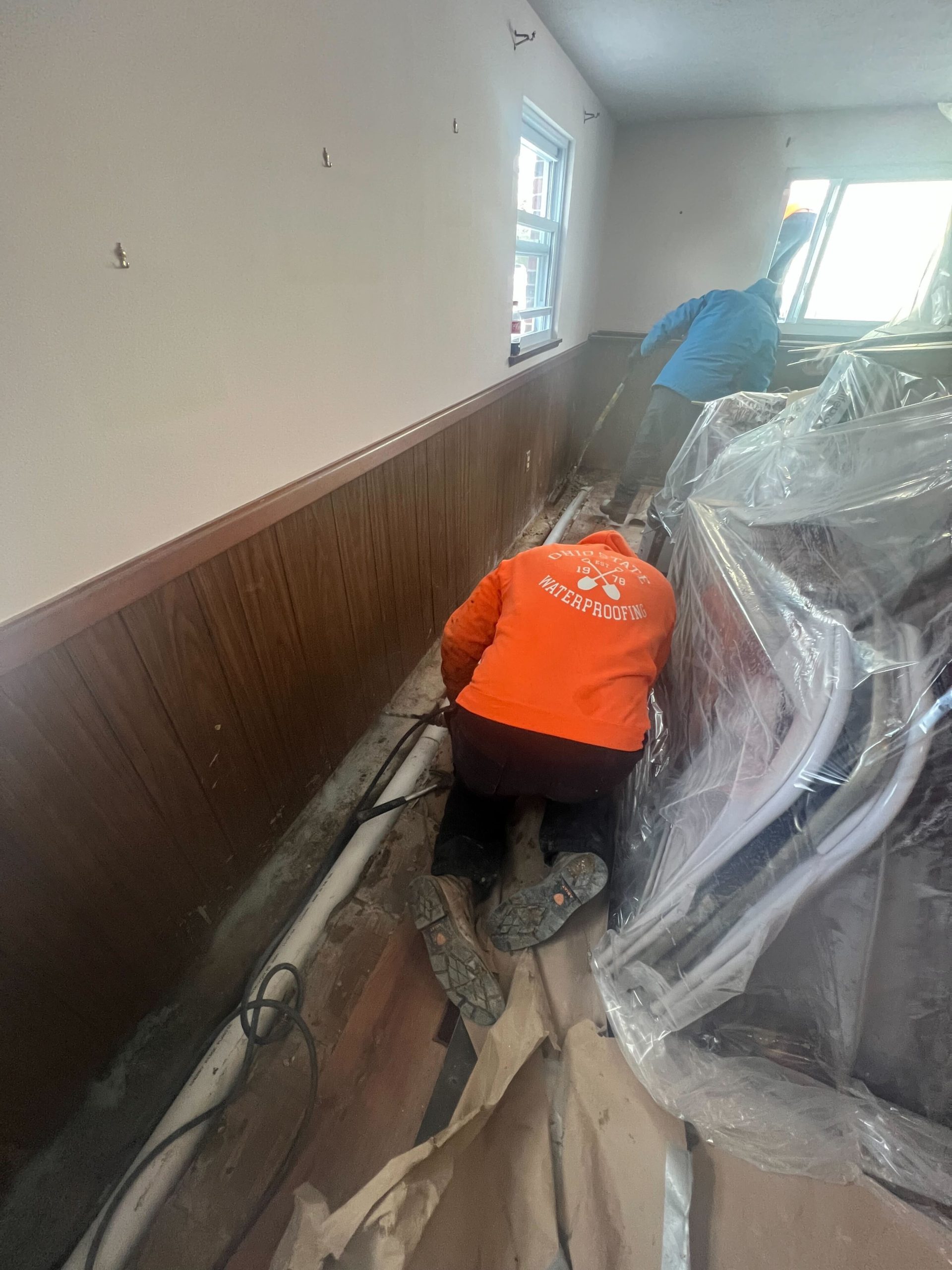
 You’re standing in your basement, eyeing a damp patch on the wall with growing concern. You’re faced with a choice: install a French drain or opt for an interior drainage system? Sure, French drains effectively redirect water, but they do demand significant excavation and maintenance. On the other hand, interior systems are less invasive and directly address those pesky basement leaks. Which one is the better waterproofing method? Well, that depends on your specific circumstances. Stick around, and we’ll unpack the pros and cons of each option.
Key Takeaways
- French drains intercept water externally, reducing water damage risk but require substantial excavation and maintenance.
- Interior drainage systems directly address water intrusion, preventing basement flooding with less disruptive installation and maintenance.
- The choice between French drains and interior drainage depends on individual water issues, budget, and acceptable level of disruption.
- French drains can be more environmentally disruptive, while interior systems have a lower impact but don’t address underlying issues like foundation cracks.
- Regular inspections and maintenance are crucial for both systems, and homeowners should consult with professionals for tailored solutions.
Understanding French Drains
While you may not be familiar with the term, French drains are an effective solution to manage excess water. These ingenious systems, named after Henry Flagg French, an American judge and agriculturalist, are nothing more than a simple ditch with a gradient, filled with gravel or rock, containing a perforated pipe that directs surface or groundwater away from a specific area.
The way a French drain works is pretty straightforward. Water flows into the trench, gets collected by the pipe, and is then diverted away from your property. These drains are typically installed in areas prone to water accumulation, such as the perimeter of a house or in the landscape where water tends to pool.
What makes French drains unique is their ability to handle significant volumes of water. They’re usually buried in the ground, making them unobtrusive and efficient.
The depth and width of the trench, the size of the gravel, and the type of pipe used all affect how well a French drain performs. With proper installation and maintenance, French drains can offer a long-lasting solution to your excess water problems.
Advantages of French Drains
Offering a host of benefits, French drains have proven to be an invaluable asset for homeowners and landscape enthusiasts alike.
First and foremost, French drains are incredibly effective at preventing water buildup. They’re designed to redirect water away from your home, mitigating the risk of water damage and mold growth.
Another significant advantage is that French drains are relatively easy to install. Even if you’re not a DIY whiz, you’ll find that the process is straightforward and doesn’t require a host of specialized tools. This means you’ll save on labor costs if you choose to install it yourself.
Moreover, French drains are highly versatile. They can be installed virtually anywhere on your property where water accumulation is a concern. Whether it’s your lawn, garden, or near the foundation of your home, a French drain can be an effective solution.
Lastly, French drains are low maintenance. Once installed correctly, they require minimal upkeep, freeing up your time for other important tasks.
This cost and time effectiveness make French drains a popular choice for many homeowners. So when you’re contemplating waterproofing methods, consider the French drain for its manifold advantages.
Limitations of French Drains
While French drains have their benefits, it’s important to take into account their limitations.
You may encounter challenges during installation, struggle with maintenance and longevity issues, and need to contemplate certain environmental impacts.
Let’s address these points to guarantee you’re making an informed decision for your drainage needs.
French Drains Installation Challenges
Despite their effectiveness, installing French drains can present some significant challenges. The process is labor-intensive and requires deep excavation, often around the entire perimeter of your house.
You’ll need heavy machinery to dig, which can make the task pricey and cause landscape disruption.
Another hurdle is the necessity of proper placement. The drain must be installed at the right depth and slope to guarantee water flows away from your home, not towards it.
Incorrect installation can lead to ineffective drainage or even damage to your home’s foundation.
Let’s not forget about the potential for unforeseen obstacles. You might encounter unexpected rocks or roots that can complicate the installation process.
Additionally, if your property is on a slope, or if the soil is heavy clay, it can make digging and installation more difficult.
Maintenance and Longevity Issues
Though French drains can be an effective solution for managing excess water, they come with their own set of maintenance and longevity challenges. Over time, they can become clogged with leaves, roots, and sediment, reducing their effectiveness.
You’ll need to regularly clean and maintain your French drain to guarantee it continues to function properly.
Additionally, the lifespan of a French drain can vary greatly depending on several factors. For instance, if the drain is installed correctly, it could last up to ten years. However, poor installation, the use of low-quality materials, or harsh weather conditions can greatly reduce its lifespan.
Moreover, French drains are susceptible to freezing in colder climates. When water in the drain freezes, it can cause blockages and eventually lead to cracks in the pipe. This can result in costly repairs and even the need for complete replacement.
In contrast, interior drainage systems, although not without their own challenges, generally require less maintenance and have a longer lifespan. They’re not exposed to outdoor elements and consequently less likely to experience problems associated with freezing or clogging from outdoor debris.
For this reason, they often provide a more reliable long-term solution for your waterproofing needs.
Environmental Impact Considerations
In relation to the aforementioned maintenance and longevity issues, it’s important not to overlook the environmental impact that French drains can have. While they’re an effective means of diverting water away from your property, the construction process can disrupt the soil, leading to erosion and potential disruption of nearby plant life.
Moreover, water rerouted from your property doesn’t simply vanish—it has to go somewhere. Often, it’s directed towards storm drains, which can strain municipal water treatment facilities during periods of heavy rainfall. In areas prone to flooding, this can exacerbate the problem, potentially leading to infrastructure damage or even sewage overflow.
The materials used to construct French drains can also be a concern. Some types of pipe, for instance, are made from PVC, a type of plastic that’s non-biodegradable and can leach chemicals into the soil.
While alternatives exist—like perforated aluminum or ceramic pipes—their use isn’t universal, and they can be more expensive.
In contrast, interior drainage systems, while not without their own environmental considerations, generally have less of an impact on the surrounding ecosystem and infrastructure. They’re contained within your property, minimizing potential disruption.
Exploring Interior Drainage Systems
Now, let’s turn our attention to interior drainage systems.
You’ll find these systems have unique benefits which we’ll explore in detail, but it’s also essential to be aware of potential drawbacks.
This balanced perspective enables you to make the most informed decisions about your property’s drainage needs.
Benefits of Interior Drainage
Interior drainage systems offer an array of benefits that can dramatically improve the health and longevity of your home.
You’ll find that these systems are designed to work in harmony with your house’s existing structures, minimizing potential disruptions during their installation. They’re usually installed in the perimeter of your basement, effectively arresting water at the entry point and preventing it from causing damage.
What’s more, these systems are known for their efficiency. They work by directing the water to a sump pump which then expels it out and away from your home. This means that even during heavy rainfalls, you don’t need to worry about water seeping into your basement and causing problems.
Another key advantage is that interior drainage systems are typically less invasive and less costly compared to exterior options like French drains. They don’t require any major excavation work, saving you both time and money.
You’ll also appreciate their low maintenance nature. Once installed, they continue to operate effectively with minimal upkeep, providing you with peace of mind for years to come.
In short, interior drainage systems offer a practical and cost-effective solution for protecting your home against water damage.
Potential Drawbacks to Consider
While interior drainage systems are a solid choice for many homeowners, it’s essential to be aware of the potential drawbacks. First, you should know that installing an interior drainage system can be disruptive. You might need to move furniture or other items, and the installation process can generate dust and noise.
Second, although these systems are designed to deal with water intrusion, they may not address the source of the problem. If you’ve got a crack in your foundation or a leaky basement window, an interior drainage system won’t fix that. It’s merely a band-aid solution.
Finally, keep in mind that these systems can be pricey. Depending on the size of your home and the complexity of the installation, it could cost thousands of dollars.
Here’s a quick table summarizing the potential drawbacks:
| Potential Drawback | Description |
|---|---|
| Disruption | Moving furniture, dust, noise during installation |
| Doesn’t Address the Source | May not fix foundation cracks or leaky windows |
| Costs | Can be expensive depending on size and complexity |
Benefits of Interior Drainage
In the domain of home improvement, you might find yourself gravitating towards interior drainage systems for a variety of reasons. One of the primary benefits of such an approach is its effectiveness in countering hydrostatic pressure, a common cause of basement leaks. By installing a system beneath your basement floor, you’re directly addressing this pressure, preventing water from seeping into your home.
Interior drainage systems also offer advantages regarding maintenance. They’re enclosed within your home, thereby protecting them from external factors such as weather conditions or root intrusions. This results in fewer maintenance problems, saving you time and potential repair costs.
In addition, interior drainage systems are often more affordable than their exterior counterparts, making them an attractive option if you’re working with a limited budget. They’re also effective in both old and new constructions, providing flexibility regardless of your home’s age.
Lastly, such systems are typically less disruptive to install. Unlike exterior solutions that may require extensive excavation, interior systems can often be installed with minimal disruption to your home and lifestyle.
Drawbacks of Interior Drainage
Despite the numerous advantages, there are certain drawbacks to interior drainage systems that you should be aware of.
One of the main downsides is the complexity of installation. This isn’t a simple DIY project – you’ll need to hire professional contractors. This can lead to increased costs, especially if your basement is finished or has complex layouts.
Another disadvantage you’ll face is the potential for damage to your home. The interior drainage system installation involves heavy machinery, and there’s always a risk of unintentional damage to your property.
Additionally, it’s a disruptive process. You might need to vacate your home during the installation, or at least deal with a lot of noise and dust.
The last pitfall to evaluate is maintenance. While interior drainage systems are generally reliable, they aren’t maintenance-free.
You’ll need to regularly inspect and clean the system to prevent blockages. Failure to do so could lead to a malfunctioning system when you need it the most.
Comparative Analysis: French Drains Vs Interior Drainage
Comparing French drains and interior drainage systems, you’ll find key differences that could influence your decision.
French drains are typically installed around the exterior of your home, intercepting water before it enters your basement. They’re often the go-to solution for properties with significant outdoor drainage problems. However, they’re more disruptive and costlier to install than interior systems, requiring substantial excavation.
On the other hand, interior drainage systems are installed inside your basement along the perimeter. They’re less intrusive, quicker to install, and often more affordable. But they’re not without drawbacks. They only manage water once it’s already inside, potentially allowing for some amount of dampness or humidity to persist.
In terms of maintenance, French drains may require more effort due to potential clogging from soil and roots. Interior systems, with their enclosed design, are generally easier to maintain.
Ultimately, the choice between French drains and interior drainage depends on your specific situation.
Consider factors like the severity of your water problems, your budget, and the potential disruption to your property. It’s wise to consult with a waterproofing professional to guarantee you make the best decision for your home.
Frequently Asked Questions
What Is the Average Cost of Installing French Drains Versus Interior Drainage Systems?
You’re looking at an average cost of $2,500 – $5,000 for French drains. Interior drainage systems, on the other hand, can set you back $3,000 – $10,000. Costs depend on your property’s specific needs and complexity.
How Long Does It Typically Take to Install These Two Different Types of Drainage Systems?
You’re looking at about a week to install a French drain, depending on the landscape’s complexity. Interior drainage systems, however, can often be installed in just a couple of days, making them a quicker solution.
Can French Drains and Interior Drainage Systems Be Combined for Better Waterproofing?
Absolutely, you can combine French drains and interior drainage for enhanced waterproofing. They’re particularly effective together in areas with heavy rainfall, ensuring water’s directed away from your foundation and mitigating potential water damage.
What Kind of Maintenance Does Each Drainage System Require?
For French drains, you’ll need regular debris clearing, while interior systems demand periodic checks for mold or mildew. Both require attention to keep them at peak performance, ensuring your home stays dry and damage-free.
Are There Any Specific Climate or Soil Conditions That Favor One System Over the Other?
Yes, climate and soil conditions can impact your choice. French drains work best in wet climates with sandy soil, while interior drainage is ideal for clay-heavy soils and areas with significant indoor moisture issues.
Conclusion
In weighing French drains against interior drainage, remember it’s not a one-size-fits-all scenario. Consider your home’s unique needs, reminiscent of Goldilocks’ quest for “just right”. Evaluate the severity of your water issues, your budget, and how much disruption you can tolerate. Whether you opt for the expansive excavation of a French drain or the less disruptive interior system, remember – the goal is a dry, safe home. Your perfect solution is out there.

Ohio State Waterproofing has provided quality service with over 90,000 successful waterproofing and foundation repair installations and satisfied customers since our inception in 1978.
Ohio State Waterproofing’s philosophy for success is to provide honest, courteous and guaranteed service to every customer. Our reputation reflects this. Our well-trained waterproofing technicians are dedicated to complete customer satisfaction. This is achieved through fast, efficient processes as well as teamwork throughout this organization. You will always find a friendly representative willing to meet your needs at Ohio State Waterproofing.
We are a full service company that handles problems ranging from patching cracks to rebuilding basements. In addition, we hold three patents related to waterproofing that make us unique in the industry. These patents and our experience allow us to be able to do what every other waterproofer can do, but no one else can do what we do.
We are actively involved in the industry and community, including the National Association of Waterproofing Contractors, BHA, NARI, NAHB, NHIA, the BIA, the FHA and a number of consumer advocacy groups, as well as playing leading roles in a number of charitable functions.
But, most importantly, our highest degree of praise comes from the thousands of referrals we get from satisfied customers. Together they’ve made us a leader in the basement waterproofing and foundation repair industry.
