
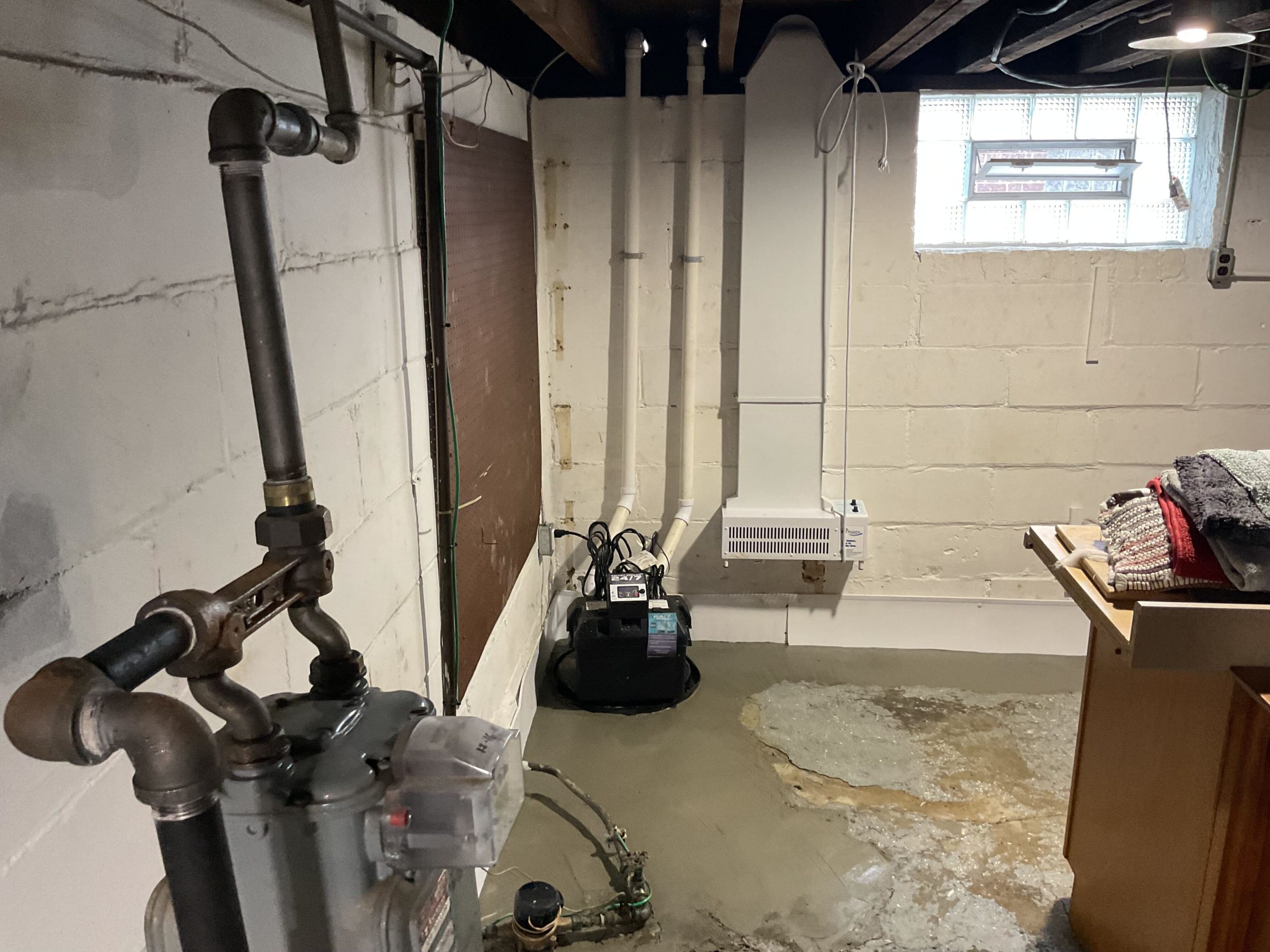
 You’ve recently installed a sump pump in your home, and you’re probably wondering if it’s possible to claim this on your taxes. While it’s not a straightforward deduction, it’s worth mentioning that tax laws can be intricate and sometimes have gray areas. For instance, there might be scenarios where a sump pump could be factored into your tax calculus. It all hinges on the specifics of your situation and knowing how to navigate the complexities of home improvements in the tax code. Sounds intriguing, doesn’t it? Let’s explore this further.
Understanding Tax Deductions for Home Improvements
Ever wondered how you can capitalize on home improvements for tax benefits? Well, you’re not alone. There’s a lot of confusion surrounding this topic, but don’t worry, we’re here to clear things up for you.
Here’s the deal: typically, home improvements, like installing a sump pump, aren’t tax-deductible. But don’t be discouraged! It doesn’t mean you can’t reap any tax benefits from them.
While you can’t deduct the cost of the improvement in the year you spend the money, you can add the cost to your home’s basis, which might reduce your tax bill when you sell your property.
Adding to your home’s basis means increasing the amount that your home is worth for tax purposes. So, if you bought your house for $200,000 and you spent $10,000 on a sump pump and other improvements, your basis would be $210,000.
If you then sell your home for $300,000, you’d only be taxed on a gain of $90,000 instead of $100,000.
The Role of Sump Pumps in Home Maintenance
Understanding the role of sump pumps in home maintenance is fundamental for any homeowner. These devices are essential in preventing water damage to your property. They’re typically installed in your basement or crawl space and act as a first line of defense against groundwater flooding.
Your sump pump’s job is simple but critical. It collects excess water that enters your home’s foundation and sends it away from your house. This mechanism protects your home from dampness and the mold growth that can follow, thereby preserving your home’s structural integrity and indoor air quality.
When heavy rainfall or snow melt increases the water table around your home, your sump pump kicks into action, preventing the water from rising to a level that could flood your basement. Without a sump pump, you’d be looking at potentially devastating water damage, which can cost thousands to repair.
It’s also important to note that the lifespan of a sump pump is about 10 years. Regular maintenance is necessary to guarantee it’s functioning properly when you need it most.
Specific Tax Rules for Sump Pumps
Given the considerable role a sump pump plays in home maintenance, it’s natural to wonder if there’s any tax relief available for such an investment. The IRS has specific rules about what can be claimed as a tax deduction, and unfortunately, a sump pump typically doesn’t make the cut.
Most home improvement expenses, including the installation of a sump pump, are considered capital improvements. While these can increase the value of your home and extend its life, they’re generally not tax-deductible. The IRS defines a capital improvement as something that adds value to your home, prolongs its life, or adapts it to new uses.
However, there’s a silver lining. If the sump pump is installed as part of a renovation to a home office or a space used exclusively for business, you may be able to claim a portion of the cost as a business expense.
It’s also possible to include the cost in a medical expense deduction if the pump is installed to alleviate specific health issues, such as mold allergies.
Always consult with a tax professional to explore these possibilities, as tax laws can be complex and change frequently.
Case Studies: Sump Pump Tax Claims
Several homeowners have navigated the intricate tax laws to successfully claim their sump pump expenses. You’ll find that these cases provide insightful examples of how to take advantage of this potential tax benefit.
Consider these three instances:
| Homeowner | Situation | Outcome |
|---|---|---|
| John | Installed a sump pump due to recurring basement flooding. | Successfully claimed the cost under home improvement expenses. |
| Sarah | Upgraded her sump pump system as part of a full home renovation. | Successfully claimed a portion of the cost as part of her overall renovation expenses. |
| Mark | Replaced a faulty sump pump. | Could not claim the expense as this was considered a repair, not an improvement. |
In John’s case, his home’s value increased due to the sump pump installation, which was a considerable factor in his successful claim. Sarah’s situation was a bit different. While she couldn’t claim the entire cost of her sump pump upgrade, it factored into her larger renovation claim. Mark’s case serves as a cautionary tale: while sump pump replacement is essential, it’s generally not tax-deductible. Remember, the key is distinguishing between home improvements and repairs.
Tips for Claiming Your Sump Pump on Taxes
Looking at the experiences of John, Sarah, and Mark, it’s evident that claiming a sump pump on your taxes can be either successful or unsuccessful, depending on your particular situation.
To increase your chances of success, let’s explore some crucial tips.
First, make sure your sump pump is part of a renovation or repair that’s necessary to prevent property damage. The IRS is more likely to accept your claim if it’s connected to protecting your home.
Next, remember to keep all receipts and documentation related to the sump pump purchase and installation. Without these, you’re unlikely to back up your claim effectively.
Additionally, you should consider consulting a tax professional. They’re experts in understanding tax laws and can provide guidance on whether your sump pump can be claimed as a home improvement deduction.
Summing Up Your Sump Pump Tax Deduction OptionsConclusion
So, you can’t directly claim your sump pump on taxes. However, if it’s part of a larger renovation, you might add the cost to your home’s basis for tax purposes. If it’s for a home office or health issues, consult a tax pro for possible deductions. Remember, tax laws can be complex and it’s important to understand the specifics before making a claim. Always seek professional advice for your unique situation.

Ohio State Waterproofing has provided quality service with over 90,000 successful waterproofing and foundation repair installations and satisfied customers since our inception in 1978.
Ohio State Waterproofing’s philosophy for success is to provide honest, courteous and guaranteed service to every customer. Our reputation reflects this. Our well-trained waterproofing technicians are dedicated to complete customer satisfaction. This is achieved through fast, efficient processes as well as teamwork throughout this organization. You will always find a friendly representative willing to meet your needs at Ohio State Waterproofing.
We are a full service company that handles problems ranging from patching cracks to rebuilding basements. In addition, we hold three patents related to waterproofing that make us unique in the industry. These patents and our experience allow us to be able to do what every other waterproofer can do, but no one else can do what we do.
We are actively involved in the industry and community, including the National Association of Waterproofing Contractors, BHA, NARI, NAHB, NHIA, the BIA, the FHA and a number of consumer advocacy groups, as well as playing leading roles in a number of charitable functions.
But, most importantly, our highest degree of praise comes from the thousands of referrals we get from satisfied customers. Together they’ve made us a leader in the basement waterproofing and foundation repair industry.
