
 Despite what you may think, stopping water from seeping through your basement walls is not an impossible task, nor does it always require professional assistance. You can tackle minor leaks with a few supplies from your local hardware store and some elbow grease. But, how do you address more severe water seepage? And, is there a way to prevent these leaks from occurring in the first place? Let’s explore these questions together and establish a clear plan for a dry, leak-free basement.
Essential Steps to Stop Water Seepage in BasementsKey Takeaways
- Identify and seal cracks in basement walls using epoxy or polyurethane, available in DIY crack injection kits.
- Install an interior drainage system or sump pump system for effective water management, preferably done by professionals.
- Apply concrete sealers to create a waterproof barrier on your basement walls.
- Regularly inspect your basement for any signs of water seepage and maintain structural integrity through early detection and repairs.
- Improve outdoor water management by sloping soil away from the home, maintaining gutters, and installing French drains if necessary.
Understanding Basement Water Seepage
Understanding the nature of water seepage in your basement is the first essential step in addressing this common household problem.
It’s important to recognize that water seepage isn’t a rare occurrence, but rather a symptom of a more significant issue that needs immediate attention.
Water seepage occurs when water finds its way into your basement through cracks, joints, and pores in the concrete. This usually happens during heavy rains or when there’s a high water table.
You’ll often notice damp spots on the walls or floor, or even a puddle of water in severe cases.
Identifying water seepage isn’t always straightforward. It could be intermittent, only appearing during certain weather conditions, or it could be a constant problem.
You might also notice a musty smell, mold growth, or efflorescence – a white, powdery substance left behind when water evaporates from the concrete.
Common Causes of Basement Leaks
Before you can effectively stop water from seeping through your basement walls, it’s essential to understand the common causes of these leaks.
One primary culprit is often the source of the leak; pinpointing this can greatly aid in your battle against basement moisture.
Another key factor to take into account is the impact of hydrostatic pressure, which can exert an enormous force on your basement walls and lead to unwanted water intrusion.
Identifying Basement Leak Sources
Why are your basement walls weeping moisture? The culprit often lies in the numerous sources of leaks in your basement. Identifying these sources is essential in preventing any further damage.
Firstly, wall cracks, however minor, can become channels for water seepage. This is particularly common in concrete, stone, and cinder block walls. If you notice damp spots or active drips along these cracks, it’s a sure sign of water intrusion.
Secondly, poor window well installation or drainage can lead to water pooling, which eventually seeps through your basement walls. Make certain that your window wells are correctly installed and the drainage is functioning properly to avoid this issue.
Next, the joint where the floor meets the wall is another common source of basement leaks. The hydrostatic pressure can force water in through these joints, especially during periods of heavy rainfall.
Lastly, plumbing issues such as leaking pipes or a malfunctioning water heater can cause unexpected water seepage. Regularly checking your plumbing systems can help detect these issues early.
Impact of Hydrostatic Pressure
While we’ve noted the various sources of basement leaks, it’s important to contemplate one of the most common underlying forces driving these issues: hydrostatic pressure. This natural phenomenon occurs when water accumulates in the soil around your home’s foundation, exerting pressure against the basement walls.
It’s this pressure that often causes water to seep through cracks or porous materials, leading to dampness or outright flooding in your basement.
You mightn’t realize it, but your basement is constantly under attack by hydrostatic pressure, especially during periods of heavy rain or rapid snowmelt. The severity of the impact will depend on various factors, such as the type of soil around your house, the depth of your basement, and the condition of your home’s drainage systems.
Neglecting the impact of hydrostatic pressure can lead to structural damage, mold growth, and a decrease in your property’s value. As a result, it’s essential to take preventive measures.
These might include improving your home’s drainage system, sealing basement walls, or installing a sump pump.
Assessing the Severity of Seepage
Before you can start fixing the seepage problem, you need to assess its severity.
Begin by identifying signs of water seepage in your basement, such as wet spots, peeling paint, or mold growth.
Then, determine the extent of the damage – this could range from mild moisture issues to serious structural problems.
Identifying Seepage Signs
Spotting the signs of seepage in your basement can be the first step towards solving this common household problem.
It’s essential to know what to look for, as early detection can make a significant difference in the overall damage and repair costs.
You’ll want to be on the lookout for visible water trails or damp spots on your basement walls, a clear sign of seepage.
Don’t ignore a musty smell either, as it’s often an indication of mildew or mold growth caused by lingering moisture.
Peeling paint or efflorescence, a white powdery substance on your walls, can also signal water intrusion.
Another thing to watch for is wet or damp spots on the basement floor.
This often happens when water seeps up from the ground or comes down from the walls.
If such spots are consistently appearing, it’s a surefire sign that you’ve got a seepage issue.
Lastly, high humidity in your basement may also indicate water seepage.
If you’re frequently finding condensation on windows or pipes, it’s time to investigate further.
Determining Damage Level
Often, it’s not only about identifying signs of seepage but also determining the severity of the damage. Your basement’s health hinges on this critical assessment.
Begin by examining the water trail. If it’s a narrow, continuous line, it’s likely a minor issue. However, if the water covers a large area, the situation could be more serious. Look for signs of deep, penetrating water, such as damp carpets, warped flooring, or peeling paint. These indicate a high level of damage.
Next, assess structural integrity. Notice any cracks in the walls or floor? If they’re small and few, you’re likely dealing with a manageable problem. But multiple, wide-ranging cracks suggest severe damage.
Pay attention to the basement smell. A musty, moldy odor signifies prolonged water exposure, hinting at significant damage.
Lastly, check for mold and mildew. Their presence points to persistent moisture and serious damage.
Essential Tools for Water Seepage Repairs
Tackling water seepage in your basement requires the right tools for effective repairs. You’re not just battling against the water, you’re also up against time. The quicker you can address the issue, the less damage you’ll have to deal with.
Firstly, you’ll need a quality wet vacuum. This handy tool can rapidly extract standing water, making the area safer and easier to work in.
Next, a dehumidifier is essential. It’ll help reduce the moisture levels in your basement, discouraging further seepage.
Having a concrete sealer is also vital. It’s applied to the walls to create a waterproof barrier. Alongside the sealer, you’ll need a good paintbrush or roller for even application.
For more extensive repairs, concrete patches and a trowel are necessary. They’re used to fill and smooth out cracks in your basement walls.
And don’t forget safety equipment! Gloves, safety glasses, and waterproof boots are a must to protect yourself during the repair process.
DIY Methods to Stop Water Seepage
Equipped with the right tools, you’re well-prepared to handle the challenge of water seepage in your basement.
But it’s not just about tools, it’s about technique. Here are some DIY methods you can use to prevent water from making its way into your basement.
- Waterproofing Paint: This isn’t your everyday paint. It’s thick, applies easily to concrete walls, and is designed to block minor seepage. You’ll need to apply multiple coats to guarantee it works effectively.
- Concrete Sealer: Concrete sealers work by penetrating the concrete and forming a protective barrier. This prevents water from seeping through the pores of the concrete.
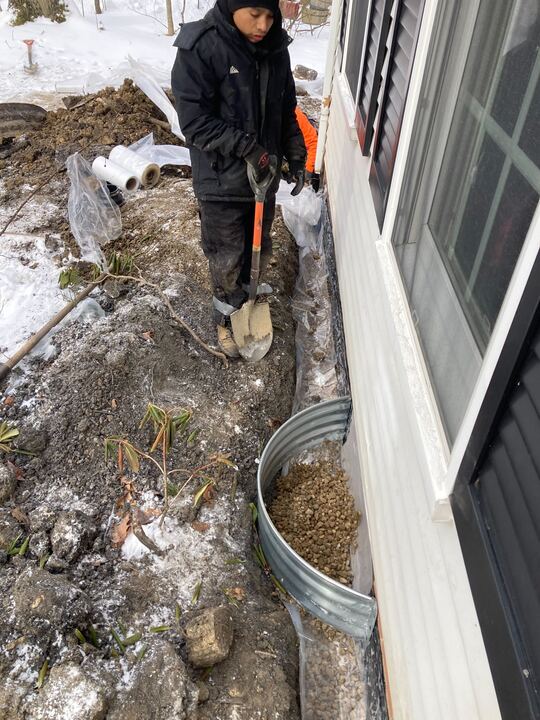
- French Drain: This involves digging a trench around the perimeter of your home, lining it with gravel, and installing a drainpipe. It’s a more complex DIY project, but it’s highly effective at diverting water away from your home.
- Crack Injection: If you notice cracks in your basement walls, you can use a crack injection kit to fill them. These kits often contain epoxy or polyurethane, materials designed to expand and seal the cracks.
Professional Solutions for Severe Cases
While DIY methods can be effective for minor water seepage issues, more severe cases may warrant professional intervention.
You’ll often find that a seasoned expert can diagnose the root cause of your problem more accurately and offer extensive solutions for mitigating it.
One such solution is the installation of an interior drainage system. This involves the creation of a trench in your floor along the wall, the placement of a perforated pipe, and the covering of this pipe with gravel and concrete.
The water flowing into your basement is then redirected into a sump pump system, which expels it outside.
Another professional solution is the application of an exterior waterproofing membrane. It’s a thick coat of waterproof material applied to the outside of your basement walls, creating a barrier against water seepage.
Waterproofing contractors may also suggest installing a French drain system if your property’s landscaping encourages water to flow towards your home.
This technique redirects water away from your foundation, helping to keep your basement dry.
Preventive Measures to Avoid Future Leaks
In preventing future leaks, routine maintenance and proper inspection of your home’s structure are essential.
Don’t consider this as an unnecessary expense. Rather, it’s an investment in preserving the integrity of your home and avoiding costly repairs later on.
To guarantee your basement remains dry, consider the following preventive measures:
- Regularly inspect your home’s foundation and walls for any cracks or signs of damage. Even the smallest crack can let in water over time.
- Keep your gutters and downspouts clean and free of debris. They play an important role in directing rainwater away from your home.
- Make sure your home’s landscaping slopes away from your house. This helps prevent water from pooling around your foundation.
- Install a sump pump if you don’t have one. This can help remove any water that does accumulate in your basement.
Frequently Asked Questions
Can I Use My Homeowners Insurance to Cover Basement Water Seepage Repairs?
Normally, homeowners insurance doesn’t cover water seepage repairs in your basement.
It’s often viewed as a maintenance issue, not an unforeseen accident.
However, if the seepage is due to a covered peril like a burst pipe, you might be covered.
Always check your policy or contact your insurance company for clarity.
Additionally, consider investing in specific endorsements or flood insurance for extensive protection.
How Long Does It Typically Take to Fix a Water Seepage Issue in the Basement?
The time it takes to fix a water seepage issue in your basement can vary greatly.
It depends on the severity of the problem and the method used for repair. Minor issues might be resolved in a few hours with simple DIY techniques.
However, for more serious problems involving professional intervention, it could take several days or even weeks.
You’ll need to consult with a professional to get a more accurate timeline for your specific situation.
Will Water Seepage in the Basement Affect the Overall Value of My House?
Absolutely, water seepage in your basement can indeed affect your house’s overall value.
As the old saying goes, “A stitch in time saves nine.” Unaddressed water issues can lead to serious structural damage, mold growth, and poor indoor air quality.
These issues are red flags for potential buyers, lowering your property’s appeal.
Are There Health Risks Associated With Prolonged Exposure to a Water-Seepage Affected Basement?
Yes, there’re health risks linked to prolonged exposure to a damp basement.
You’re potentially exposing yourself to harmful molds and bacteria that thrive in moist environments.
Over time, this may cause respiratory issues, allergic reactions, or even more serious health problems.
It’s important you address the issue promptly to safeguard your health.
Always wear proper protective gear when dealing with damp basements to limit your exposure.
Can I Continue Using My Basement While the Water Seepage Issue Is Being Addressed?
Stepping into your basement while water seepage is being addressed is like walking on thin ice.
It’s unsafe and unadvisable. The dampness can cause slipping hazards and electrical shock risks.
Plus, it’s more difficult for professionals to rectify the issue if the area is in use.
So, while your patience might be tested, it’s best to stay out of the basement until the water seepage problem is fully resolved.
Safety first.
Conclusion
So, you’ve braved the world of basement leaks and seepage. You’ve tackled the cracks, mastered your drainage, and even considered professional help. But remember, prevention is key. Keep those gutters clean, watch your landscape, and be vigilant. Don’t let your guard down. The battle against basement moisture is ongoing. With the right tools, knowledge, and a proactive approach, you’ll keep your basement dry and your home safe.

Ohio State Waterproofing has provided quality service with over 90,000 successful waterproofing and foundation repair installations and satisfied customers since our inception in 1978.
Ohio State Waterproofing’s philosophy for success is to provide honest, courteous and guaranteed service to every customer. Our reputation reflects this. Our well-trained waterproofing technicians are dedicated to complete customer satisfaction. This is achieved through fast, efficient processes as well as teamwork throughout this organization. You will always find a friendly representative willing to meet your needs at Ohio State Waterproofing.
We are a full service company that handles problems ranging from patching cracks to rebuilding basements. In addition, we hold three patents related to waterproofing that make us unique in the industry. These patents and our experience allow us to be able to do what every other waterproofer can do, but no one else can do what we do.
We are actively involved in the industry and community, including the National Association of Waterproofing Contractors, BHA, NARI, NAHB, NHIA, the BIA, the FHA and a number of consumer advocacy groups, as well as playing leading roles in a number of charitable functions.
But, most importantly, our highest degree of praise comes from the thousands of referrals we get from satisfied customers. Together they’ve made us a leader in the basement waterproofing and foundation repair industry.
